
Genus · Colubridae
Types of mussuranas
3 species make up the genus Mussurana, the snakes commonly called mussuranas. None are considered dangerous to humans.
About mussuranas (snake-eating snakes)
Mussuranas are stout Latin American snakes famous for hunting and eating other snakes, including venomous pit vipers.
Mussurana is a genus of New World snakes in the family Colubridae, the largest and most diverse snake family. The common name mussurana is applied broadly across several closely related genera in tropical Latin America, but the snakes share a defining trait: they are ophiophagous, meaning they specialize in eating other snakes. They are best known for preying on venomous pit vipers, which has earned them a reputation as beneficial animals on farms and rural land.
These snakes range through much of Central and South America, in habitats that include forest edges, savannas, agricultural land, and brushy clearings. They are typically terrestrial and most active at dusk and night, sheltering in burrows, leaf litter, or under cover during the heat of the day. Their tolerance for human-modified landscapes is part of why they are encountered around farms and homesteads.
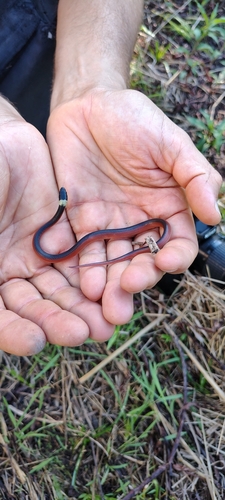
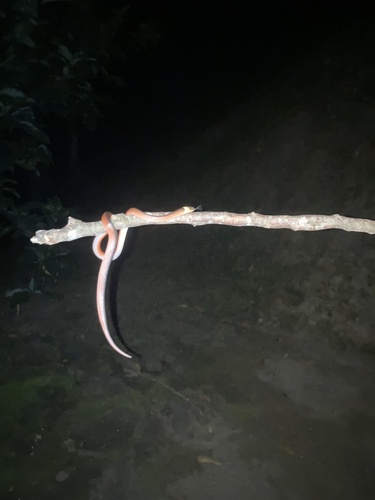
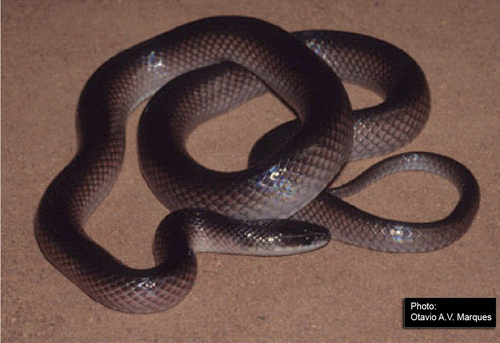
In general terms, mussuranas are medium to large, heavy-bodied snakes with smooth scales and a glossy appearance. Coloration often shifts with age: juveniles of some species are reddish or pinkish with a pale collar and dark head, while adults darken toward uniform gray, blue-black, or brown. The body is muscular, which fits their feeding style, and the head is only modestly distinct from the neck.
Mussuranas are rear-fanged, classified within the broadly venomous colubrid grouping. They possess enlarged grooved teeth at the back of the upper jaw and a mild venom used to subdue prey, and they also kill by constriction. Their venom is adapted for small reptile prey and is not considered medically dangerous to people in the way pit viper venom is. Even so, no wild snake should be handled. Bites, stress to the animal, and misidentification are all real risks. If anyone is bitten by a snake they cannot confidently identify, treat it as a medical situation and contact emergency services or US Poison Control at 1-800-222-1222.
Ecologically, mussuranas are valuable predators. Adults feed heavily on other snakes and also take lizards and small mammals, using a combination of constriction and rear-fanged venom. They reproduce by laying eggs, with clutch sizes varying by species and female size. Because they routinely prey on venomous snakes, including those that threaten livestock and people, mussuranas are widely regarded as helpful and are best left undisturbed when found.
Mussurana belongs to the Colubridae family (Colubrids). The largest snake family, and the one most snakes you meet belong to. Typically round pupils, a head only slightly wider than the neck, and no heat-sensing facial pit or rattle. Scales may be smooth and glossy or keeled and matte depending on the species.
Danger: Almost all colubrids are harmless. A small number are rear-fanged with medically significant venom, the boomslang and the twig (vine) snakes of Africa being the dangerous exceptions. Most colubrids will flee or bluff rather than bite.
All species (3)
Keep learning
- What Is a Snake? Anatomy and the BasicsA clear overview of what makes a snake a snake: limbless body plan, anatomy, evolution from lizards, species diversity, and why they are ectothermic.
- How Snakes Move, Hunt, and EatHow snakes move without legs, hunt as ambushers or active foragers, kill by constriction or venom, and swallow prey wider than their head.
- What Do Snakes Eat?All snakes are carnivores. Learn what snakes eat, how diet changes with size and age, how often they feed, and how they hunt and swallow prey.
- Venomous vs Nonvenomous: How to Tell the DifferenceThe folk rules for telling venomous snakes apart, where each one fails, and why location-based identification beats guessing by sight.