
Genus · Viperidae
Montatheris
The genus Montatheris contains a single species. It is venomous.
About Kenya montane viper
A tiny, single-species African viper that lives in cold, high-altitude grasslands and moorland.
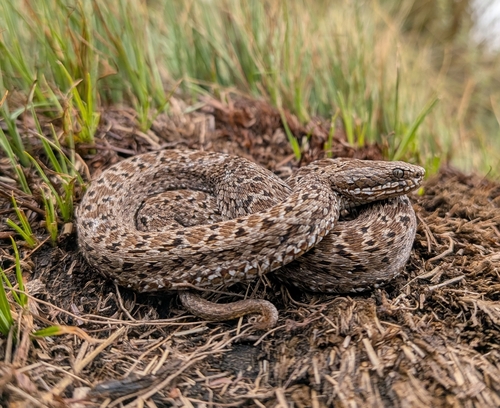
Montatheris is a genus in the family Viperidae, the true vipers, and it contains just one recognized species, the Kenya montane viper (Montatheris hindii). It belongs to the African viper radiation that also includes the bush vipers and the night adders, and like all vipers it has hinged front fangs that fold against the roof of the mouth. The genus was split off from related montane vipers because of its distinct skull and scale features, and today it stands alone as a small, specialized member of the family.
This snake is restricted to the high mountains of central Kenya, including the moorlands and afro-alpine grasslands above the treeline on peaks such as the Aberdares and Mount Kenya. It lives in a cold, open, often misty environment that few snakes tolerate, sheltering in tussock grass, low vegetation, and ground cover. Members are small and stout for a viper, with a short body, keeled scales, and the broad, somewhat triangular head typical of the family. Because the genus is obscure and rarely studied in the field, broad family-level and regional traits are the most reliable guide to recognizing it rather than fine detail.
As a true viper, the Kenya montane viper is venomous, and no wild venomous snake should ever be handled. Its venom and the medical risk it poses to people are poorly documented given how isolated and infrequently encountered it is, so any bite should be treated as a medical emergency: contact local emergency services, or in the US call Poison Control at 1-800-222-1222, and do not attempt first aid procedures yourself. Ecologically it is a ground-dwelling ambush and active forager thought to feed on small prey such as lizards, frogs, and invertebrates suited to its cold habitat. Like many high-altitude vipers it is believed to give live birth rather than lay eggs, an adaptation to cool climates where eggs would struggle to develop.
Montatheris belongs to the Viperidae family (Vipers & pit vipers). Heavy-bodied venomous snakes with long, hinged, hollow fangs. Broad, triangular head distinct from a narrow neck, heavy body, and (usually) vertical, cat-like pupils. Pit vipers also have a heat-sensing pit; true vipers do not.
Danger: Every viper is venomous, and the family includes some of the world's most medically important snakes. Venom is typically hemotoxic, causing pain, swelling, tissue damage, and bleeding. Treat any viper bite as a medical emergency.
All species (1)
Keep learning
- Venomous vs Nonvenomous: How to Tell the DifferenceThe folk rules for telling venomous snakes apart, where each one fails, and why location-based identification beats guessing by sight.
- Are Snakes Dangerous? The Real Risk, in PerspectiveMost snakes are harmless and avoid people. Here is the honest picture of snakebite risk worldwide and how to lower your own.
- Snake Venom Explained: How It Works and WhyWhat snake venom actually is, why it evolved, the main venom types, fang delivery, how antivenom works, and why ranking the most venomous snake is hard.
- How Snakes Move, Hunt, and EatHow snakes move without legs, hunt as ambushers or active foragers, kill by constriction or venom, and swallow prey wider than their head.