
Genus · Homalopsidae
Miralia
The genus Miralia contains a single species. It is not considered dangerous to humans.
About Asian mud snakes
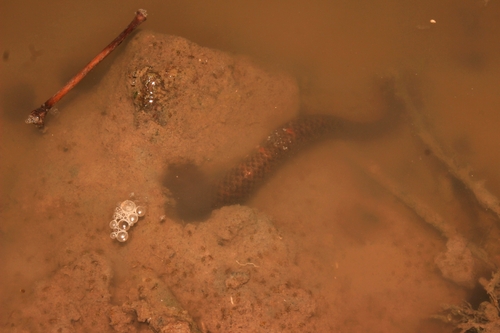
Miralia is a tiny genus of aquatic mud snakes from Southeast Asia, best known by Reuss' Mud Snake.
Miralia is a small genus in the family Homalopsidae, the Indo-Australian water snakes and mud snakes. The family is built for life in water and soft sediment, and its members live in rivers, swamps, rice paddies, mangroves, estuaries, and coastal mud flats across South and Southeast Asia and into Australia. Miralia sits squarely within this aquatic family, and the representative our database tracks is Reuss' Mud Snake (Miralia alternans), a freshwater species associated with the wetlands and slow waters of Southeast Asia. Like other homalopsids, members are stout, smooth to weakly keeled, and clearly suited to a wet, bottom-dwelling existence rather than to climbing or open ground.
Recognizing a mud snake in this family comes down to a handful of aquatic traits rather than one flashy field mark. Homalopsids typically have eyes and nostrils set high on the head so the animal can breathe and watch while mostly submerged, valved or crescent-shaped nostrils that seal out water, and a thickset body that moves easily through mud and shallow water. Many show banded or blotched patterns in muted browns and grays that blend into silt and tannin-stained water. Because several aquatic genera in the region overlap in habitat and look broadly similar, confident identification of any single mud snake usually needs locality and close examination of scale details rather than a glance.
Homalopsids are rear-fanged and mildly venomous, with enlarged grooved teeth at the back of the upper jaw and a venom geared toward subduing fish, frogs, and other small aquatic prey. For people these snakes are generally regarded as not dangerous, and they are not aggressive, but rear-fanged is not the same as harmless. A wild snake can bite if grabbed, and individual reactions to any bite vary, so the responsible approach is to observe and leave the animal alone rather than handle it. If a bite happens and any concerning symptoms develop, do not wait it out at home; in the United States contact Poison Control at 1-800-222-1222, and anywhere call local emergency services. The family as a whole is ovoviviparous, giving birth to live young in or near water, and these mud snakes spend their lives quietly hunting along the bottom of the wetlands they call home.
Miralia belongs to the Homalopsidae family (Mud & water snakes). Aquatic, mud-dwelling snakes with upward-facing eyes and nostrils. Stout, often drab snakes with upturned nostrils, found in or near muddy water.
Danger: Rear-fanged with mild venom; not considered dangerous to humans.
All species (1)
Keep learning
- What Is a Snake? Anatomy and the BasicsA clear overview of what makes a snake a snake: limbless body plan, anatomy, evolution from lizards, species diversity, and why they are ectothermic.
- How Snakes Move, Hunt, and EatHow snakes move without legs, hunt as ambushers or active foragers, kill by constriction or venom, and swallow prey wider than their head.
- What Do Snakes Eat?All snakes are carnivores. Learn what snakes eat, how diet changes with size and age, how often they feed, and how they hunt and swallow prey.
- Venomous vs Nonvenomous: How to Tell the DifferenceThe folk rules for telling venomous snakes apart, where each one fails, and why location-based identification beats guessing by sight.