
Genus · Typhlopidae
Types of worm snakes
6 species make up the genus Madatyphlops, the snakes commonly called worm snakes. None are considered dangerous to humans.
About Madagascar blind snakes
Small, burrowing, worm-like blind snakes that live underground and are completely harmless to people.
Madatyphlops is a genus of blind snakes in the family Typhlopidae. The name combines Madagascar with Typhlops, the classic blind snake group, because most of its members are found on Madagascar and nearby parts of the western Indian Ocean region. These are tiny, secretive, soil-dwelling snakes that the average person will almost never see, since they spend nearly their entire lives underground or hidden in leaf litter.
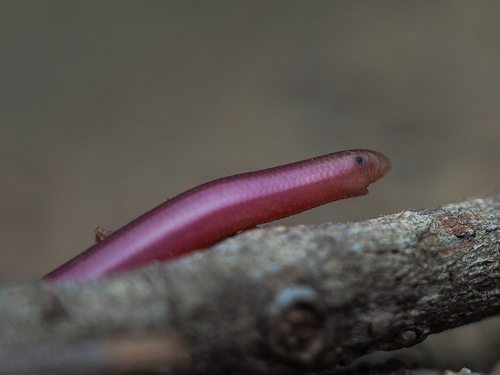
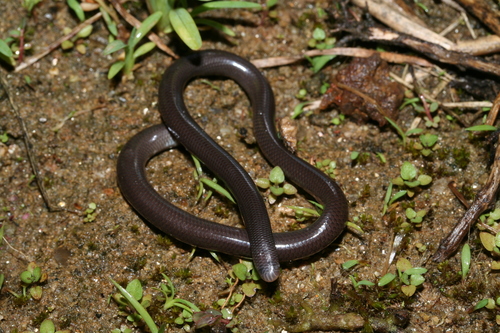
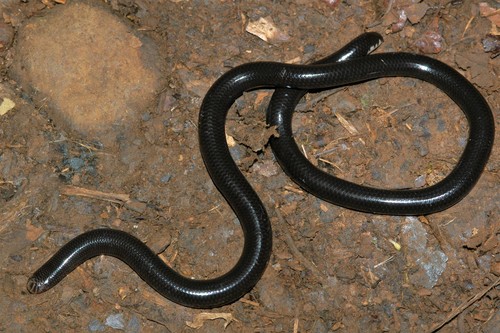
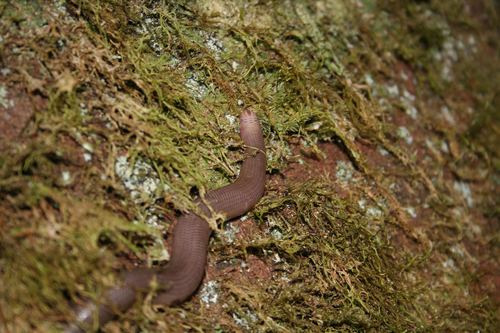
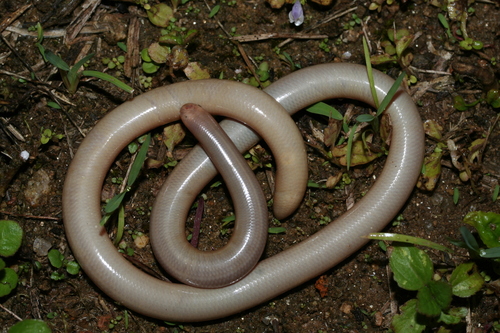
Like other typhlopids, Madatyphlops snakes look more like earthworms than typical snakes. They have a smooth, cylindrical body covered in tight, glossy scales of nearly uniform size, a blunt rounded head, a short blunt tail often tipped with a tiny spine, and eyes reduced to dark spots beneath the head scales rather than functional eyes. The mouth is small and set on the underside of the head, an adaptation for life pressed into soil. They are generally small, on the order of a slim pencil in girth, with most species measuring only a handful of inches to a foot or so in length.
These snakes are fossorial, meaning they live by burrowing. Typical habitats across the family include forest floors, soft soils, sandy ground, leaf litter, rotting logs, and gardens, wherever the soil is loose enough to push through and stays moist. They surface mainly after heavy rain or when their cover is disturbed, which is when most people happen to find one. Several members of this genus carry common names that reflect this lifestyle, such as the Sand Worm Snake, Mocquard's Worm Snake, and the Andasibe Blind Snake.
Madatyphlops snakes are non-venomous and completely harmless to humans. They have no venom, no fangs, and a mouth far too small to deliver a meaningful bite to a person. If picked up, one will typically wriggle, press its tiny tail spine against the skin, or release a musky fluid, none of which is dangerous. There is no medical concern from contact with these animals. As with any wild animal, the kind thing is to leave it be and let it return to the soil rather than handle it.
Their ecology centers on the underground food web. Blind snakes in this family feed mainly on soft-bodied invertebrates and the eggs, larvae, and pupae of ants and termites, hunting by scent and touch in the dark. They play a quiet role in soil ecosystems by preying on colony insects. Reproduction in the family is generally by laying small clutches of eggs, and behavior is shy and reclusive, with activity tied to moisture and temperature rather than daylight. Because many Madatyphlops species are known only from a few specimens, fine details of diet and breeding for individual species remain poorly documented, and broader family patterns are the most reliable guide.
Madatyphlops belongs to the Typhlopidae family (Blindsnakes). Tiny, worm-like burrowing snakes that raid ant and termite nests. Looks like a small, glossy earthworm with smooth scales and no obvious neck, eyes, or pattern.
Danger: Harmless. They do not bite people and have no venom.
All species (6)
Keep learning
- What Is a Snake? Anatomy and the BasicsA clear overview of what makes a snake a snake: limbless body plan, anatomy, evolution from lizards, species diversity, and why they are ectothermic.
- How Snakes Move, Hunt, and EatHow snakes move without legs, hunt as ambushers or active foragers, kill by constriction or venom, and swallow prey wider than their head.
- What Do Snakes Eat?All snakes are carnivores. Learn what snakes eat, how diet changes with size and age, how often they feed, and how they hunt and swallow prey.
- Venomous vs Nonvenomous: How to Tell the DifferenceThe folk rules for telling venomous snakes apart, where each one fails, and why location-based identification beats guessing by sight.