
Genus · Colubridae
Types of reed snakes
6 species make up the genus Macrocalamus, the snakes commonly called reed snakes. None are considered dangerous to humans.
About reed snakes
Small, secretive highland snakes of the Malay Peninsula, named for their slender, reed-like build and hidden, forest-floor lives.
Macrocalamus is a genus of small snakes in the family Colubridae, the largest and most diverse snake family in the world. Members are commonly called mountain reed snakes, a nod both to their slim, reed-like bodies and to the highland forests where they live. Our database holds 6 species in this genus, including Chan-ard's Mountain Reed Snake, Tweedie's Mountain Reed Snake, the Genting Highlands Reed Snake, and Schulz's Reed Snake. Several of these are known from only a handful of localities, so detailed natural history for the genus remains limited.
These snakes are tied to the cool, wet uplands of the Malay Peninsula, with most records coming from montane forests in Peninsular Malaysia and adjacent areas. They favor damp, shaded conditions on and beneath the forest floor, where soil, leaf litter, and rotting wood stay moist. This is a habitat where many small colubrids stay out of sight, and Macrocalamus fits that pattern: they are rarely seen and easily overlooked.
Recognizing a member of Macrocalamus comes down to general cues rather than bold markings. They are small, slender snakes with smooth scales, modest-sized heads not much wider than the neck, and small eyes consistent with a low-light, near-ground life. Coloration tends to be plain and dark, in browns or grays, sometimes with subtle patterning. Because several small forest snakes in the region look broadly similar, locality and fine scale details are the most reliable way to tell them apart, and confident identification often calls for an expert.
These are harmless snakes to people. Macrocalamus species are not front-fanged venomous snakes and pose no medical threat to humans. Their small size and reclusive, forest-floor habits mean encounters are uncommon and bites are not a meaningful concern. As with any wild animal, the right approach is to observe and leave it alone rather than handle it. If anyone is ever bitten by a snake they cannot confidently identify and symptoms develop, treat it as a medical situation and contact emergency services or US Poison Control at 1-800-222-1222.
Ecologically, Macrocalamus are quiet ground-dwelling snakes of damp montane forest. Like many small, secretive colubrids of the leaf litter and soil, they are understood to feed on soft-bodied invertebrates and are largely nocturnal or crepuscular, spending daylight hidden under cover. Because the genus is poorly studied and several species are narrowly distributed, much of their reproduction and behavior remains to be documented, and what is known is drawn from broader family and regional context rather than detailed observation.
Macrocalamus belongs to the Colubridae family (Colubrids). The largest snake family, and the one most snakes you meet belong to. Typically round pupils, a head only slightly wider than the neck, and no heat-sensing facial pit or rattle. Scales may be smooth and glossy or keeled and matte depending on the species.
Danger: Almost all colubrids are harmless. A small number are rear-fanged with medically significant venom, the boomslang and the twig (vine) snakes of Africa being the dangerous exceptions. Most colubrids will flee or bluff rather than bite.
All species (6)
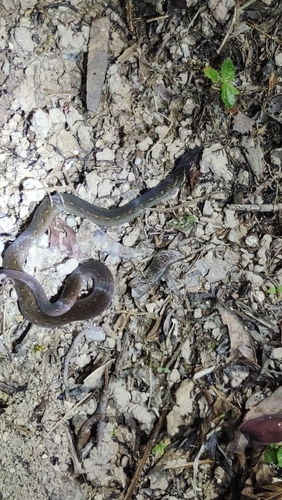 Chan-ard Mountain Reed SnakeMacrocalamus chanardiHarmless
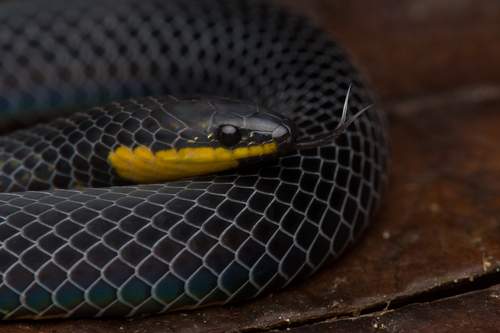 Tweedie's Mountain Reed SnakeMacrocalamus tweedieiHarmless
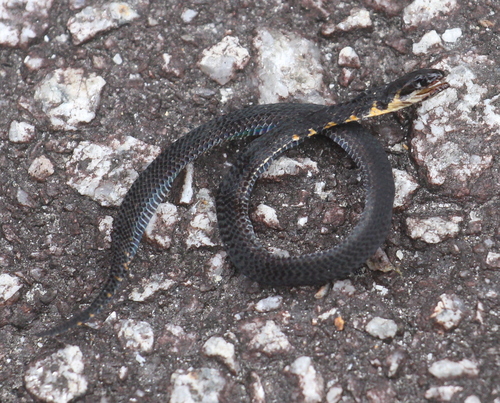 Genting Highlands Reed SnakeMacrocalamus gentingensisHarmless
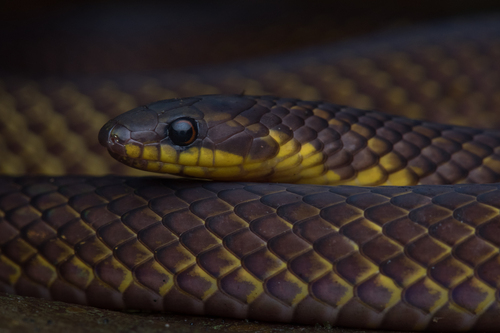 Schulz's Reed SnakeMacrocalamus schulziHarmless
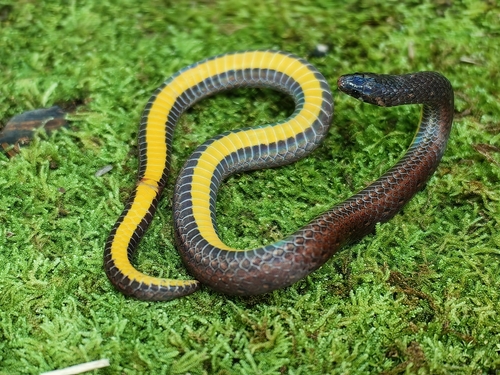 Macrocalamus emasHarmless
- No photoStriped Reed SnakeMacrocalamus lateralisHarmless
Keep learning
- What Is a Snake? Anatomy and the BasicsA clear overview of what makes a snake a snake: limbless body plan, anatomy, evolution from lizards, species diversity, and why they are ectothermic.
- How Snakes Move, Hunt, and EatHow snakes move without legs, hunt as ambushers or active foragers, kill by constriction or venom, and swallow prey wider than their head.
- What Do Snakes Eat?All snakes are carnivores. Learn what snakes eat, how diet changes with size and age, how often they feed, and how they hunt and swallow prey.
- Venomous vs Nonvenomous: How to Tell the DifferenceThe folk rules for telling venomous snakes apart, where each one fails, and why location-based identification beats guessing by sight.