
Genus · Colubridae
Types of sand snakes
4 species make up the genus Lytorhynchus, the snakes commonly called sand snakes. None are considered dangerous to humans.
About awl-headed sand snakes
Small, pointy-snouted desert colubrids built for burrowing through the loose sands of North Africa, the Middle East, and South Asia.
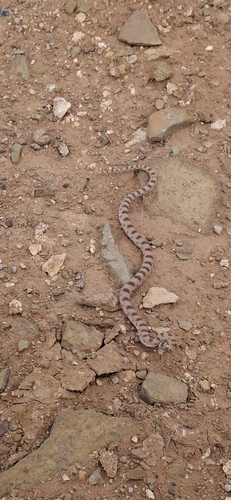
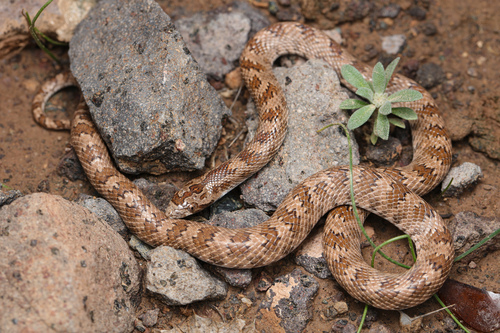
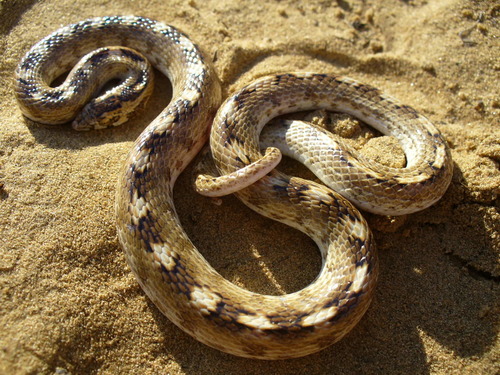
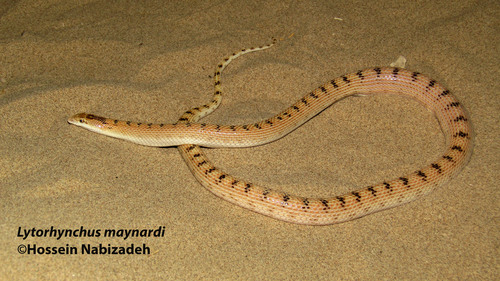
Lytorhynchus is a genus of small snakes in the family Colubridae, the largest and most varied snake family on Earth. The group is often called the awl-headed or longnose sand snakes because of the sharply tapered, slightly upturned snout that gives the head a pointed, awl-like profile. That snout is the defining feature: it is a digging and sand-shedding tool, an adaptation for life in arid country. Our database holds four species in this genus, including the Awl-headed Snake, the Derafshi Snake, the Sind Longnose Sand Snake, and the Baloch Awl-headed Sand Snake.
These are dryland specialists. The genus ranges across the deserts and semi-deserts of North Africa, the Arabian Peninsula, and through the Middle East into Iran, Pakistan, and northwestern India. Typical habitat is sandy or sandy-gravel desert, dunes, and scrubby arid flats where a small snake can move just beneath the surface. Like many desert colubrids, they shelter from daytime heat and tend toward nocturnal or crepuscular activity, hunting in the cooler hours.
Members are generally recognizable as slender, modestly sized snakes with that distinctive pointed, projecting snout and smooth scales suited to sliding through sand. Coloration usually runs to pale sandy or tan ground tones with darker blotches or saddles along the back, a camouflage pattern common to snakes that live on open desert substrate. Exact sizes vary by species, but these are small snakes rather than large ones, and the head is not strongly distinct from the neck.
On safety, Lytorhynchus snakes are not considered dangerous to people. As is common across Colubridae, some members may possess mild rear-fanged secretions used to subdue small prey, but they are not regarded as a medically significant threat to humans and there is no antivenom need associated with the genus. Even so, no wild snake should be picked up or handled, and any snake that cannot be confidently identified should be left alone. If a bite occurs and symptoms develop, or if there is any doubt about the species, seek medical care promptly. In the United States contact Poison Control at 1-800-222-1222, and elsewhere contact local emergency services.
Ecologically these are small predators of the desert. Diet centers on small prey suited to their size, such as lizards and their eggs and other small animals they encounter while moving through sand and scrub. Like the great majority of colubrids, Lytorhynchus species are egg-laying. Behaviorally they are secretive and well hidden, relying on burrowing, camouflage, and night activity rather than confrontation, which is a large part of why they are so seldom seen even where they are present.
Lytorhynchus belongs to the Colubridae family (Colubrids). The largest snake family, and the one most snakes you meet belong to. Typically round pupils, a head only slightly wider than the neck, and no heat-sensing facial pit or rattle. Scales may be smooth and glossy or keeled and matte depending on the species.
Danger: Almost all colubrids are harmless. A small number are rear-fanged with medically significant venom, the boomslang and the twig (vine) snakes of Africa being the dangerous exceptions. Most colubrids will flee or bluff rather than bite.
All species (4)
Keep learning
- What Is a Snake? Anatomy and the BasicsA clear overview of what makes a snake a snake: limbless body plan, anatomy, evolution from lizards, species diversity, and why they are ectothermic.
- How Snakes Move, Hunt, and EatHow snakes move without legs, hunt as ambushers or active foragers, kill by constriction or venom, and swallow prey wider than their head.
- What Do Snakes Eat?All snakes are carnivores. Learn what snakes eat, how diet changes with size and age, how often they feed, and how they hunt and swallow prey.
- Venomous vs Nonvenomous: How to Tell the DifferenceThe folk rules for telling venomous snakes apart, where each one fails, and why location-based identification beats guessing by sight.