
Genus · Colubridae
Types of ground snakes
8 species make up the genus Lygophis, the snakes commonly called ground snakes. None are considered dangerous to humans.
About ground snakes
A group of slender, fast-moving South American ground snakes that hunt by day across grasslands, savannas, and wetland edges.
Lygophis is a genus of small to medium colubrid snakes in the family Colubridae, the largest and most diverse snake family in the world. It belongs to the South American radiation of colubrids often grouped in the subfamily Xenodontinae, a lineage of mostly harmless, ground-dwelling snakes. Our database tracks 8 species. They are commonly called ground snakes because they live and forage on the ground rather than in trees or water, though several species stay close to wet habitats.
The genus is centered on South America. Members are found across a wide swath of the continent, including the grasslands and savannas of Brazil, the Cerrado and Pampas regions, and parts of Argentina, Paraguay, Uruguay, Bolivia, and neighboring countries. Typical habitat is open country rather than dense forest. They favor grasslands, savanna, scrub, marsh edges, and the margins of seasonal wetlands, where ground cover and prey are abundant.
Recognizing a Lygophis in general terms means looking for a slim, agile snake of modest size, usually well under a meter long, with a distinct head, fairly large eyes, and smooth scales that give it a sleek look. Many species carry lengthwise stripes or lines running down a brown, tan, or olive body, which is why several have names like striped snake or lined ground snake. Because patterns vary and other South American ground snakes look similar, confident identification usually relies on locality and scale details rather than color alone.
Lygophis snakes are rear-fanged colubrids, meaning they have enlarged grooved teeth toward the back of the upper jaw and a mild saliva that helps subdue small prey. They are not considered dangerous to people and are not known to cause medically significant envenomation in humans. Even so, the safe approach with any wild snake is to observe and not handle it, because field identification is unreliable and even harmless snakes can bite if grabbed. If a bite from any snake causes worrying symptoms, contact emergency services or US Poison Control at 1-800-222-1222 rather than trying to treat it yourself.
Ecologically, these are active daytime hunters. They feed largely on frogs and toads, along with lizards, small fish, and other small prey they encounter while patrolling open and wet-edge habitats. They are egg layers, producing modest clutches, and they rely on speed and alertness rather than constriction or strong venom to catch food and avoid predators. Their quick, diurnal foraging across grasslands and wetlands makes them a familiar part of South America's open-country snake fauna.
Lygophis belongs to the Colubridae family (Colubrids). The largest snake family, and the one most snakes you meet belong to. Typically round pupils, a head only slightly wider than the neck, and no heat-sensing facial pit or rattle. Scales may be smooth and glossy or keeled and matte depending on the species.
Danger: Almost all colubrids are harmless. A small number are rear-fanged with medically significant venom, the boomslang and the twig (vine) snakes of Africa being the dangerous exceptions. Most colubrids will flee or bluff rather than bite.
All species (8)
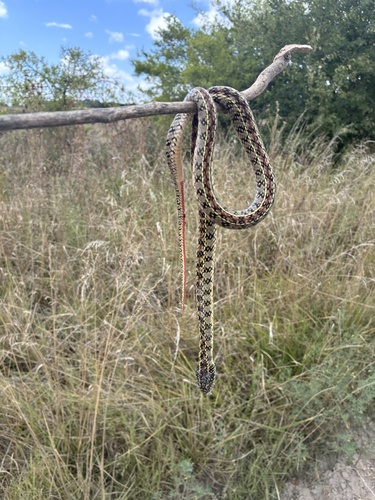 Gunther's Striped SnakeLygophis anomalusHarmless
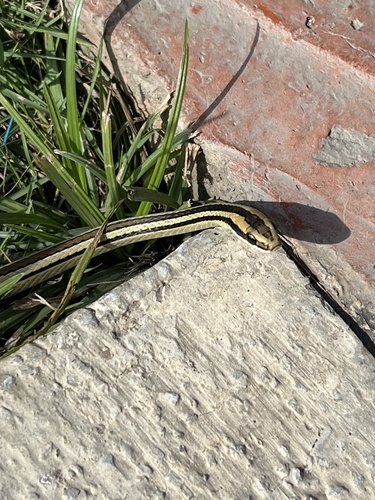 Lined Ground SnakeLygophis lineatusHarmless
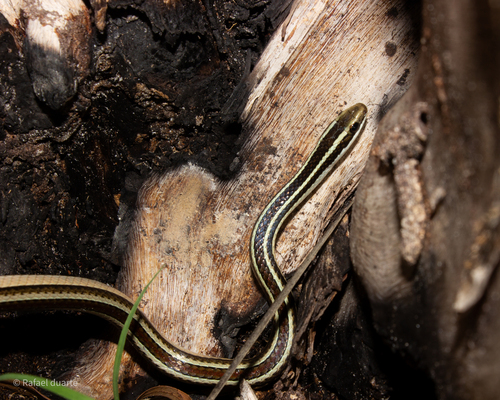 Lema's Ground SnakeLygophis dilepisHarmless
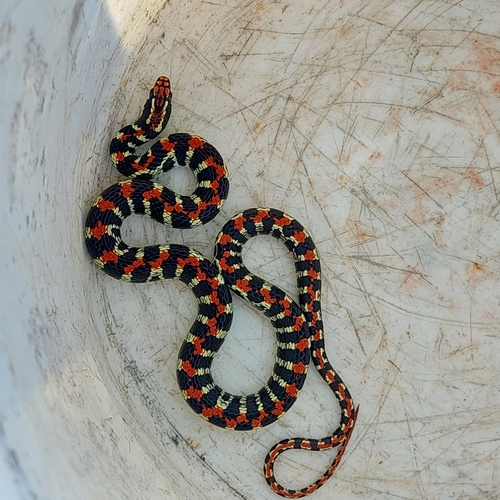 Elegant Ground SnakeLygophis elegantissimusHarmless
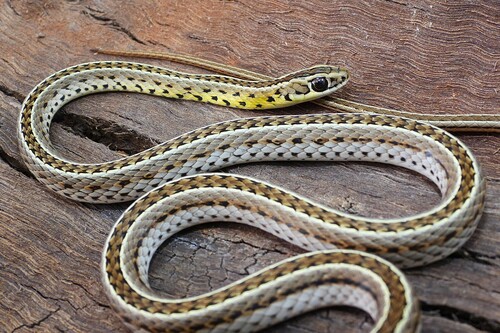 Southern Striped SnakeLygophis meridionalisHarmless
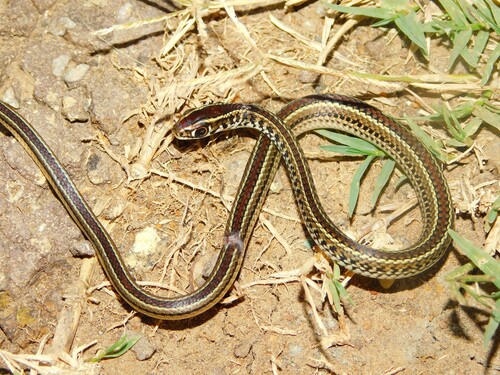 Fronted Ground SnakeLygophis flavifrenatusHarmless
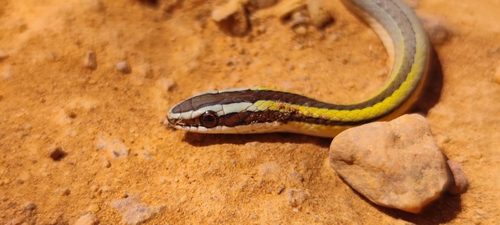 Hoge's Ground SnakeLygophis paucidensHarmless
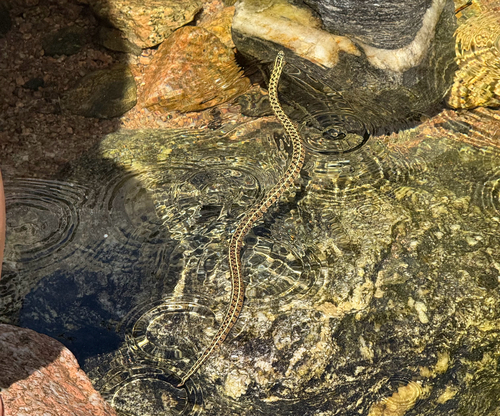 Vanzolini's Ground SnakeLygophis vanzoliniiHarmless
Keep learning
- What Is a Snake? Anatomy and the BasicsA clear overview of what makes a snake a snake: limbless body plan, anatomy, evolution from lizards, species diversity, and why they are ectothermic.
- How Snakes Move, Hunt, and EatHow snakes move without legs, hunt as ambushers or active foragers, kill by constriction or venom, and swallow prey wider than their head.
- What Do Snakes Eat?All snakes are carnivores. Learn what snakes eat, how diet changes with size and age, how often they feed, and how they hunt and swallow prey.
- Venomous vs Nonvenomous: How to Tell the DifferenceThe folk rules for telling venomous snakes apart, where each one fails, and why location-based identification beats guessing by sight.