
Genus · Colubridae
Lycognathophis
The genus Lycognathophis contains a single species. It is not considered dangerous to humans.
About Seychelles wolf snake
A single slender colubrid found only on the granitic islands of the Seychelles.
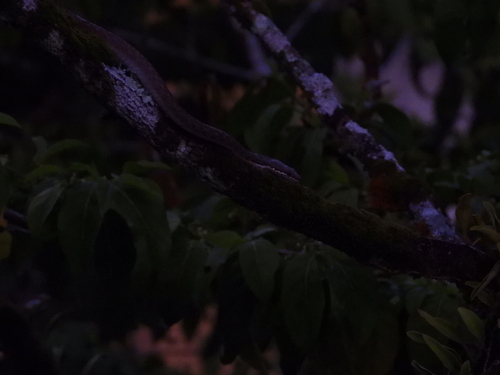
Lycognathophis is a genus in the large family Colubridae that contains just one recognized species, the Seychelles wolf snake (Lycognathophis seychellensis). It is endemic to the Seychelles, an island archipelago in the western Indian Ocean, and is found nowhere else in the world. As the only member of its genus, it represents an isolated lineage that has evolved in place on these remote islands, which is a common pattern among reptiles on oceanic island groups.
This is a slim, agile, medium-sized snake that varies considerably in color, with individuals ranging through brown, olive, gray, and yellowish tones, sometimes with darker markings or a striped appearance. Like many colubrids it has large eyes, a clearly defined head, and a tapering body built for moving quickly through leaf litter, low vegetation, and rocky ground. It is active by day and is encountered in forest, scrub, and around human settlements across several of the granitic Seychelles islands.
As a colubrid, the Seychelles wolf snake is not a front-fanged species and is not considered dangerous to people. Many colubrids carry mild rear-fanged secretions used to subdue small prey such as lizards, frogs, and other small animals, and any defensive bite from a snake of this size would be expected to be minor. Even so, wild snakes should be observed rather than handled, and any bite that causes unexpected or worsening symptoms warrants professional medical attention. In the United States contact Poison Control at 1-800-222-1222, or contact local emergency services. Because this genus is so localized and obscure, the soundest approach is to treat it within the broad, generally harmless colubrid framework rather than assuming specifics.
Lycognathophis belongs to the Colubridae family (Colubrids). The largest snake family, and the one most snakes you meet belong to. Typically round pupils, a head only slightly wider than the neck, and no heat-sensing facial pit or rattle. Scales may be smooth and glossy or keeled and matte depending on the species.
Danger: Almost all colubrids are harmless. A small number are rear-fanged with medically significant venom, the boomslang and the twig (vine) snakes of Africa being the dangerous exceptions. Most colubrids will flee or bluff rather than bite.
All species (1)
Keep learning
- What Is a Snake? Anatomy and the BasicsA clear overview of what makes a snake a snake: limbless body plan, anatomy, evolution from lizards, species diversity, and why they are ectothermic.
- How Snakes Move, Hunt, and EatHow snakes move without legs, hunt as ambushers or active foragers, kill by constriction or venom, and swallow prey wider than their head.
- What Do Snakes Eat?All snakes are carnivores. Learn what snakes eat, how diet changes with size and age, how often they feed, and how they hunt and swallow prey.
- Venomous vs Nonvenomous: How to Tell the DifferenceThe folk rules for telling venomous snakes apart, where each one fails, and why location-based identification beats guessing by sight.