
Genus · Anomalepididae
Types of blind snakes
11 species make up the genus Liotyphlops, the snakes commonly called blind snakes. None are considered dangerous to humans.
About Dawn blind snakes
Tiny, worm-like burrowing snakes from Central and South America that spend nearly their whole lives underground hunting ant and termite broods.
Liotyphlops is a genus of small fossorial snakes in the family Anomalepididae, the primitive or dawn blind snakes. The Anomalepididae are one of the most ancient living snake lineages, grouped with the other blind snake families in the infraorder Scolecophidia. Members of this family are restricted to the New World tropics, and Liotyphlops sits among them as a typical example: a slender, cylindrical, near-uniform-width snake built entirely for life in soil and leaf litter. Our database holds 11 species in this genus, including Ternetz's Blind Snake, the Bonda Blind Snake, the Whitenose Blind Snake, and the Caracas Blindsnake.
These snakes range across parts of Central America and northern and central South America. They live in tropical and subtropical environments, where they stay hidden in loose soil, under rocks and logs, in rotting wood, and within the nests of social insects. Because they are so secretive and rarely surface, many species are known from only a handful of specimens, and detailed natural history for individual species is limited. Honest herpetology here means leaning on what is solid at the family and genus level rather than inventing species-specific detail.
Recognizing a Liotyphlops in general terms is easier than telling one species from another. Expect a very small, smooth, glossy snake that looks more like an earthworm than a typical snake, with a body of nearly even thickness from head to short blunt tail. The eyes are reduced to dark spots under the head scales, useful for sensing light and dark but not for forming images. The head is rounded and the mouth is small and tucked underneath. Like other anomalepidids, they have small teeth, and unlike most blind snakes they bear teeth on both the upper and lower jaws, a trait herpetologists use to separate this family from related blind snake groups.
Liotyphlops snakes are harmless to people. They are not venomous, not rear-fanged, and not dangerous. Their tiny mouths and teeth are made for gripping soft insect prey, not for defending against anything human-sized, and they are not known to bite people in any meaningful way. There is no medical concern associated with this genus. As a general rule, do not handle wild snakes you cannot confidently identify, and if any snakebite ever causes concern, contact emergency services or US Poison Control at 1-800-222-1222.
Ecologically, these are specialist predators of social insects. They feed mainly on the eggs, larvae, and pupae of ants and termites, moving through soil and into insect colonies to feed. Like other scolecophidians they are believed to reproduce by laying eggs. Their behavior is overwhelmingly subterranean: they burrow, they avoid light, and they are most often found by people only when soil is turned over or after heavy rain pushes them to the surface. In the broader ecosystem they help regulate insect populations and serve as prey for larger snakes and other small predators.
Liotyphlops belongs to the Anomalepididae family (Dawn blindsnakes). Primitive, tiny burrowing snakes of the American tropics. Tiny, shiny, and worm-like, with vestigial eyes.
Danger: Harmless.
All species (11)
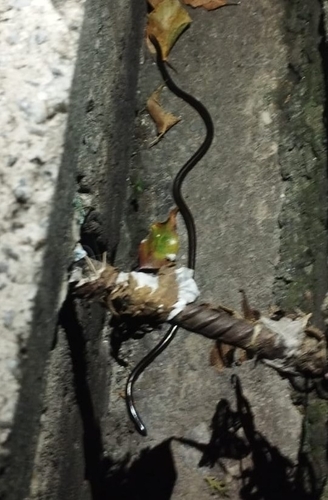 Ternetz's Blind SnakeLiotyphlops ternetziiHarmless
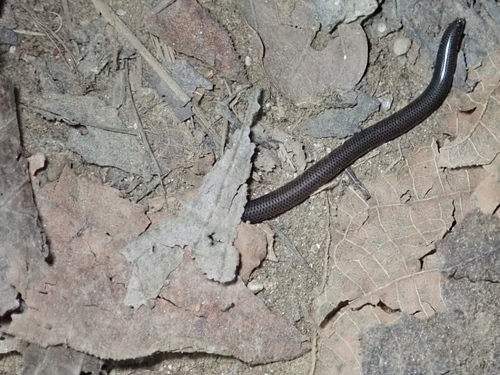 Bonda Blind SnakeLiotyphlops bondensisHarmless
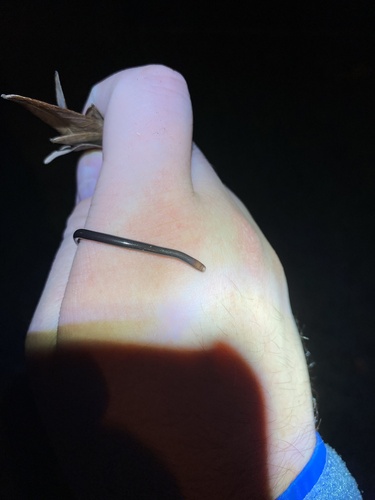 Whitenose Blind SnakeLiotyphlops albirostrisHarmless
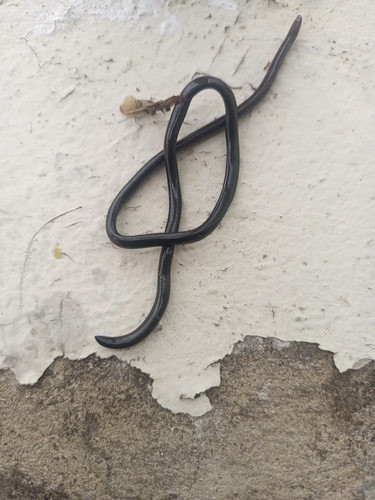 Caracas BlindsnakeLiotyphlops caracasensisHarmless
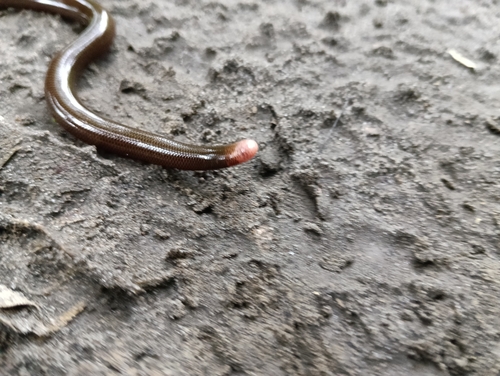 Cope's Blind SnakeLiotyphlops anopsHarmless
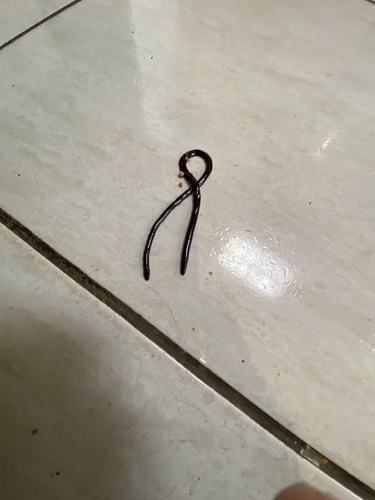 São Paulo Blind SnakeLiotyphlops schubartiHarmless
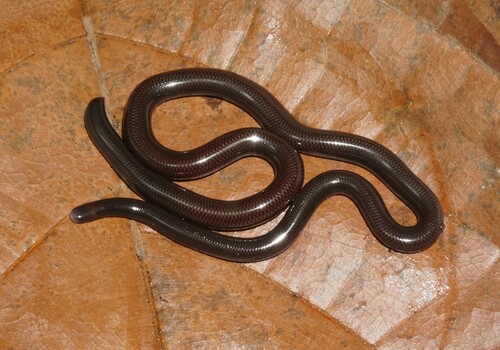 Liotyphlops pinoHarmless
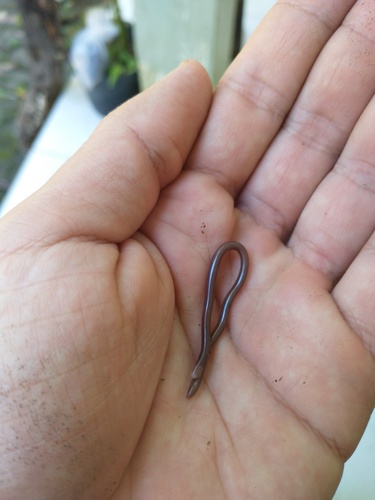 São Sebastião Blind SnakeLiotyphlops caissaraHarmless
 Wilder's Blind SnakeLiotyphlops wilderiHarmless
- No photoCundinamarca Blind SnakeLiotyphlops argaleusHarmless
- No photoMato Grosso Blind SnakeLiotyphlops tayloriHarmless
Keep learning
- What Is a Snake? Anatomy and the BasicsA clear overview of what makes a snake a snake: limbless body plan, anatomy, evolution from lizards, species diversity, and why they are ectothermic.
- How Snakes Move, Hunt, and EatHow snakes move without legs, hunt as ambushers or active foragers, kill by constriction or venom, and swallow prey wider than their head.
- What Do Snakes Eat?All snakes are carnivores. Learn what snakes eat, how diet changes with size and age, how often they feed, and how they hunt and swallow prey.
- Venomous vs Nonvenomous: How to Tell the DifferenceThe folk rules for telling venomous snakes apart, where each one fails, and why location-based identification beats guessing by sight.