
Genus · Pseudoxyrhophiidae
Types of smooth snakes
9 species make up the genus Liophidium, the snakes commonly called smooth snakes. None are considered dangerous to humans.
About Madagascar smooth snakes
Small, glossy, harmless ground snakes found almost entirely on Madagascar and nearby islands.
Liophidium is a genus of small to medium snakes in the family Pseudoxyrhophiidae, the dominant group of snakes on Madagascar. This family makes up the bulk of the island's snake fauna, the product of a single colonization event followed by an explosive radiation into many forms. Liophidium is one branch of that radiation, and like most of its relatives it is found on Madagascar and a few surrounding Indian Ocean islands, with a small number of species reaching the Comoros, including Mayotte. Most members are terrestrial and active by day.
Recognizing a Liophidium in general terms means looking for a slender, smooth-scaled snake with a polished, almost varnished appearance. Several species carry crisp, high-contrast patterns: light lips, a pale collar across the neck, or longitudinal stripes and bands running down the body. The common names in our database reflect this directly, with the White-lipped Smooth Snake, the Gold-collared Snake, and the Madagascar Black-backed Smooth Snake all named for these clean markings. Identification to the exact species is difficult and usually relies on scale counts and locality, so the genus is better recognized as a type than pinned down by eye.
These are not dangerous snakes to people. Liophidium are non-venomous, harmless colubroid-grade snakes with no medically significant venom and no fangs built to deliver one to a human. They pose no threat through a bite. As with any wild animal, the sensible response is to leave it alone and observe from a distance rather than handle it, and never assume an unfamiliar snake in the field is harmless until it has been reliably identified.
Ecologically, Liophidium are active foragers of the forest floor and leaf litter. Their diet centers on small prey such as lizards, including the skinks and other reptiles common in Malagasy habitats, along with reptile eggs and small invertebrates depending on the species. They occupy a range of environments across the island, from humid rainforest to drier and more open country, which matches the broad habitat spread typical of the wider Pseudoxyrhophiidae family.
Like most snakes in their family, Liophidium are egg-laying, and detailed life-history data for individual species remain limited because many are rarely encountered and lightly studied. This is an honest gap: the genus is real and well placed within Malagasy snake evolution, but its biology is known mostly at the family and broad-genus level rather than species by species. What is clear is the overall picture, a group of small, harmless, mostly diurnal ground snakes that are part of what makes Madagascar's reptile fauna so distinctive.
Liophidium belongs to the Pseudoxyrhophiidae family (Malagasy snakes). A spectacular radiation of mostly harmless snakes centered on Madagascar. Highly variable; identification is usually by region and genus rather than a single family trait.
Danger: Considered harmless to humans. Some are mildly venomous (rear-fanged) but not medically significant.
All species (9)
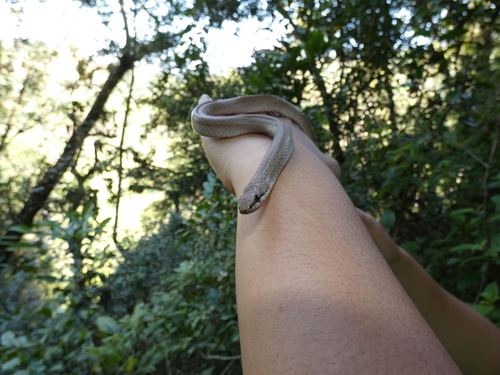 White-lipped Smooth SnakeLiophidium torquatumHarmless
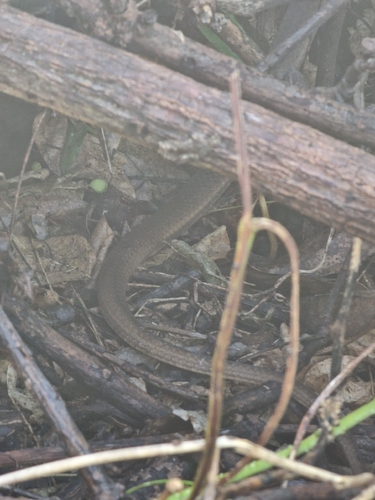 Mayotte Smooth SnakeLiophidium mayottensisHarmless
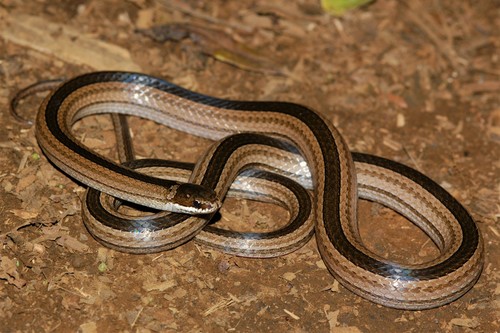 Gold-collared SnakeLiophidium rhodogasterHarmless
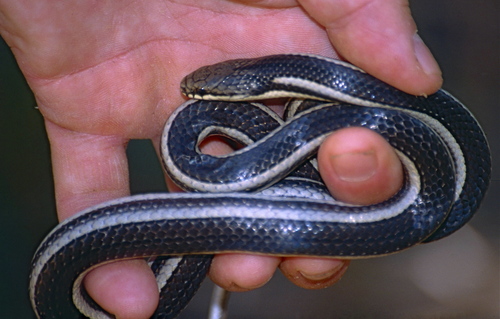 Madagascar Black-backed Smooth SnakeLiophidium vaillantiHarmless
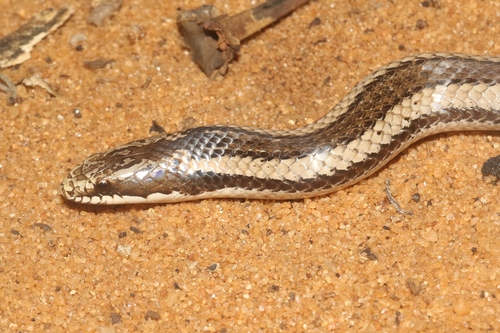 Toliara Smooth SnakeLiophidium chabaudiHarmless
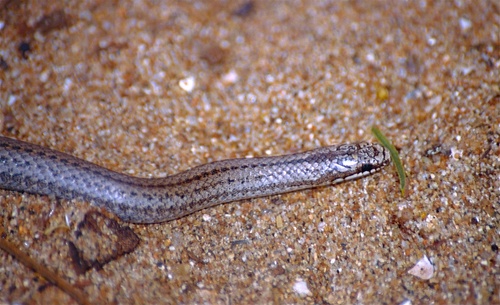 Befandriana Smooth SnakeLiophidium appertiHarmless
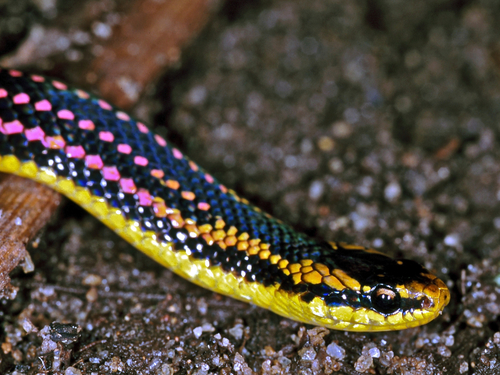 Red-striped Smooth SnakeLiophidium pattoniHarmless
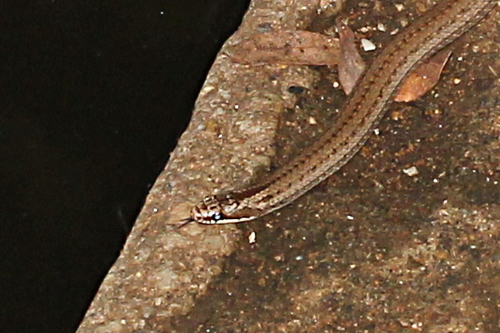 Three-lined Smooth SnakeLiophidium trilineatumHarmless
- No photoAnatelo Forest Smooth SnakeLiophidium therezieniHarmless
Keep learning
- What Is a Snake? Anatomy and the BasicsA clear overview of what makes a snake a snake: limbless body plan, anatomy, evolution from lizards, species diversity, and why they are ectothermic.
- How Snakes Move, Hunt, and EatHow snakes move without legs, hunt as ambushers or active foragers, kill by constriction or venom, and swallow prey wider than their head.
- What Do Snakes Eat?All snakes are carnivores. Learn what snakes eat, how diet changes with size and age, how often they feed, and how they hunt and swallow prey.
- Venomous vs Nonvenomous: How to Tell the DifferenceThe folk rules for telling venomous snakes apart, where each one fails, and why location-based identification beats guessing by sight.