
Genus · Colubridae
Types of water snakes
2 species make up the genus Limnophis, the snakes commonly called water snakes. None are considered dangerous to humans.
About African water snakes
Limnophis is a small genus of secretive African water snakes built for life in marshes and slow streams.
Limnophis is a genus of small African colubrid snakes placed in the family Colubridae, the largest and most varied snake family. Our database holds two species: the Bangweulu Water Snake (Limnophis bangweolicus) and the Bicolored Swamp Snake (Limnophis bicolor). Both are tied to wet habitats in central and southern Africa, which is reflected in the genus name, drawn from Greek roots meaning marsh or pool. These are wetland specialists, not the large, widespread water snakes familiar from North America, and they remain poorly studied compared to common colubrids.
As wetland snakes, members of Limnophis live in and around swamps, floodplains, marshes, and slow-moving fresh water in the African interior. In general terms they are modest in size, slender, and unremarkable in pattern, which suits a life spent hunting near water and sheltering in dense vegetation. Like most aquatic and semi-aquatic colubrids, they feed on small prey associated with their habitat, such as amphibians and small fish, and are expected to lay eggs as the typical colubrid reproductive mode, though detailed natural-history records for these specific species are limited.
On safety, these are small non-front-fanged colubrids and are not considered dangerous to people. They are not vipers, cobras, or other front-fanged venomous snakes, and there is no evidence they pose a medical threat. Even so, the responsible approach to any wild snake is to observe it and leave it alone rather than handle it, since field identification is easy to get wrong. If anyone is ever bitten by a snake they cannot confidently identify, treat it as a medical matter, stay calm, and seek care promptly through local emergency services or, in the United States, Poison Control at 1-800-222-1222.
Limnophis belongs to the Colubridae family (Colubrids). The largest snake family, and the one most snakes you meet belong to. Typically round pupils, a head only slightly wider than the neck, and no heat-sensing facial pit or rattle. Scales may be smooth and glossy or keeled and matte depending on the species.
Danger: Almost all colubrids are harmless. A small number are rear-fanged with medically significant venom, the boomslang and the twig (vine) snakes of Africa being the dangerous exceptions. Most colubrids will flee or bluff rather than bite.
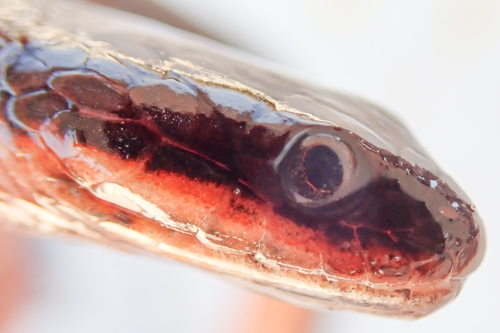
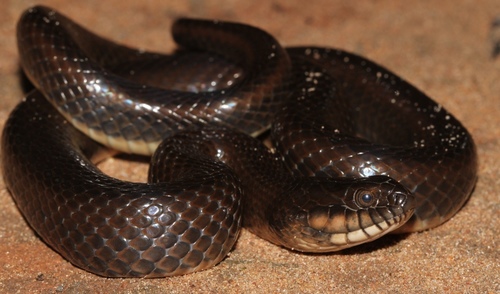
All species (2)
Keep learning
- What Is a Snake? Anatomy and the BasicsA clear overview of what makes a snake a snake: limbless body plan, anatomy, evolution from lizards, species diversity, and why they are ectothermic.
- How Snakes Move, Hunt, and EatHow snakes move without legs, hunt as ambushers or active foragers, kill by constriction or venom, and swallow prey wider than their head.
- What Do Snakes Eat?All snakes are carnivores. Learn what snakes eat, how diet changes with size and age, how often they feed, and how they hunt and swallow prey.
- Venomous vs Nonvenomous: How to Tell the DifferenceThe folk rules for telling venomous snakes apart, where each one fails, and why location-based identification beats guessing by sight.