
Genus · Typhlopidae
Types of blind-snakes
7 species make up the genus Letheobia, the snakes commonly called blind-snakes. None are considered dangerous to humans.
About Blind snakes
Letheobia is a genus of small, burrowing African blind snakes that spend almost their entire lives underground.
Letheobia belongs to the family Typhlopidae, the typical blind snakes, a large group of fossorial reptiles found across the warmer regions of the world. The genus is centered in sub-Saharan Africa, with a reach into parts of northeastern Africa and the Middle East. Like other typhlopids, Letheobia species are specialized for a life spent tunneling through soil and leaf litter rather than moving across the surface.
Members of this genus look more like earthworms than typical snakes, which is why they are so easily overlooked. They have a slender, near cylindrical body of roughly uniform width, smooth glossy scales, a short blunt tail often ending in a tiny spine, and tiny vestigial eyes that are reduced to dark spots beneath the head scales. Those eyes can sense light and dark but form no real image, which is all a perpetual burrower needs. Most species are small, commonly in the range of a few inches to about a foot, with pale, pinkish, or faintly patterned coloration suited to underground life.
Recognizing Letheobia in general terms means looking for the classic blind snake build: a smooth worm-like body with no obvious neck, a rounded head not wider than the body, and the same kind of scales running around the entire circumference. Distinguishing one Letheobia species from another, or even separating the genus from related African blind snake genera, usually requires close examination of scale counts and skull features and is a task for specialists. Several species in this genus are known from very few specimens, so detailed field information is limited.
These snakes are completely harmless to people. They are not venomous, they are not rear-fanged, and their mouths are tiny and adapted for feeding on soft-bodied invertebrates, not for biting in defense. They cannot meaningfully hurt a human. The typical reaction of a blind snake when uncovered is to writhe and try to burrow back into cover. There is no medical danger from this genus.
Ecologically, Letheobia species feed mainly on small soil invertebrates, especially ants and termites along with their eggs and larvae, which they hunt within tunnel systems. They are secretive and rarely seen on the surface except after heavy rain or when soil is disturbed. As with many typhlopids, reproduction is by laying eggs, and clutches are generally small. By preying on social insects underground, blind snakes like these play a quiet role in soil ecosystems.
Letheobia belongs to the Typhlopidae family (Blindsnakes). Tiny, worm-like burrowing snakes that raid ant and termite nests. Looks like a small, glossy earthworm with smooth scales and no obvious neck, eyes, or pattern.
Danger: Harmless. They do not bite people and have no venom.
All species (7)
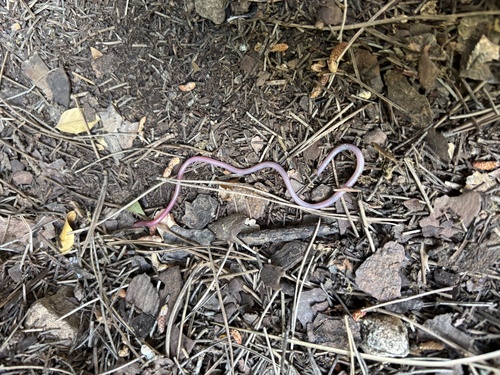 Israeli Worm SnakeLetheobia simoniHarmless
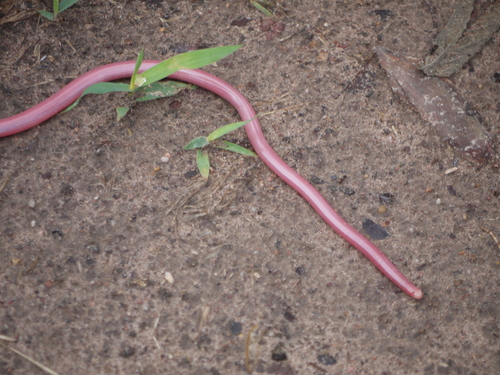 Gracile blind-snakeLetheobia gracilisHarmless
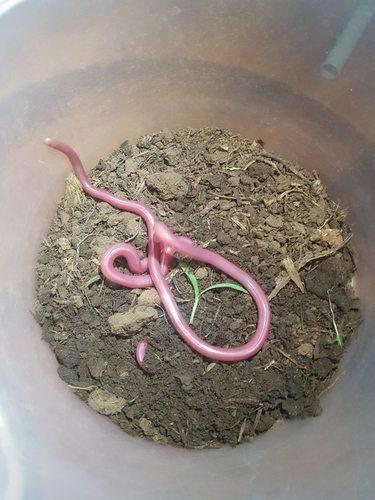 Letheobia akageraeHarmless
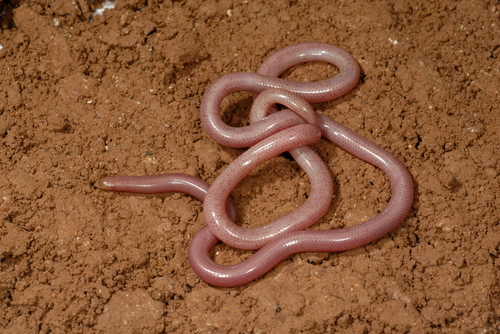 Letheobia episcopusHarmless
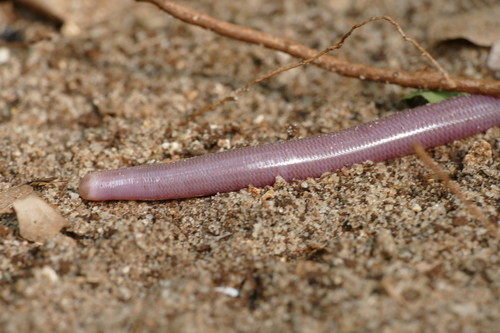 Swahili gracile blind-snakeLetheobia swahilicaHarmless
- No photoCameroon gracile blind-snakeLetheobia decorosusHarmless
- No photoEthiopian Blind SnakeLetheobia somalicaHarmless
Keep learning
- What Is a Snake? Anatomy and the BasicsA clear overview of what makes a snake a snake: limbless body plan, anatomy, evolution from lizards, species diversity, and why they are ectothermic.
- How Snakes Move, Hunt, and EatHow snakes move without legs, hunt as ambushers or active foragers, kill by constriction or venom, and swallow prey wider than their head.
- What Do Snakes Eat?All snakes are carnivores. Learn what snakes eat, how diet changes with size and age, how often they feed, and how they hunt and swallow prey.
- Venomous vs Nonvenomous: How to Tell the DifferenceThe folk rules for telling venomous snakes apart, where each one fails, and why location-based identification beats guessing by sight.