
Genus · Pseudoxyrhophiidae
Types of leaf-nosed snakes
2 species make up the genus Langaha, the snakes commonly called leaf-nosed snakes. None are considered dangerous to humans.
About Madagascar leaf-nosed snakes
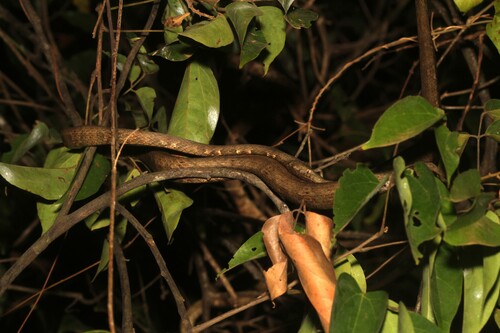
The leaf-nosed snakes of Madagascar, named for the bizarre fleshy appendage on the snout.
Langaha is a small genus of arboreal snakes endemic to Madagascar, placed in the family Pseudoxyrhophiidae, the dominant group of snakes on the island. The genus is best known for the strange snout projection that gives it the common name leaf-nosed snake. Our database tracks two species, including the widespread Madagascar leaf-nosed snake (Langaha madagascariensis) and the Ambilobe leaf-nosed snake (Langaha pseudoalluaudi), found in the dry and humid forests of the island.
These snakes are slender, well camouflaged tree dwellers that blend with twigs and branches. The most striking feature is the elongated nasal appendage, and Langaha is one of the few snakes that is strongly sexually dimorphic in this trait: males carry a long, tapering, pointed snout projection, while females have a flatter, leaf shaped or serrated one. Combined with their thin bodies and bark like coloring, this makes them very hard to spot in the canopy, which is the point. They hunt by ambush, relying on stillness and camouflage rather than speed.
Like many pseudoxyrhophiids, Langaha is rear-fanged and mildly venomous, using enlarged grooved teeth at the back of the jaw to subdue small prey such as lizards and frogs. The venom is adapted for these small animals and these snakes are not considered a serious danger to people, but rear-fanged is not the same as harmless. A bite can cause local pain and swelling, and individual reactions vary. Do not handle wild snakes. If a bite occurs, stay calm, keep the limb still, and seek medical care. In the US contact Poison Control at 1-800-222-1222; elsewhere contact local emergency services.
Langaha belongs to the Pseudoxyrhophiidae family (Malagasy snakes). A spectacular radiation of mostly harmless snakes centered on Madagascar. Highly variable; identification is usually by region and genus rather than a single family trait.
Danger: Considered harmless to humans. Some are mildly venomous (rear-fanged) but not medically significant.
All species (2)
Keep learning
- What Is a Snake? Anatomy and the BasicsA clear overview of what makes a snake a snake: limbless body plan, anatomy, evolution from lizards, species diversity, and why they are ectothermic.
- How Snakes Move, Hunt, and EatHow snakes move without legs, hunt as ambushers or active foragers, kill by constriction or venom, and swallow prey wider than their head.
- What Do Snakes Eat?All snakes are carnivores. Learn what snakes eat, how diet changes with size and age, how often they feed, and how they hunt and swallow prey.
- Venomous vs Nonvenomous: How to Tell the DifferenceThe folk rules for telling venomous snakes apart, where each one fails, and why location-based identification beats guessing by sight.