
Genus · Homalopsidae
Kualatahan
The genus Kualatahan contains a single species. It is not considered dangerous to humans.
About Pahang mud snake
A little-known Southeast Asian mud snake built for life in the muck of freshwater wetlands.
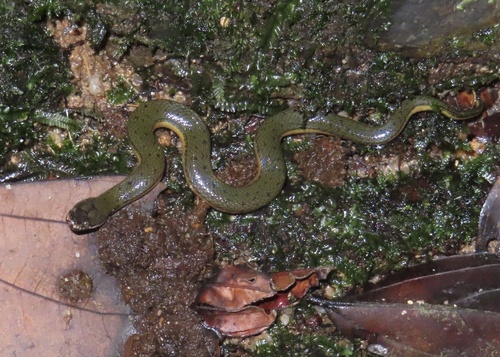
Kualatahan is a small genus in the family Homalopsidae, the group commonly called the mud snakes or Indo-Australian water snakes. The family is overwhelmingly aquatic or semi-aquatic, and its members spend their lives in muddy rivers, swamps, mangroves, rice paddies, and estuaries from South and Southeast Asia into northern Australia. Kualatahan sits within this family and is represented in our database by a single species, the Pahang mud snake, named for the Pahang region of Peninsular Malaysia where homalopsids of this kind occur.
Like other mud snakes, members of this genus are adapted for a watery, bottom-dwelling existence. Homalopsids typically have valvular nostrils set high on the snout and small eyes positioned toward the top of the head, which lets them breathe and watch while mostly submerged in shallow, silty water. Bodies tend to be stout to moderately built, and most are modestly sized, often under a meter. In general terms you would recognize a snake of this group as a thick-bodied, dull-colored water snake found in or near freshwater mud rather than a fast, dry-land species. Because Kualatahan is an obscure taxon, treat any precise color or scale detail as something to confirm against a regional field guide rather than assume.
Homalopsids are rear-fanged and mildly venomous, using enlarged grooved teeth at the back of the jaw to subdue prey such as fish, frogs, and crustaceans, which they hunt in the water. Their venom is adapted for small cold-blooded prey and these snakes are not considered dangerous to people, but rear-fanged does not mean harmless: a wild snake can still bite and a few people react badly to any snake bite, so do not handle a wild snake and do not assume any wild snake is safe to pick up. If a bite occurs, contact emergency services or US Poison Control at 1-800-222-1222 rather than treating it at home. Reproduction across the family is commonly live-bearing, with females giving birth to small litters in or near the water.
Kualatahan belongs to the Homalopsidae family (Mud & water snakes). Aquatic, mud-dwelling snakes with upward-facing eyes and nostrils. Stout, often drab snakes with upturned nostrils, found in or near muddy water.
Danger: Rear-fanged with mild venom; not considered dangerous to humans.
All species (1)
Keep learning
- What Is a Snake? Anatomy and the BasicsA clear overview of what makes a snake a snake: limbless body plan, anatomy, evolution from lizards, species diversity, and why they are ectothermic.
- How Snakes Move, Hunt, and EatHow snakes move without legs, hunt as ambushers or active foragers, kill by constriction or venom, and swallow prey wider than their head.
- What Do Snakes Eat?All snakes are carnivores. Learn what snakes eat, how diet changes with size and age, how often they feed, and how they hunt and swallow prey.
- Venomous vs Nonvenomous: How to Tell the DifferenceThe folk rules for telling venomous snakes apart, where each one fails, and why location-based identification beats guessing by sight.