
Genus · Pseudoxyrhophiidae
Types of night snakes
3 species make up the genus Ithycyphus, the snakes commonly called night snakes. None are considered dangerous to humans.
About Malagasy night snakes
Slender, rear-fanged night snakes found only on Madagascar, mildly venomous to their prey but not considered dangerous to people.
Ithycyphus is a small genus of snakes in the family Pseudoxyrhophiidae, a large group of mostly mild-venomed colubroid snakes centered on Madagascar with a few relatives in Africa and the Comoros. The genus is endemic to Madagascar, meaning it occurs nowhere else in the world. Our database lists three species, including the snakes sometimes called the Perinet night snake and the Southwestern night snake. Like most of their family, they are part of the radiation of Malagasy snakes that diversified in isolation on the island.
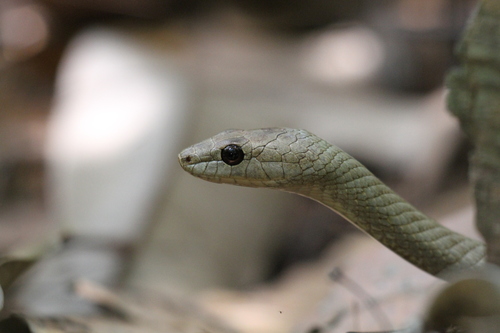
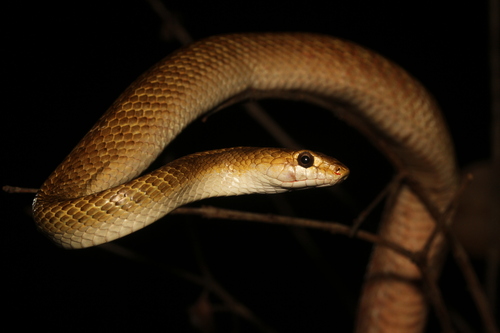
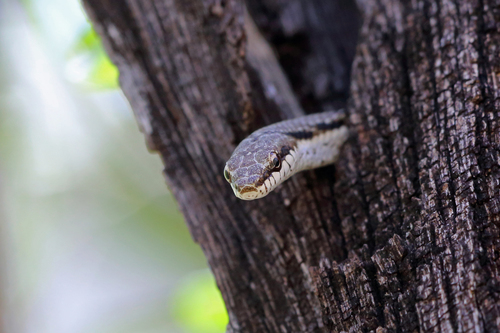
These are slim, elongate snakes with relatively large eyes, a build typical of active, alert predators rather than heavy-bodied ambushers. Members of the family Pseudoxyrhophiidae span a wide range of lifestyles, from burrowers to tree climbers, and the night snakes of this genus are generally agile, slender-bodied animals. Coloration in the group tends toward browns, grays, and tans that blend with leaf litter and bark, often with subtle patterning. Without species-level certainty for every member, the safest way to recognize one is by context: a thin Malagasy snake with a long tail and prominent eyes is likely a member of this broader night-snake assemblage.
Habitat across the genus follows Madagascar's varied landscapes, from humid eastern rainforest around localities like Perinet (Andasibe) to the drier deciduous forests and scrub of the southwest. Pseudoxyrhophiids as a family occupy forest floor, low vegetation, and trees, and many are active at night or in low light, which is reflected in the common name. They are part of a functioning native ecosystem and, like nearly all Malagasy wildlife, are sensitive to deforestation and habitat loss.
On safety: snakes in this genus are rear-fanged, meaning they have enlarged, grooved teeth toward the back of the upper jaw and a mild venom delivered by chewing rather than by hollow front fangs. This venom is adapted to subdue small prey such as lizards and is not regarded as medically significant to humans. They are not aggressive and are not considered dangerous. That said, no wild snake should be handled. A bite from any rear-fanged snake can cause local irritation, and bites should be avoided rather than risked. If a bite from any snake causes symptoms beyond minor local discomfort, do not wait it out: contact emergency services or US Poison Control at 1-800-222-1222, or your local equivalent.
Ecologically, these night snakes feed mainly on small vertebrates, with lizards being a common prey item among slender Malagasy snakes of this type. Reproduction in the family is generally by egg-laying. Behaviorally they are secretive and non-confrontational, relying on camouflage and quick movement rather than defense. Because several species are poorly studied, detailed life-history data for individual members is limited, and much of what is known comes from family-level and regional understanding of Madagascar's snake fauna.
Ithycyphus belongs to the Pseudoxyrhophiidae family (Malagasy snakes). A spectacular radiation of mostly harmless snakes centered on Madagascar. Highly variable; identification is usually by region and genus rather than a single family trait.
Danger: Considered harmless to humans. Some are mildly venomous (rear-fanged) but not medically significant.
All species (3)
Keep learning
- What Is a Snake? Anatomy and the BasicsA clear overview of what makes a snake a snake: limbless body plan, anatomy, evolution from lizards, species diversity, and why they are ectothermic.
- How Snakes Move, Hunt, and EatHow snakes move without legs, hunt as ambushers or active foragers, kill by constriction or venom, and swallow prey wider than their head.
- What Do Snakes Eat?All snakes are carnivores. Learn what snakes eat, how diet changes with size and age, how often they feed, and how they hunt and swallow prey.
- Venomous vs Nonvenomous: How to Tell the DifferenceThe folk rules for telling venomous snakes apart, where each one fails, and why location-based identification beats guessing by sight.