
Genus · Homalopsidae
Types of mud snakes
5 species make up the genus Hypsiscopus, the snakes commonly called mud snakes. None are considered dangerous to humans.
About Asian mud snakes
Small, semiaquatic rear-fanged snakes that hunt in the muddy water of Southeast Asian rice paddies, ponds, and slow streams.
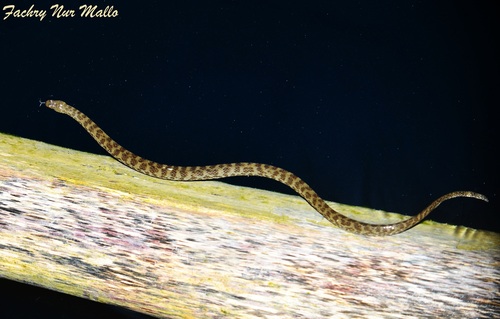
Hypsiscopus is a genus of small water snakes in the family Homalopsidae, the Asian and Australasian mud snakes. The whole family is built for life in water and mud, and Hypsiscopus is a textbook example. These are aquatic to semiaquatic snakes that spend most of their lives in the soft margins of freshwater habitats. Members are commonly called mud snakes or rice paddy snakes because flooded paddies are some of their favorite ground.
The genus is found across mainland and island Southeast Asia, with members reaching parts of southern China, the Indochinese peninsula, the Malay region, and Indonesian islands such as Sulawesi. Within that broad range they stick to lowland wetlands: rice fields, irrigation canals, marshes, ponds, ditches, and the still or slow edges of rivers. They are tolerant of disturbed, human-modified water and are often among the snakes most encountered by farmers working flooded land.
In general terms, recognize a Hypsiscopus as a smallish, smooth-bodied water snake, usually well under a meter long, with a body shape suited to swimming and burrowing in mud. Like other homalopsids, they have nostrils set high on the snout, often with valves that close underwater, an adaptation for an aquatic ambush life. Color tends toward plain browns and grays above with a paler belly, sometimes with a subtle pattern. Precise scale counts and markings vary by species, so confident species-level identification depends on locality and close examination rather than color alone.
These snakes are rear-fanged and mildly venomous. They carry enlarged grooved teeth at the back of the upper jaw and a Duvernoy gland that produces a venom used to subdue small prey such as fish and frogs. To people, Hypsiscopus is considered harmless in the sense that it is not a source of dangerous envenomation, and it is not aggressive. That said, no wild snake should be handled. A rear-fanged bite can still cause local pain, swelling, or irritation, and handling a wild animal stresses it and risks injury to both parties. Do not pick up a snake to identify it.
Ecologically, Hypsiscopus are nocturnal to crepuscular hunters that ambush and pursue prey in shallow water, feeding mainly on fish and amphibians. As members of Homalopsidae they are live-bearing, giving birth to fully formed young rather than laying eggs, which fits their fully aquatic lifestyle. They are an ordinary, beneficial part of wetland food webs, helping keep small fish and frog populations in check, and pose no meaningful threat to humans who simply leave them alone.
Hypsiscopus belongs to the Homalopsidae family (Mud & water snakes). Aquatic, mud-dwelling snakes with upward-facing eyes and nostrils. Stout, often drab snakes with upturned nostrils, found in or near muddy water.
Danger: Rear-fanged with mild venom; not considered dangerous to humans.
All species (5)
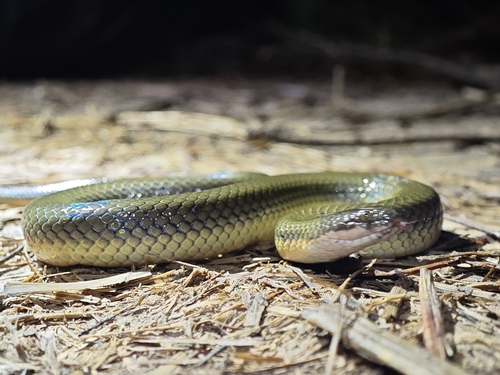
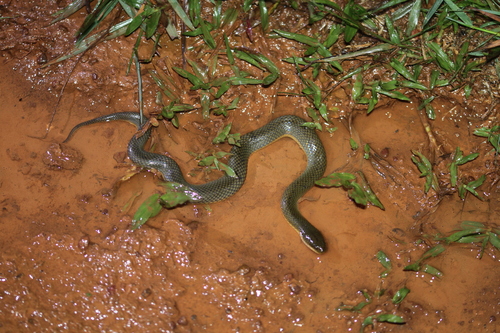
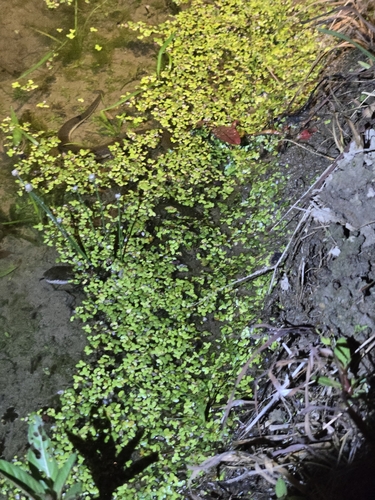
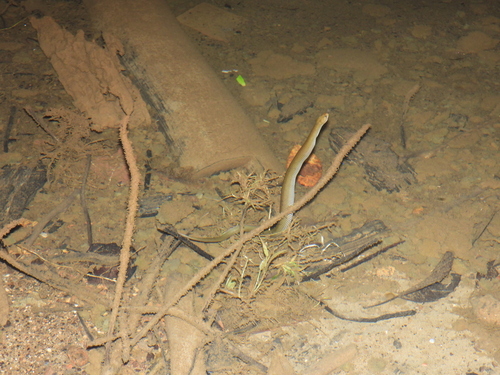
Keep learning
- What Is a Snake? Anatomy and the BasicsA clear overview of what makes a snake a snake: limbless body plan, anatomy, evolution from lizards, species diversity, and why they are ectothermic.
- How Snakes Move, Hunt, and EatHow snakes move without legs, hunt as ambushers or active foragers, kill by constriction or venom, and swallow prey wider than their head.
- What Do Snakes Eat?All snakes are carnivores. Learn what snakes eat, how diet changes with size and age, how often they feed, and how they hunt and swallow prey.
- Venomous vs Nonvenomous: How to Tell the DifferenceThe folk rules for telling venomous snakes apart, where each one fails, and why location-based identification beats guessing by sight.