
Genus · Homalopsidae
Types of water snakes
4 species make up the genus Homalopsis, the snakes commonly called water snakes. None are considered dangerous to humans.
About puff-faced water snakes
Thick-bodied Southeast Asian water snakes built for hunting fish and frogs in muddy, slow-moving water.
Homalopsis is a small genus of aquatic snakes in the family Homalopsidae, the Old World mud snakes and water snakes. The family is centered on South and Southeast Asia and northern Australia, and almost all of its members are tied to water. Homalopsis sits squarely in that mold: stout, semi-aquatic snakes of the lowland wetlands, with four recognized species in our database including the Puff-faced Water Snake, Jack's Water Snake, and Deuve's Water Snake.
These snakes live in the freshwater and brackish lowlands of mainland Southeast Asia, in habitats such as rice paddies, canals, marshes, slow rivers, ponds, and flooded fields. Like other homalopsids they are strongly adapted to an aquatic life. A common family trait is the placement of the nostrils high on the snout, often with valves that close underwater, which lets the snake breathe at the surface while keeping most of its body submerged.
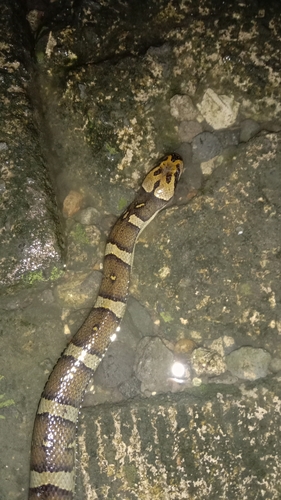
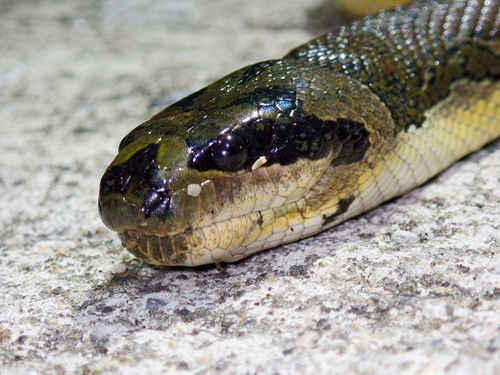
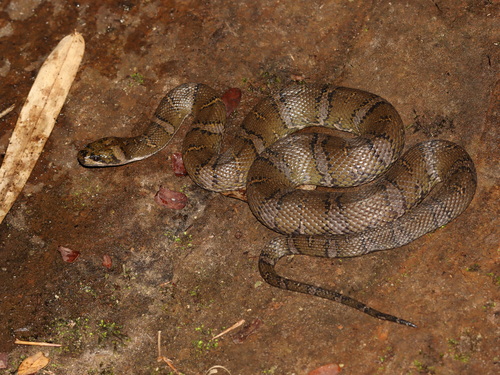
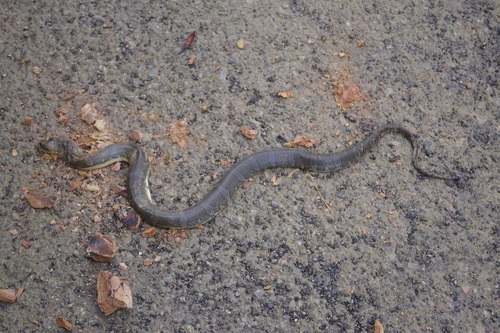
In general terms, members of Homalopsis are recognized by a heavy, somewhat flattened body, a relatively broad head set off from the neck, and keeled or rough dorsal scales that give a non-glossy look. Many show dark bands or blotches over a paler ground color, useful camouflage against a muddy bottom. The genus name and the common name puff-faced refer to the swollen, padded appearance around the face and snout seen in the type species.
Homalopsids are rear-fanged and mildly venomous. They carry enlarged grooved teeth at the back of the upper jaw and a Duvernoy's gland that delivers a weak venom used to subdue small aquatic prey. To people these snakes are not considered dangerous, and bites typically cause only minor local effects, but rear-fanged does not mean harmless. Never assume a wild snake is safe to handle, avoid picking one up, and if a bite causes anything beyond trivial symptoms seek medical care. In the US contact Poison Control at 1-800-222-1222, or call local emergency services.
Ecologically these are ambush and active foragers of the water column and the mud, feeding mainly on fish and amphibians such as frogs and tadpoles. They are most active at night. Like many homalopsids they are live-bearing, giving birth to litters of young rather than laying eggs, which suits a fully aquatic lifestyle. They are an important part of wetland food webs and are sometimes encountered by people in paddies and fishing areas.
Homalopsis belongs to the Homalopsidae family (Mud & water snakes). Aquatic, mud-dwelling snakes with upward-facing eyes and nostrils. Stout, often drab snakes with upturned nostrils, found in or near muddy water.
Danger: Rear-fanged with mild venom; not considered dangerous to humans.
All species (4)
Keep learning
- What Is a Snake? Anatomy and the BasicsA clear overview of what makes a snake a snake: limbless body plan, anatomy, evolution from lizards, species diversity, and why they are ectothermic.
- How Snakes Move, Hunt, and EatHow snakes move without legs, hunt as ambushers or active foragers, kill by constriction or venom, and swallow prey wider than their head.
- What Do Snakes Eat?All snakes are carnivores. Learn what snakes eat, how diet changes with size and age, how often they feed, and how they hunt and swallow prey.
- Venomous vs Nonvenomous: How to Tell the DifferenceThe folk rules for telling venomous snakes apart, where each one fails, and why location-based identification beats guessing by sight.