
Genus · Homalopsidae
Types of mud snakes
2 species make up the genus Homalophis, the snakes commonly called mud snakes. None are considered dangerous to humans.
About mud snakes
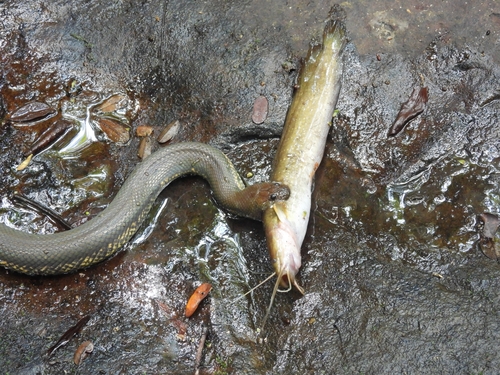
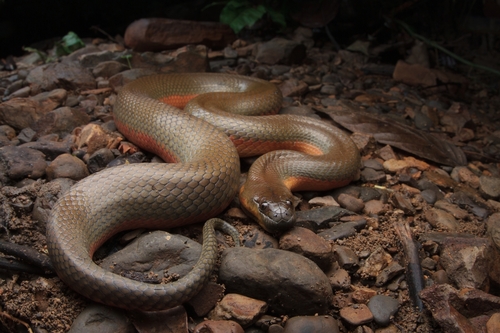
Homalophis is a small genus of aquatic, rear-fanged mud snakes living in the freshwater systems of Borneo and the Greater Sunda region.
Homalophis is a genus in the family Homalopsidae, the Indo-Australian and Asian water and mud snakes. Homalopsids are a group of mildly venomous, rear-fanged snakes built for life in water and soft sediment, and Homalophis sits among them as a small genus with only a couple of recognized species. Two of these are the Kapuas Mud Snake and the Blotched-Lipped Mud Snake, both associated with the rivers and waterways of Borneo and nearby parts of the Sunda region. Because the genus is small and poorly studied, it is best understood through the well-documented traits shared across the homalopsid family rather than through species-level claims that are not well established.
Like other mud snakes, members of Homalophis are tied to fresh water and the muddy margins of rivers, streams, and forested wetlands. Homalopsids in general show adaptations for an aquatic, bottom-dwelling life, including eyes and nostrils set high on the head and the ability to spend long periods in the water. In broad terms these are stout to moderately built snakes with smooth or weakly keeled scales and patterning that blends into silty, vegetated water. The Blotched-Lipped Mud Snake takes its name from markings around the lip scales, a typical example of the subtle, locally specific patterns that distinguish one mud snake from another.
Homalophis snakes are rear-fanged and mildly venomous, meaning they have enlarged grooved teeth toward the back of the upper jaw and a venom adapted for subduing small aquatic prey such as fish and amphibians. They are not considered dangerous to people and are generally regarded as shy, but rear-fanged does not mean harmless, and any wild snake can bite. Do not handle wild snakes. If a bite occurs and symptoms develop, seek medical care promptly: in the US contact Poison Control at 1-800-222-1222, and elsewhere call local emergency services. Like many homalopsids, these snakes are thought to give live birth rather than lay eggs, and they spend most of their lives in or near the water they hunt in.
Homalophis belongs to the Homalopsidae family (Mud & water snakes). Aquatic, mud-dwelling snakes with upward-facing eyes and nostrils. Stout, often drab snakes with upturned nostrils, found in or near muddy water.
Danger: Rear-fanged with mild venom; not considered dangerous to humans.
All species (2)
Keep learning
- What Is a Snake? Anatomy and the BasicsA clear overview of what makes a snake a snake: limbless body plan, anatomy, evolution from lizards, species diversity, and why they are ectothermic.
- How Snakes Move, Hunt, and EatHow snakes move without legs, hunt as ambushers or active foragers, kill by constriction or venom, and swallow prey wider than their head.
- What Do Snakes Eat?All snakes are carnivores. Learn what snakes eat, how diet changes with size and age, how often they feed, and how they hunt and swallow prey.
- Venomous vs Nonvenomous: How to Tell the DifferenceThe folk rules for telling venomous snakes apart, where each one fails, and why location-based identification beats guessing by sight.