
Genus · Cyclocoridae
Types of cylindrical snakes
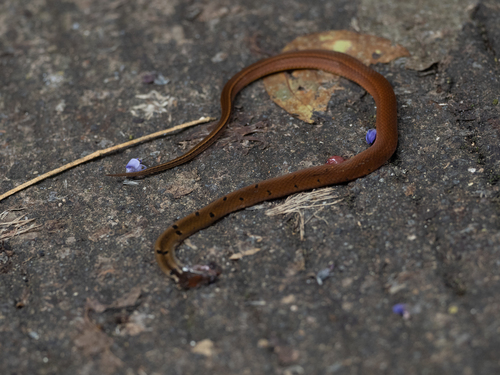
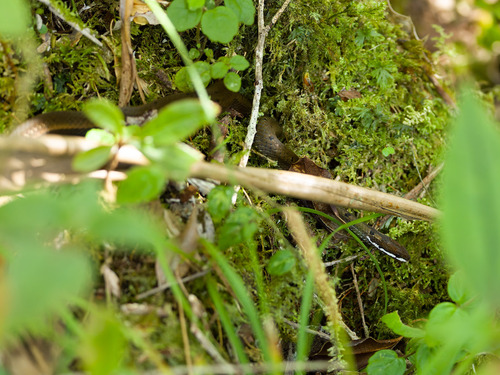
2 species make up the genus Hologerrhum, the snakes commonly called cylindrical snakes. None are considered dangerous to humans.
About Philippine cylindrical snakes
A tiny genus of secretive, harmless burrowing snakes found only in the Philippines.
Hologerrhum is a small genus of snakes endemic to the Philippines, with just a couple of recognized species, including the Philippine Cylindrical Snake and Dermal's Philippine Water Snake. It belongs to the family Cyclocoridae, a recently recognized group of snakes restricted to the Philippine archipelago. These are not the household colubrids of mainland Asia. They form their own distinct lineage that diverged long ago, and studying them is part of how scientists piece together the deep evolutionary history of snakes in island Southeast Asia.
Members of this genus are small, slender, smooth-scaled snakes adapted to a low-profile, partly hidden life. Like most cyclocorids they favor forest floors, leaf litter, and moist soil, and they tend to stay out of sight. They are best recognized by where they live rather than by any single flashy field mark. A small, harmless-looking snake encountered in Philippine forest leaf litter or near forest streams is the kind of animal this group contains. Because the genus is poorly studied and rarely seen, precise field identification is genuinely difficult, and many details of their biology remain unknown.
These snakes are not dangerous to people. They are small, non-aggressive, and are not known to be a medical threat. As with any wild snake, the right move is to leave it alone and observe from a distance rather than handle it, both for your safety and the animal's. If a snakebite of any kind ever occurs and the species is uncertain, treat it as a medical situation: stay calm, keep the limb still, and seek emergency care or contact US Poison Control at 1-800-222-1222 or your local emergency services. Their ecology is only partly documented, but cyclocorids in general are thought to feed on small prey such as invertebrates and small vertebrates and to reproduce by laying eggs, consistent with other small forest-floor snakes of the region.
Hologerrhum belongs to the Cyclocoridae family (Philippine snakes). A small family of harmless snakes endemic to the Philippines. Small, secretive snakes; identification is by region and genus.
Danger: Harmless.
All species (2)
Keep learning
- What Is a Snake? Anatomy and the BasicsA clear overview of what makes a snake a snake: limbless body plan, anatomy, evolution from lizards, species diversity, and why they are ectothermic.
- How Snakes Move, Hunt, and EatHow snakes move without legs, hunt as ambushers or active foragers, kill by constriction or venom, and swallow prey wider than their head.
- What Do Snakes Eat?All snakes are carnivores. Learn what snakes eat, how diet changes with size and age, how often they feed, and how they hunt and swallow prey.
- Venomous vs Nonvenomous: How to Tell the DifferenceThe folk rules for telling venomous snakes apart, where each one fails, and why location-based identification beats guessing by sight.