
Genus · Elapidae
Types of rinkhals
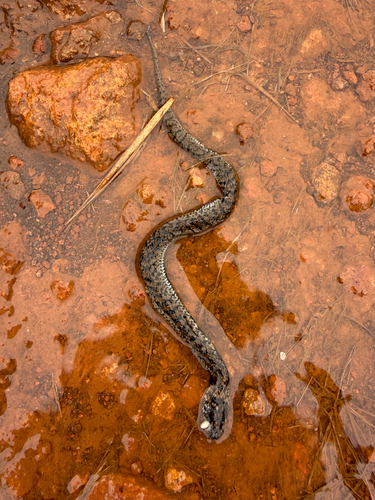
2 species make up the genus Hemachatus, the snakes commonly called rinkhals. All of them are venomous.
About rinkhals (ring-necked spitting cobras)
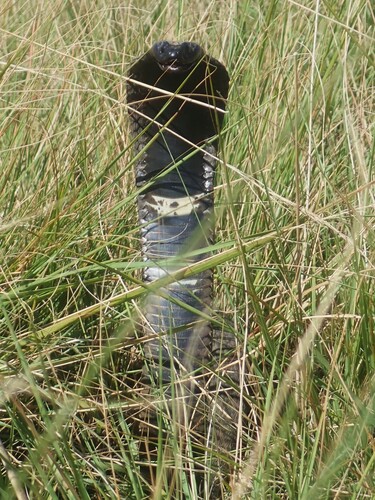
The rinkhals is an African elapid that spits venom and plays dead, set apart from true cobras by its keeled scales and live birth.
Hemachatus is a small genus in the family Elapidae, the group that also holds true cobras, mambas, coral snakes, and sea snakes. It has long been treated as a single species, the rinkhals (Hemachatus haemachatus), and recent work recognizes a small number of distinct forms within it, such as the widespread common rinkhals and the localized Nyanga rinkhals. The genus is closely related to the true cobras (Naja) and shares their iconic defensive hood, but it sits on its own branch. The most telling difference is that Hemachatus has strongly keeled, ridged body scales rather than the smooth scales of true cobras, and it gives birth to live young instead of laying eggs.
Rinkhals are found in southern Africa, centered on South Africa and reaching into nearby highland regions including parts of Zimbabwe and Lesotho. They favor cooler, moist grasslands, montane areas, marshy ground, and the edges of farmland, often at higher elevations than many true cobras tolerate. In general appearance a rinkhals is a medium-sized snake, commonly a little over one meter long, dark above with one or two pale bands across the throat that show clearly when it rears and spreads its hood. The name comes from these neck rings. Diet runs to toads, frogs, small mammals, and other snakes, and the female bears live litters rather than laying a clutch.
The rinkhals is venomous and is a spitting elapid, capable of ejecting venom forward toward a perceived threat, with the eyes a frequent target. It is also famous for a dramatic death-feigning display, rolling onto its back with mouth open when cornered. Venom in the eyes causes intense pain and can damage sight, and a bite is a medical emergency. Do not approach, corner, or attempt to handle a wild rinkhals or any cobra-like snake, and wear eye protection only if you must be near one for work reasons. If venom reaches the eyes, flush gently with clean water and seek care at once. For any bite or eye exposure, contact emergency services immediately, and in the US you can also reach Poison Control at 1-800-222-1222.
Hemachatus belongs to the Elapidae family (Cobras, mambas, coral & sea snakes). Front-fanged venomous snakes, many with potent neurotoxic venom. Usually slender with a head barely wider than the neck and fixed front fangs (not the folding fangs of vipers). Coral snakes are boldly ringed; sea snakes have a flattened, paddle-like tail.
Danger: All elapids are venomous and the family is responsible for a large share of fatal snakebites worldwide. Many are shy, but bites can be life-threatening. Treat any bite as a medical emergency.
All species (2)
Keep learning
- Venomous vs Nonvenomous: How to Tell the DifferenceThe folk rules for telling venomous snakes apart, where each one fails, and why location-based identification beats guessing by sight.
- Are Snakes Dangerous? The Real Risk, in PerspectiveMost snakes are harmless and avoid people. Here is the honest picture of snakebite risk worldwide and how to lower your own.
- Snake Venom Explained: How It Works and WhyWhat snake venom actually is, why it evolved, the main venom types, fang delivery, how antivenom works, and why ranking the most venomous snake is hard.
- How Snakes Move, Hunt, and EatHow snakes move without legs, hunt as ambushers or active foragers, kill by constriction or venom, and swallow prey wider than their head.