
Genus · Colubridae
Types of keelbacks
10+ species make up the genus Helicops, the snakes commonly called keelbacks. None are considered dangerous to humans.
About South American watersnakes
Helicops are highly aquatic Neotropical snakes that hunt fish and amphibians in the rivers and wetlands of South America.
Helicops is a genus of aquatic snakes traditionally placed in the family Colubridae, the largest and most varied family of snakes. Colubridae is a sprawling group that includes the majority of the world's harmless and mildly venomous species, and within it Helicops sits among the New World watersnakes. As classification has been refined, many researchers now place Helicops in the subfamily Dipsadinae (the Neotropical dipsadines), but for general purposes it remains a colubrid-type snake rather than a member of the front-fanged venomous families like vipers or elapids.
These snakes are native to South America, ranging widely across tropical and subtropical regions including the Amazon and Orinoco basins and reaching into parts of the Atlantic forest and surrounding wetlands. They are tied closely to water and live in rivers, streams, lakes, marshes, flooded forests, and slow backwaters. Many species spend most of their lives in or near the water and are rarely found far from it.
In general terms, members of Helicops are recognizable as stout, water-adapted snakes with eyes and nostrils set high on the head, which lets them watch and breathe while staying mostly submerged. Keeled scales give many of them a rough texture, and patterns often run to bands, blotches, stripes, or spotting in browns, olives, and darker tones that blend with muddy water and riverbeds. Several common names reflect this look, such as the various keelbacks and the brown-banded watersnake. Telling individual species apart usually requires close attention to scale counts and locality rather than color alone.
Helicops are rear-fanged snakes, meaning any venom-conducting teeth sit toward the back of the upper jaw rather than at the front. They are not considered dangerous to people in the way vipers or coral snakes are, and bites typically cause only minor local effects. Even so, no wild snake should be handled. Rear-fanged species can deliver saliva and venom with a sustained or chewing bite, individual reactions vary, and identification mistakes in the field are easy to make. Treat any wild snake as best left alone, and if a bite occurs or a snake's identity is uncertain, seek medical evaluation rather than self-treating. In the United States contact Poison Control at 1-800-222-1222, and elsewhere contact local emergency services.
Ecologically, Helicops are predators of the water column. Their diet is dominated by fish and amphibians, including frogs and tadpoles, which they pursue and seize in the water. Activity is often nocturnal or crepuscular, and the snakes are agile swimmers that can stay hidden along banks and bottoms. Reproduction varies across the genus: some species lay eggs while others give live birth, a flexibility seen in a number of aquatic snake lineages. They are generally non-aggressive and rely on concealment and a quick retreat to water when threatened.
Helicops belongs to the Colubridae family (Colubrids). The largest snake family, and the one most snakes you meet belong to. Typically round pupils, a head only slightly wider than the neck, and no heat-sensing facial pit or rattle. Scales may be smooth and glossy or keeled and matte depending on the species.
Danger: Almost all colubrids are harmless. A small number are rear-fanged with medically significant venom, the boomslang and the twig (vine) snakes of Africa being the dangerous exceptions. Most colubrids will flee or bluff rather than bite.
All species (17)
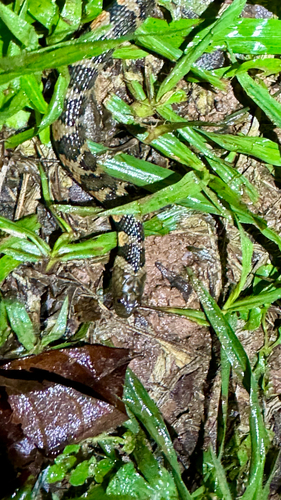 Brown-banded watersnakeHelicops angulatusHarmless
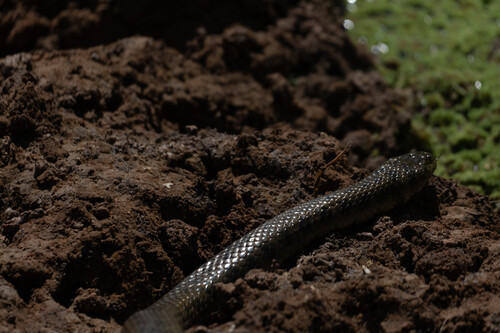 Leopard KeelbackHelicops leopardinusHarmless
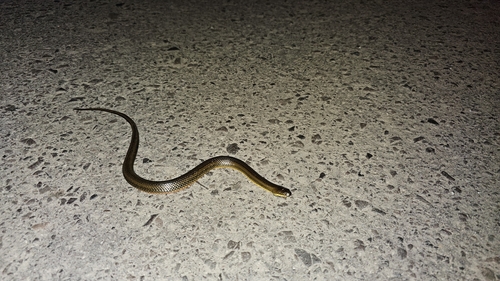 Brazilian KeelbackHelicops infrataeniatusHarmless
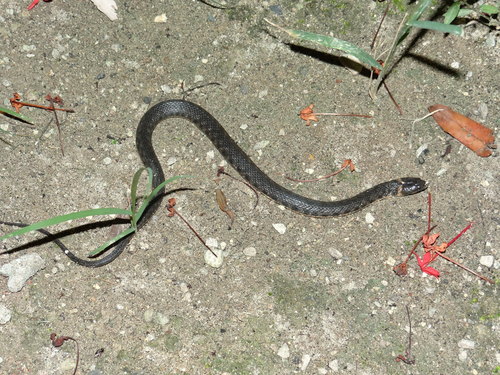 Daniel's KeelbackHelicops danieliHarmless
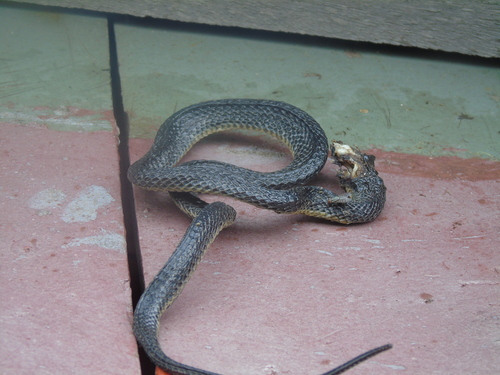 Wied's KeelbackHelicops carinicaudusHarmless
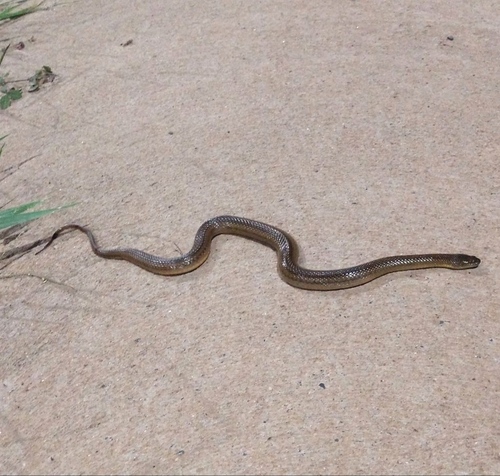 Olive KeelbackHelicops modestusHarmless
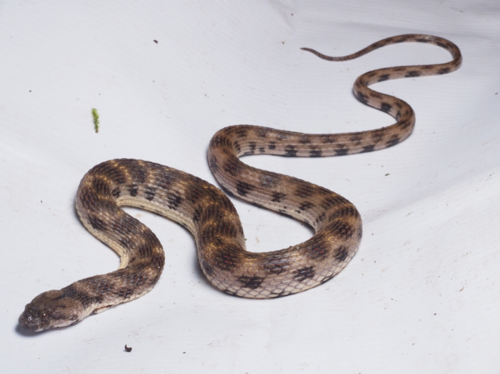 Shreve's KeelbackHelicops pastazaeHarmless
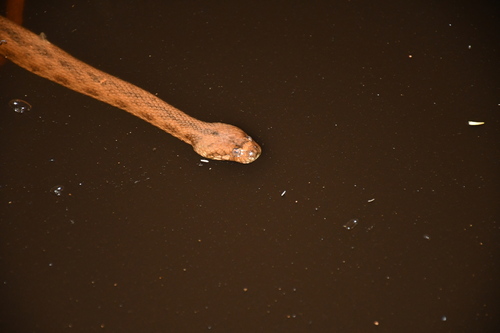 Norman's KeelbackHelicops polylepisHarmless
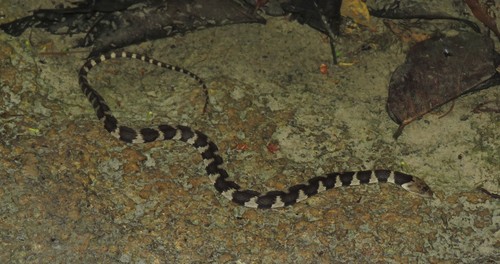 Apiaká KeelbackHelicops apiakaHarmless
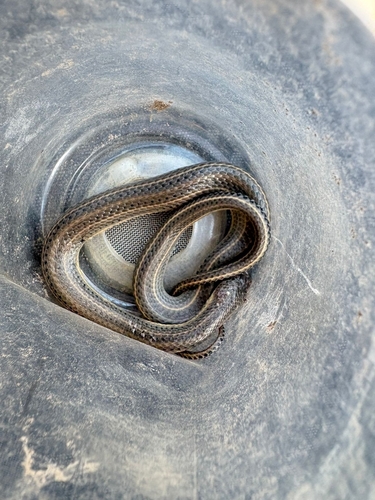 Equatorial KeelbackHelicops trivittatusHarmless
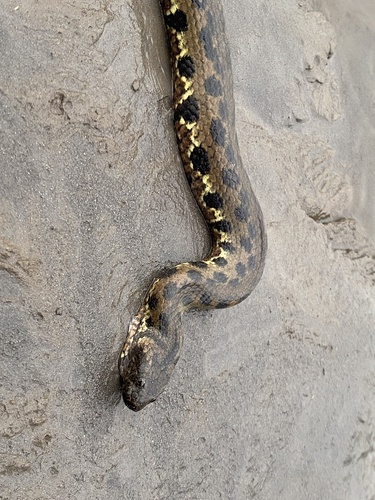 Hagmann's KeelbackHelicops hagmanniHarmless
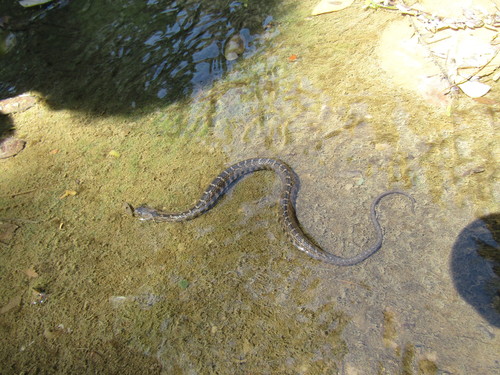 Hoge's KeelbackHelicops scalarisHarmless
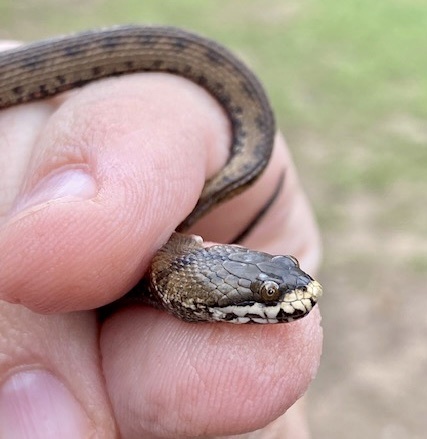 Spiral KeelbackHelicops petersiHarmless
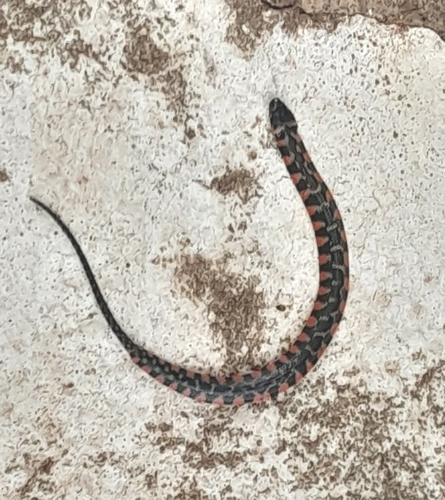 São Paulo KeelbackHelicops gomesiHarmless
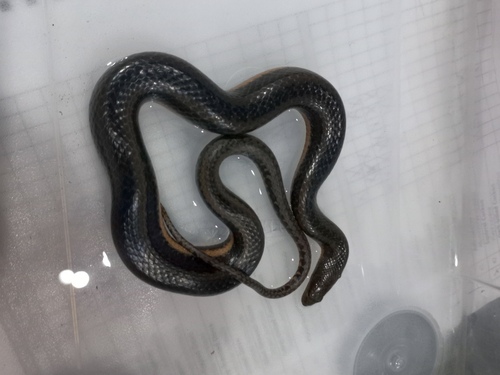 Helicops boitataHarmless
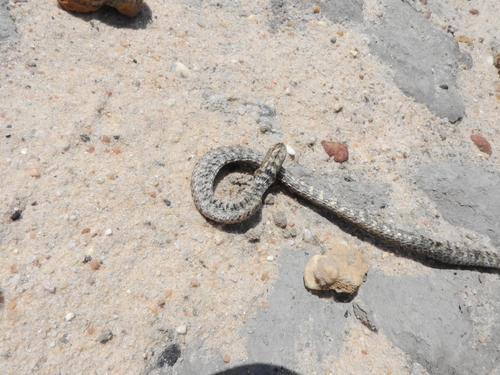 Tapajós River KeelbackHelicops tapajonicusHarmless
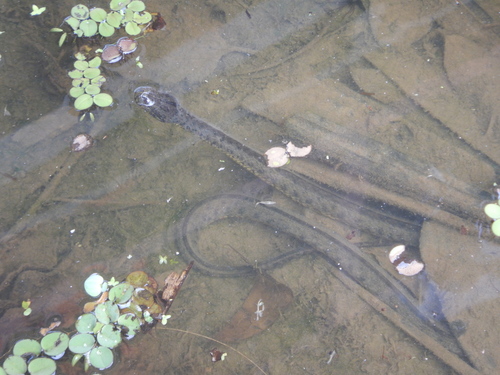 Peru KeelbackHelicops yacuHarmless
Keep learning
- What Is a Snake? Anatomy and the BasicsA clear overview of what makes a snake a snake: limbless body plan, anatomy, evolution from lizards, species diversity, and why they are ectothermic.
- How Snakes Move, Hunt, and EatHow snakes move without legs, hunt as ambushers or active foragers, kill by constriction or venom, and swallow prey wider than their head.
- What Do Snakes Eat?All snakes are carnivores. Learn what snakes eat, how diet changes with size and age, how often they feed, and how they hunt and swallow prey.
- Venomous vs Nonvenomous: How to Tell the DifferenceThe folk rules for telling venomous snakes apart, where each one fails, and why location-based identification beats guessing by sight.