
Genus · Colubridae
Types of water snakes
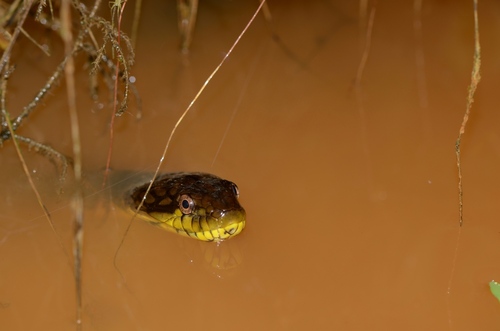
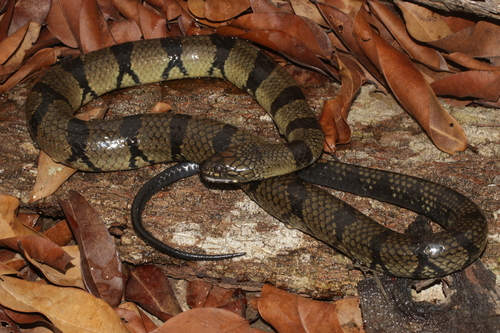
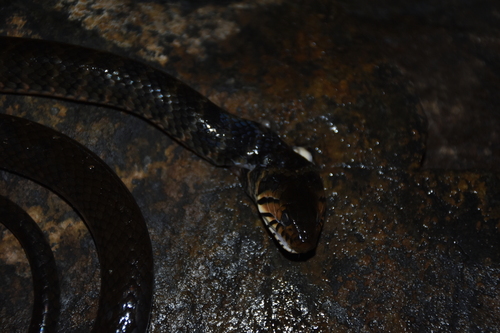
3 species make up the genus Grayia, the snakes commonly called water snakes. None are considered dangerous to humans.
About African water snakes
A small group of semi-aquatic African snakes built for life in and around fresh water.
Grayia is a genus of African water snakes in the family Colubridae, the large and diverse family that holds most of the world's typical snakes. The genus is small, with only a handful of recognized species, all of them tied to the lakes, rivers, swamps, and slow streams of sub-Saharan Africa. They are sometimes grouped near the homalopsid and natricine water snakes in older literature, but the modern placement keeps them within the broad colubrid radiation.
These snakes range across central, western, and eastern Africa, following permanent water through forest, savanna, and wetland. Members are strongly semi-aquatic, spending much of their time in or beside water and rarely straying far from it. The Congo Basin and the great lakes region are core habitat. Where water is reliable year round, Grayia can be locally common even if it is rarely noticed.
In general terms, Grayia are slender to moderately built snakes with smooth or weakly keeled scales, round pupils, and eyes set to function above the waterline. Coloration is typically subdued, often olive, brown, or gray with banding or speckling that breaks up the outline against a riverbed. Recognition in the field rests more on the aquatic habits and African range than on any single flashy marking, so confirm identification from locality and a clear look rather than color alone.
On safety, Grayia are non-venomous colubrids. They are not front-fanged and are not considered dangerous to people. As with any wild snake, a frightened animal can bite defensively and the wound should simply be cleaned, but there is no venom risk of medical concern from this genus. Do not handle wild snakes you cannot positively identify, and if you are ever unsure whether a bite involved a venomous species, treat it as an emergency: in the US call Poison Control at 1-800-222-1222 or local emergency services, and elsewhere contact local emergency care.
Ecologically these are fish and amphibian hunters, taking prey such as small fish, frogs, and tadpoles in and around the water where they live. Like most colubrids in the group they are egg-laying. Behavior is generally retiring; they swim well, dive to forage, and retreat to water or bankside cover when disturbed rather than standing their ground.
Grayia belongs to the Colubridae family (Colubrids). The largest snake family, and the one most snakes you meet belong to. Typically round pupils, a head only slightly wider than the neck, and no heat-sensing facial pit or rattle. Scales may be smooth and glossy or keeled and matte depending on the species.
Danger: Almost all colubrids are harmless. A small number are rear-fanged with medically significant venom, the boomslang and the twig (vine) snakes of Africa being the dangerous exceptions. Most colubrids will flee or bluff rather than bite.
All species (3)
Keep learning
- What Is a Snake? Anatomy and the BasicsA clear overview of what makes a snake a snake: limbless body plan, anatomy, evolution from lizards, species diversity, and why they are ectothermic.
- How Snakes Move, Hunt, and EatHow snakes move without legs, hunt as ambushers or active foragers, kill by constriction or venom, and swallow prey wider than their head.
- What Do Snakes Eat?All snakes are carnivores. Learn what snakes eat, how diet changes with size and age, how often they feed, and how they hunt and swallow prey.
- Venomous vs Nonvenomous: How to Tell the DifferenceThe folk rules for telling venomous snakes apart, where each one fails, and why location-based identification beats guessing by sight.