
Genus · Colubridae
Gongylosoma
5 species make up the genus Gongylosoma. None are considered dangerous to humans.
About reed snakes
Tiny, secretive ground dwellers of Asian forests that spend most of their lives hidden in leaf litter and soil.
Gongylosoma is a small genus of slender, diminutive snakes in the family Colubridae, the largest and most diverse snake family on Earth. Often grouped under the broad common name reed snakes, these animals belong to the wider assemblage of Southeast Asian forest-floor colubrids. They are minor, easily overlooked members of their ecosystems rather than large or familiar species, and several are known to science from only a handful of specimens.
Members of this genus live in South and Southeast Asia, with records spanning parts of southern China, the Indian subcontinent, Thailand, Peninsular Malaysia, and the islands of Indonesia such as Borneo, Sumatra, and Java. The names of described species give a sense of where they fit, including the Orange-bellied Snake, the Long-tailed Ringneck, the Common Ring-neck, and Gunther's Reed Snake. Their typical habitat is moist tropical and subtropical forest, where they shelter under leaf litter, logs, stones, and loose soil.
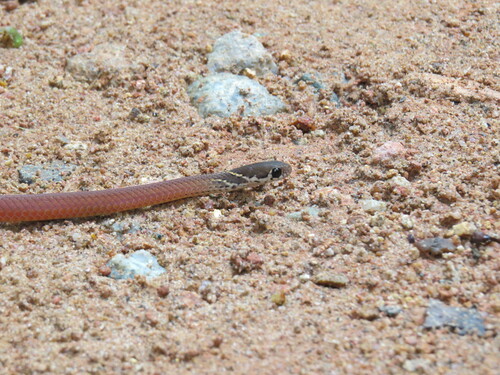
Recognizing these snakes in general terms means looking for a very small, thin, smooth-scaled body, usually well under a couple of feet long. Many forest colubrids of this type carry a pale collar or neck band, faint stripes, or a contrasting belly color, which is reflected in common names like ring-neck and orange-bellied. Because the genus is obscure and several species are poorly studied, the most reliable identification comes from a regional field guide or an expert rather than from a single field mark.
These are harmless, non-venomous snakes with no medical significance to people. They are not front-fanged venomous species, and they pose no danger to humans through a bite. As with any wild animal, the responsible approach is to observe without handling and to leave the snake undisturbed in its habitat. If anyone is ever bitten by a snake they cannot confidently identify, treat it as a medical matter and contact emergency services or US Poison Control at 1-800-222-1222.
Ecologically, small forest colubrids of this kind are predators of tiny prey, typically feeding on invertebrates and other small soft-bodied animals they find while foraging in the litter and soil. Like most colubrids in this region, they are egg-laying, producing small clutches. Their behavior is shy and reclusive, relying on concealment and quick retreat rather than defense, which is one reason so little detailed natural history is documented for the genus.
Gongylosoma belongs to the Colubridae family (Colubrids). The largest snake family, and the one most snakes you meet belong to. Typically round pupils, a head only slightly wider than the neck, and no heat-sensing facial pit or rattle. Scales may be smooth and glossy or keeled and matte depending on the species.
Danger: Almost all colubrids are harmless. A small number are rear-fanged with medically significant venom, the boomslang and the twig (vine) snakes of Africa being the dangerous exceptions. Most colubrids will flee or bluff rather than bite.
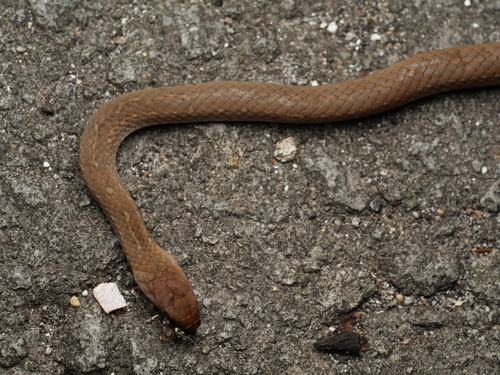
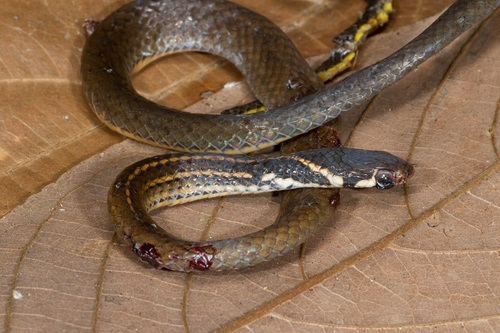
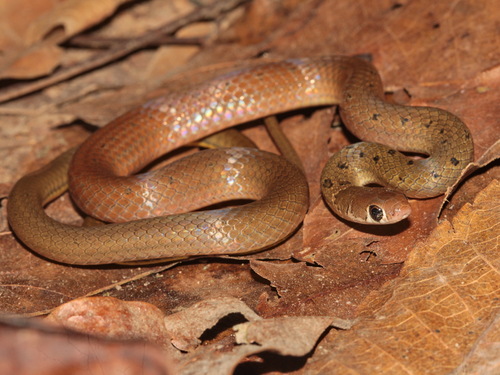
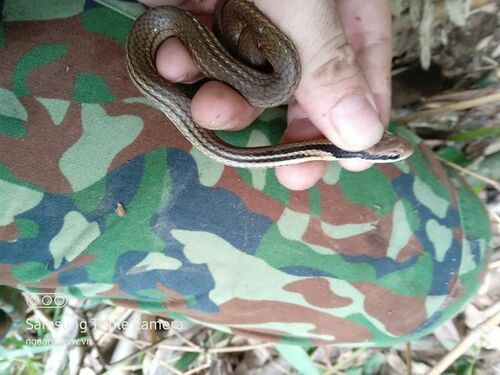
All species (5)
Keep learning
- What Is a Snake? Anatomy and the BasicsA clear overview of what makes a snake a snake: limbless body plan, anatomy, evolution from lizards, species diversity, and why they are ectothermic.
- How Snakes Move, Hunt, and EatHow snakes move without legs, hunt as ambushers or active foragers, kill by constriction or venom, and swallow prey wider than their head.
- What Do Snakes Eat?All snakes are carnivores. Learn what snakes eat, how diet changes with size and age, how often they feed, and how they hunt and swallow prey.
- Venomous vs Nonvenomous: How to Tell the DifferenceThe folk rules for telling venomous snakes apart, where each one fails, and why location-based identification beats guessing by sight.