
Genus · Viperidae
Garthius
The genus Garthius contains a single species. It is venomous.
About Chasen's mountain pitviper
A single, little-known mountain pitviper from the highlands of Borneo, built like a small ambush hunter of cool forest floors.
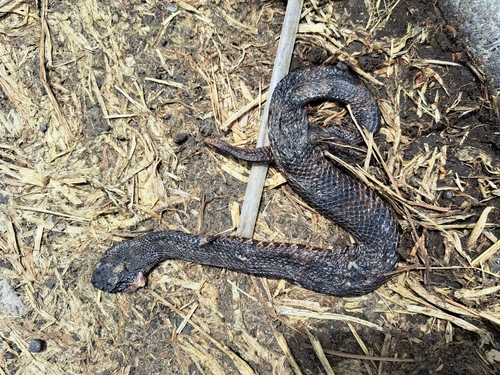
Garthius is a monotypic genus in the family Viperidae, the vipers, and within it the pitviper lineage that carries heat-sensing facial pits between the eye and the nostril. Its one species, Garthius chaseni or Chasen's mountain pitviper, lives in the mountains of northern Borneo. It was formerly placed with the Asian pitvipers in broader genera before being separated into its own genus, which is why older references may list it under a different name. As a pitviper it sits among the New and Old World crotaline vipers, sharing the hinged, hollow front fangs and the paired loreal pits that define that group.
This is a stout, relatively short snake of cool, wet montane forest, where it is associated with leaf litter and the forest floor rather than the trees. In general terms, pitvipers like this are recognized by a broad triangular head distinct from the neck, vertical pupils, keeled scales that give a rough texture, and the telltale loreal pit. Garthius is muted and cryptic in color, patterned to disappear against damp leaves and soil, and it is a small, ground-dwelling animal rather than a long arboreal one. Because it is genuinely obscure and restricted in range, fine details of its natural history are not well documented.
Garthius is venomous. Like other true vipers and pitvipers it delivers venom through long, folding front fangs, and no wild pitviper should ever be handled. Real encounters are rare given its remote mountain habitat and small range, but the safe approach to any pitviper is the same: keep your distance, do not attempt to catch or move it, and let it retreat. Ecologically, ground-dwelling montane pitvipers are ambush predators that feed on small vertebrates such as frogs, lizards, and small mammals, sitting motionless and striking prey that comes within reach; many Asian pitvipers bear live young rather than laying eggs. If anyone is bitten by a venomous snake, treat it as a medical emergency and seek care immediately, contacting local emergency services or, in the United States, Poison Control at 1-800-222-1222.
Garthius belongs to the Viperidae family (Vipers & pit vipers). Heavy-bodied venomous snakes with long, hinged, hollow fangs. Broad, triangular head distinct from a narrow neck, heavy body, and (usually) vertical, cat-like pupils. Pit vipers also have a heat-sensing pit; true vipers do not.
Danger: Every viper is venomous, and the family includes some of the world's most medically important snakes. Venom is typically hemotoxic, causing pain, swelling, tissue damage, and bleeding. Treat any viper bite as a medical emergency.
All species (1)
Keep learning
- Venomous vs Nonvenomous: How to Tell the DifferenceThe folk rules for telling venomous snakes apart, where each one fails, and why location-based identification beats guessing by sight.
- Are Snakes Dangerous? The Real Risk, in PerspectiveMost snakes are harmless and avoid people. Here is the honest picture of snakebite risk worldwide and how to lower your own.
- Snake Venom Explained: How It Works and WhyWhat snake venom actually is, why it evolved, the main venom types, fang delivery, how antivenom works, and why ranking the most venomous snake is hard.
- How Snakes Move, Hunt, and EatHow snakes move without legs, hunt as ambushers or active foragers, kill by constriction or venom, and swallow prey wider than their head.