
Genus · Homalopsidae
Fordonia
The genus Fordonia contains a single species. It is not considered dangerous to humans.
About white-bellied mangrove snake
A stout, crab-eating mangrove snake of Indo-Pacific tidal mudflats, built for life half-buried in soft estuarine mud.
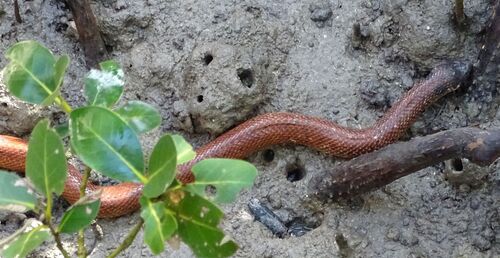
Fordonia is a small genus in the family Homalopsidae, the Indo-Australian water and mud snakes, and it is best known for a single widespread species, the White-bellied Mangrove Snake (Fordonia leucobalia). Like other homalopsids, it is a rear-fanged, mildly venomous aquatic snake with eyes and nostrils set high on the head and valved nostrils that close underwater, all adaptations for a life spent in and around the water. It ranges across coastal tropical regions from eastern India and Southeast Asia through Indonesia and the Philippines to northern Australia, where it lives in the muddy intertidal zone of mangrove forests, tidal creeks, and estuarine mudflats rather than open sea or fresh inland water.
Recognizing Fordonia comes down to body shape and habitat. It is a thick-bodied, relatively short snake, usually under a meter, with smooth scales, a blunt rounded snout, and small high-set eyes. Color is variable, ranging from gray, brown, or brick to nearly black, often with paler blotches or spots, and the underside is typically pale or whitish, which gives the species its common name. Found burrowing through mangrove mud at low tide or swimming in tidal channels, a stout dark snake with a light belly in that exact habitat is the strongest clue you are looking at this genus.
What sets Fordonia apart ecologically is its diet. It is one of very few snakes that specializes in eating crabs and other crustaceans, seizing prey in burrows and tidal flats and, remarkably, sometimes tearing hard-shelled or soft, freshly molted crabs into pieces before swallowing, which is unusual feeding behavior for a snake. Its mild rear-fanged venom helps subdue this crustacean prey and poses no serious threat to people. Like its homalopsid relatives it gives live birth to small litters rather than laying eggs. It is not considered dangerous to humans, but it is a wild animal and best left undisturbed and not handled; if anyone is ever bitten by a snake they cannot confidently identify, treat it as a medical matter and contact emergency services or, in the United States, Poison Control at 1-800-222-1222.
Fordonia belongs to the Homalopsidae family (Mud & water snakes). Aquatic, mud-dwelling snakes with upward-facing eyes and nostrils. Stout, often drab snakes with upturned nostrils, found in or near muddy water.
Danger: Rear-fanged with mild venom; not considered dangerous to humans.
All species (1)
Keep learning
- What Is a Snake? Anatomy and the BasicsA clear overview of what makes a snake a snake: limbless body plan, anatomy, evolution from lizards, species diversity, and why they are ectothermic.
- How Snakes Move, Hunt, and EatHow snakes move without legs, hunt as ambushers or active foragers, kill by constriction or venom, and swallow prey wider than their head.
- What Do Snakes Eat?All snakes are carnivores. Learn what snakes eat, how diet changes with size and age, how often they feed, and how they hunt and swallow prey.
- Venomous vs Nonvenomous: How to Tell the DifferenceThe folk rules for telling venomous snakes apart, where each one fails, and why location-based identification beats guessing by sight.