
Genus · Xenodermidae
Types of bearded snakes
2 species make up the genus Fimbrios, the snakes commonly called bearded snakes. None are considered dangerous to humans.
About bearded snakes
Small, secretive forest-floor snakes of mainland Southeast Asia, named for the fringe of enlarged scales along the lip.
Fimbrios is a tiny genus in the family Xenodermidae, the odd-scaled snakes, with just two recognized species: the Bearded Snake (Fimbrios klossi) and Smith's Rough Water Snake (Fimbrios smithi). Xenodermidae is a small Asian family known for unusual, often knobby or ridged scalation that sets its members apart from typical colubrid-looking snakes. Within that family Fimbrios stands out for the distinctive fringe of projecting, fimbriate scales bordering the lips and snout, which gives the genus its common name. These are not familiar animals to most people; they are rarely seen, poorly studied, and known mainly from forested uplands in mainland Southeast Asia.
These snakes are tied to wet, forested habitat in the region spanning roughly Cambodia, Vietnam, Laos, and Thailand. They are small, ground-dwelling, and associated with leaf litter, moist soil, and the margins of streams in evergreen and montane forest. In general terms you would recognize a member of this genus as a small snake with a rough or textured rather than smooth, glossy body, and the telltale fringed scales along the mouth. Because the two species are so similar and so seldom encountered, precise field identification is a job for careful examination rather than a quick glance, and the genus as a whole is far more likely to be confused with other small forest snakes than to be recognized on sight.
Fimbrios snakes are not considered dangerous to people. The family Xenodermidae contains no medically significant venomous species, and these are small, retiring animals with no record of harm to humans. They are best regarded as harmless wildlife to observe and leave undisturbed rather than handle, and any wild snake that cannot be confidently identified should not be picked up. Specific diet, reproduction, and behavior for the two species are not well documented, but like other small leaf-litter and stream-associated snakes in the family they are presumed to feed on soft-bodied invertebrates such as earthworms and to live cryptic, low-profile lives close to the forest floor. If anyone is ever bitten by an unidentified snake and symptoms develop, contact emergency services or US Poison Control at 1-800-222-1222.
Fimbrios belongs to the Xenodermidae family (Odd-scaled snakes). Forest snakes with strange, knob-like scales. Distinctive bumpy, irregular scalation unlike the smooth or evenly keeled scales of most snakes.
Danger: Harmless.
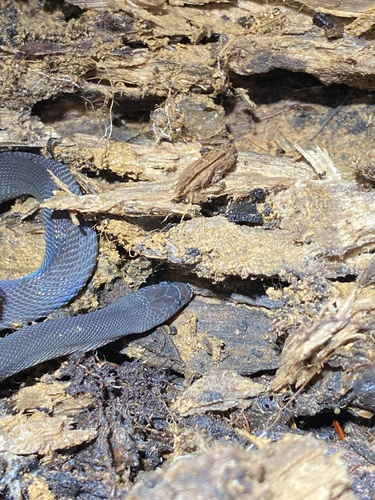
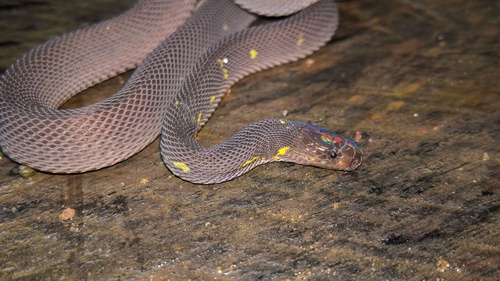
All species (2)
Keep learning
- What Is a Snake? Anatomy and the BasicsA clear overview of what makes a snake a snake: limbless body plan, anatomy, evolution from lizards, species diversity, and why they are ectothermic.
- How Snakes Move, Hunt, and EatHow snakes move without legs, hunt as ambushers or active foragers, kill by constriction or venom, and swallow prey wider than their head.
- What Do Snakes Eat?All snakes are carnivores. Learn what snakes eat, how diet changes with size and age, how often they feed, and how they hunt and swallow prey.
- Venomous vs Nonvenomous: How to Tell the DifferenceThe folk rules for telling venomous snakes apart, where each one fails, and why location-based identification beats guessing by sight.