
Genus · Elapidae
Ephalophis
The genus Ephalophis contains a single species. It is venomous.
About mangrove sea snakes
A tiny mangrove-dwelling lineage of true sea snakes, venomous but shy and rarely encountered by people.
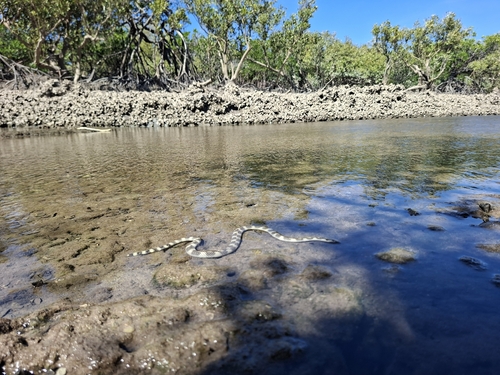
Ephalophis is a genus in the family Elapidae, the same front-fanged family that includes cobras, coral snakes, and all the true sea snakes. It is a very small genus, represented in our database by one species, the Northwestern Mangrove Sea Snake (Ephalophis greyae). These are marine elapids of the Australasian region, and they belong to the group of fully aquatic sea snakes that adapted from terrestrial ancestors to life in salt water. Like other sea snakes, members of Ephalophis breathe air but spend their lives in the water, and they are recognized in general terms by a paddle-shaped, laterally flattened tail that drives swimming.
The genus is associated with the tropical coasts of northwestern Australia, where its members live in shallow, sheltered marine environments. The defining habitat is intertidal mangrove mudflats and tidal creeks rather than open ocean, which sets these snakes apart from the deeper-water sea snakes. They tend to stay in murky, shallow water close to shore, where they hunt small prey among the roots and channels of the mangroves. This restricted, near-shore range means most people never see one.
As elapids, sea snakes in this group are venomous, and the honest framing is to treat any sea snake as potentially dangerous and never to handle a wild one. That said, these are shy, secretive animals that pose little threat when left alone, and they are not aggressive toward people in normal circumstances. Sea snakes generally feed on small fish and other small marine animals and give live birth in the water rather than laying eggs. If anyone is ever bitten by a sea snake, treat it as a medical emergency and seek immediate professional care: in the United States contact Poison Control at 1-800-222-1222, and elsewhere call local emergency services.
Ephalophis belongs to the Elapidae family (Cobras, mambas, coral & sea snakes). Front-fanged venomous snakes, many with potent neurotoxic venom. Usually slender with a head barely wider than the neck and fixed front fangs (not the folding fangs of vipers). Coral snakes are boldly ringed; sea snakes have a flattened, paddle-like tail.
Danger: All elapids are venomous and the family is responsible for a large share of fatal snakebites worldwide. Many are shy, but bites can be life-threatening. Treat any bite as a medical emergency.
All species (1)
Keep learning
- Venomous vs Nonvenomous: How to Tell the DifferenceThe folk rules for telling venomous snakes apart, where each one fails, and why location-based identification beats guessing by sight.
- Are Snakes Dangerous? The Real Risk, in PerspectiveMost snakes are harmless and avoid people. Here is the honest picture of snakebite risk worldwide and how to lower your own.
- Snake Venom Explained: How It Works and WhyWhat snake venom actually is, why it evolved, the main venom types, fang delivery, how antivenom works, and why ranking the most venomous snake is hard.
- How Snakes Move, Hunt, and EatHow snakes move without legs, hunt as ambushers or active foragers, kill by constriction or venom, and swallow prey wider than their head.