
Genus · Colubridae
Types of longtail snakes
4 species make up the genus Enulius, the snakes commonly called longtail snakes. None are considered dangerous to humans.
About longtail snakes
Slender, secretive Central American burrowers known for the strikingly long tails that give the group its name.
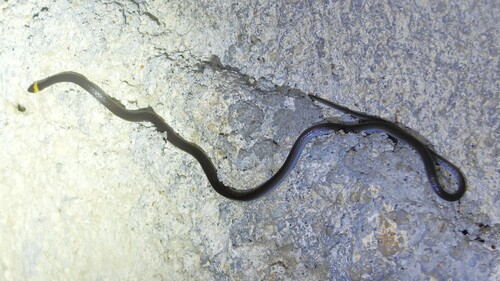
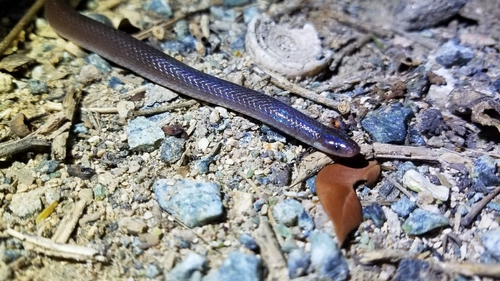
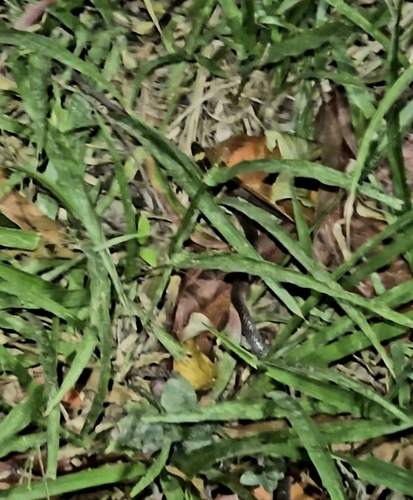
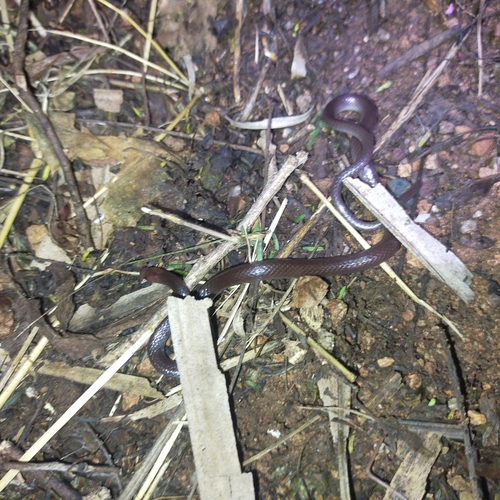
Enulius is a small genus of New World snakes in the family Colubridae, the largest and most diverse snake family on Earth. The genus is informally called the longtail snakes because its members have proportionally long tails relative to body length, an unusual trait among small ground-dwelling colubrids. Our database tracks 4 species, including the Pacific Longtail Snake, the Mexican Longtail Snake, and two island forms from the Bay Islands of Honduras, the Roatan Longtail Snake and the Guanaja Longtail Snake.
These are snakes of southern Mexico, Central America, and nearby islands. As a fossorial and semi-fossorial group, they favor humid lowland and foothill habitats where they can stay hidden: leaf litter, loose soil, rotting logs, and the cover of stones and debris. They are rarely seen in the open, which is part of why several members, especially the island endemics, remain poorly documented. When a taxon is this obscure, the honest picture comes from the broader colubrid and regional pattern rather than from detailed species-by-species records.
Recognizing a longtail snake comes down to general build rather than bold markings. Expect a thin, modest-sized body, smooth scales typical of many colubrids, a small head not much wider than the neck, and the namesake long, tapering tail. Coloration tends toward plain browns and grays that blend into soil and litter. These are not boldly patterned or large snakes, and field identification of the exact species often depends on locality and close examination by someone familiar with the regional fauna.
On safety, Enulius species are small, non-aggressive colubrids with no medically significant venom and are considered harmless to people. They are not constrictors of any concern to humans and pose no real danger. As a general rule with any wild snake, the responsible approach is to observe and leave it alone rather than handle it, both for your safety and the animal's. If a person is ever bitten by a snake they cannot confidently identify, contact US Poison Control at 1-800-222-1222 or local emergency services.
Ecologically, these are quiet players in the leaf-litter food web. Small fossorial colubrids like these typically feed on invertebrates and small prey they encounter underground or under cover, and like most colubrids they are egg-laying. Their secretive, burrowing lifestyle means much of their behavior happens out of sight, and the island endemics in particular are of conservation interest precisely because their limited ranges and hidden habits make them hard to study and easy to overlook.
Enulius belongs to the Colubridae family (Colubrids). The largest snake family, and the one most snakes you meet belong to. Typically round pupils, a head only slightly wider than the neck, and no heat-sensing facial pit or rattle. Scales may be smooth and glossy or keeled and matte depending on the species.
Danger: Almost all colubrids are harmless. A small number are rear-fanged with medically significant venom, the boomslang and the twig (vine) snakes of Africa being the dangerous exceptions. Most colubrids will flee or bluff rather than bite.
All species (4)
Keep learning
- What Is a Snake? Anatomy and the BasicsA clear overview of what makes a snake a snake: limbless body plan, anatomy, evolution from lizards, species diversity, and why they are ectothermic.
- How Snakes Move, Hunt, and EatHow snakes move without legs, hunt as ambushers or active foragers, kill by constriction or venom, and swallow prey wider than their head.
- What Do Snakes Eat?All snakes are carnivores. Learn what snakes eat, how diet changes with size and age, how often they feed, and how they hunt and swallow prey.
- Venomous vs Nonvenomous: How to Tell the DifferenceThe folk rules for telling venomous snakes apart, where each one fails, and why location-based identification beats guessing by sight.