
Genus · Homalopsidae
Types of mud snakes
5 species make up the genus Enhydris, the snakes commonly called mud snakes. None are considered dangerous to humans.
About Asian mud snakes
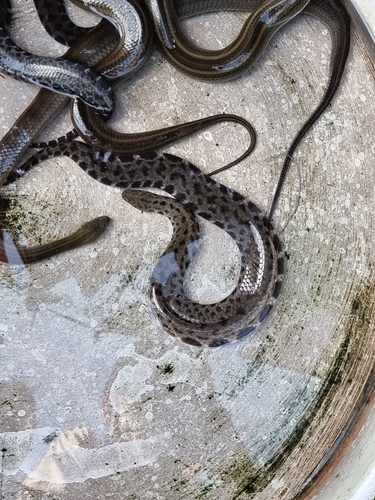
Enhydris are stout, semiaquatic rear-fanged mud snakes that spend their lives in the muddy fresh waters of South and Southeast Asia.
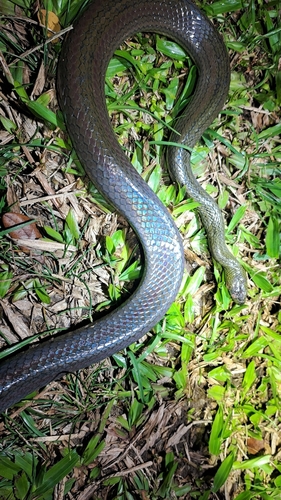
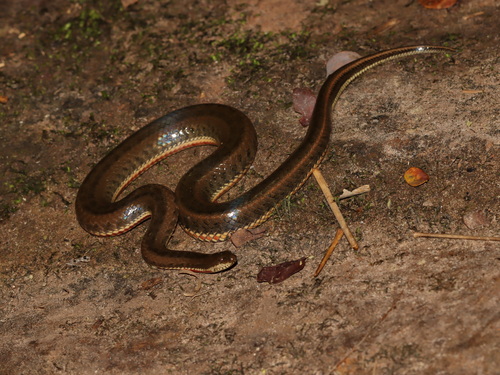
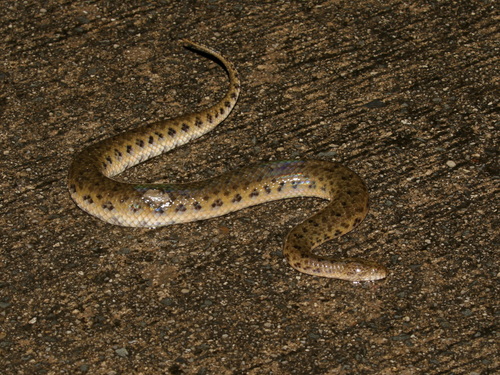
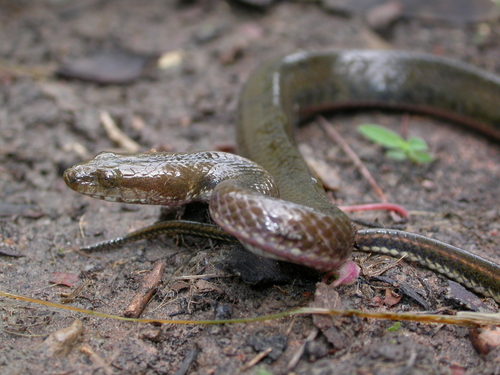
Enhydris is a genus of aquatic snakes in the family Homalopsidae, the group commonly called mud snakes or water snakes of Asia. Homalopsids are a distinct lineage of rear-fanged colubroid snakes built for life in water, and Enhydris sits squarely within that family. Historically the name Enhydris was used as a catch-all for many Asian water snakes, but taxonomists have since split most of those species into other genera, so the genus today holds a smaller, more closely related set of species. Our database includes 5 of them, with examples such as the Rainbow Mud Snake, the Mekong Mud Snake, Chanard's Mud Snake, and the Longtailed Mud Snake.
These snakes live in the lowland fresh and brackish waters of South and Southeast Asia, a region that runs roughly from the Indian subcontinent through mainland Southeast Asia and into the islands beyond. Typical habitats are slow or still waters: rice paddies, marshes, swamps, canals, ponds, ditches, and the muddy margins of rivers and lakes. They are strongly tied to water and are rarely found far from it, which is why the family earns the mud snake and water snake names.
In general terms, Enhydris members are recognizable as thick-bodied, moderately sized water snakes with smooth or weakly keeled scales, small eyes, and nostrils positioned high on the snout, a common adaptation in aquatic snakes that lets them breathe while mostly submerged. Coloration tends toward muted browns, grays, and olive tones, often with darker stripes or a lighter belly, which suits a life spent in murky water and soft mud. Without close examination, telling one homalopsid species from another by eye is difficult, so identification usually relies on locality, scale counts, and patterning.
Like other homalopsids, Enhydris snakes are rear-fanged and mildly venomous. Their enlarged grooved teeth sit toward the back of the upper jaw and deliver a weak venom used to subdue small aquatic prey. They are not considered dangerous to people and have no reputation for causing serious envenomation, but rear-fanged is not the same as harmless. A wild venomous snake should never be handled, and any bite that causes more than trivial local effects, or any bite from a snake you cannot confidently identify, warrants medical attention. In the United States contact Poison Control at 1-800-222-1222, and elsewhere contact local emergency services.
Ecologically these are aquatic ambush and active foragers that feed mainly on fish, frogs, tadpoles, and other small water animals, using their mild venom and grip to handle slippery prey. Many homalopsids, including Enhydris, are live-bearing, giving birth to fully formed young rather than laying eggs, an advantage for a fully aquatic lifestyle. They tend to be most active at night and are generally inoffensive, preferring to retreat into water or mud rather than confront a threat.
Enhydris belongs to the Homalopsidae family (Mud & water snakes). Aquatic, mud-dwelling snakes with upward-facing eyes and nostrils. Stout, often drab snakes with upturned nostrils, found in or near muddy water.
Danger: Rear-fanged with mild venom; not considered dangerous to humans.
All species (5)
Keep learning
- What Is a Snake? Anatomy and the BasicsA clear overview of what makes a snake a snake: limbless body plan, anatomy, evolution from lizards, species diversity, and why they are ectothermic.
- How Snakes Move, Hunt, and EatHow snakes move without legs, hunt as ambushers or active foragers, kill by constriction or venom, and swallow prey wider than their head.
- What Do Snakes Eat?All snakes are carnivores. Learn what snakes eat, how diet changes with size and age, how often they feed, and how they hunt and swallow prey.
- Venomous vs Nonvenomous: How to Tell the DifferenceThe folk rules for telling venomous snakes apart, where each one fails, and why location-based identification beats guessing by sight.