
Genus · Colubridae
Emmochliophis
The genus Emmochliophis contains a single species. It is not considered dangerous to humans.
About shadow snakes
A rare, poorly known genus of small Andean forest snakes from northwestern South America.
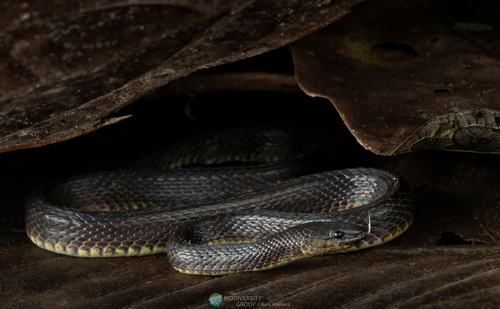
Emmochliophis is a genus of small, secretive snakes from the cloud forests and montane regions of the northern Andes, with records centered on Ecuador. It sits in the family Colubridae, the largest and most diverse snake family in the world, and within the New World subfamily Dipsadinae, a sprawling group of mostly harmless and small-bodied snakes that dominates Central and South American forest-floor snake communities. The genus holds only one or two recognized species, including Fugler's Shadow Snake, which makes it one of the obscurest branches of that radiation. The common name reflects the dim, shaded leaf-litter and forest-floor habitats these snakes are tied to rather than any open or sun-exposed lifestyle.
These are modest, slender snakes rather than large or conspicuous ones. In general terms, members of the genus fit the dipsapine forest-snake pattern: small size, smooth or weakly textured scales, and muted brown to gray earth tones that blend into damp leaf litter, often with darker markings that break up the outline. They are tied to humid Andean forest at moderate to high elevation, the kind of cool, wet, shaded ground where many secretive South American snakes live out of sight. Because the genus is so rarely encountered and the species records are limited, exact color, pattern, and scale details are best confirmed against a regional field guide or museum reference rather than assumed from the genus name alone.
On safety, Emmochliophis belongs to a colubrid lineage where the snakes are not dangerous to people. There is no front-fanged venom apparatus here, and even the rear-fanged or mildly venomous members of the wider subfamily pose no serious medical threat to humans. These small snakes are not aggressive and are far more likely to flee than to confront. Even so, no wild snake should be picked up or handled, both for the animal's welfare and because any bite can cause local irritation or infection. If a person is bitten and develops unexpected or worsening symptoms, treat it as a medical matter and seek emergency care, in the United States via Poison Control at 1-800-222-1222 or local emergency services elsewhere. As small forest predators, snakes of this group are presumed to feed on tiny prey such as invertebrates and small amphibians, and like most dipsadine colubrids they are expected to be egg-laying.
Emmochliophis belongs to the Colubridae family (Colubrids). The largest snake family, and the one most snakes you meet belong to. Typically round pupils, a head only slightly wider than the neck, and no heat-sensing facial pit or rattle. Scales may be smooth and glossy or keeled and matte depending on the species.
Danger: Almost all colubrids are harmless. A small number are rear-fanged with medically significant venom, the boomslang and the twig (vine) snakes of Africa being the dangerous exceptions. Most colubrids will flee or bluff rather than bite.
All species (1)
Keep learning
- What Is a Snake? Anatomy and the BasicsA clear overview of what makes a snake a snake: limbless body plan, anatomy, evolution from lizards, species diversity, and why they are ectothermic.
- How Snakes Move, Hunt, and EatHow snakes move without legs, hunt as ambushers or active foragers, kill by constriction or venom, and swallow prey wider than their head.
- What Do Snakes Eat?All snakes are carnivores. Learn what snakes eat, how diet changes with size and age, how often they feed, and how they hunt and swallow prey.
- Venomous vs Nonvenomous: How to Tell the DifferenceThe folk rules for telling venomous snakes apart, where each one fails, and why location-based identification beats guessing by sight.