
Genus · Elapidae
Types of garter snakes
7 species make up the genus Elapsoidea, the snakes commonly called garter snakes. All of them are venomous.
About African garter snakes
Small, secretive African elapids that are close cousins of cobras and mambas despite their modest size.
Elapsoidea is a genus of snakes in the family Elapidae, the same family that includes cobras, mambas, kraits, and coral snakes. The members are known in plain English as African garter snakes, a name that refers to their banded or ringed appearance rather than any relationship to the harmless North American garter snakes of the genus Thamnophis. The genus currently holds roughly 7 to 10 recognized species, and the count shifts as researchers study populations across the continent.
These are snakes of sub-Saharan Africa, ranging across savanna, grassland, woodland, and the edges of drier regions. They are largely fossorial and nocturnal, meaning they spend much of their lives burrowing in loose soil, sheltering under rocks, logs, and debris, and emerging mainly at night or after rain. Because of this hidden lifestyle they are seldom seen, even where they are common, and many people who live alongside them never encounter one.
In general terms, African garter snakes are small and cylindrical with smooth scales, a short blunt tail, and a head that is barely distinct from the neck, which suits a burrowing animal. Young snakes are often boldly marked with light and dark bands, while adults frequently fade to a more uniform dark brown, gray, or blackish color as the bands become indistinct with age. Adults are typically modest in length, usually well under a meter. Identifying the exact species in the field is difficult and is best left to scale counts and locality data rather than color alone.
Like all members of Elapidae, these snakes are venomous and have fixed front fangs. They are not considered among the dangerously life-threatening African elapids, and bites to humans are uncommon given their secretive habits, but they are wild venomous animals and should never be handled. If a bite occurs, treat it as a medical emergency, keep the person calm and still, and seek professional care immediately. In the United States contact Poison Control at 1-800-222-1222, and elsewhere call local emergency services. Do not rely on home remedies or first-aid procedures in place of medical treatment.
Ecologically, African garter snakes are predators of small prey encountered in soil and leaf litter, with diets that commonly include other small snakes, lizards, amphibians, and similar animals typical of fossorial elapids. They are egg-laying, like most elapids, and are quiet, non-aggressive snakes that tend to hide or flee rather than confront a threat. Their role as small nocturnal hunters makes them a normal and useful part of the African ecosystems where they live.
Elapsoidea belongs to the Elapidae family (Cobras, mambas, coral & sea snakes). Front-fanged venomous snakes, many with potent neurotoxic venom. Usually slender with a head barely wider than the neck and fixed front fangs (not the folding fangs of vipers). Coral snakes are boldly ringed; sea snakes have a flattened, paddle-like tail.
Danger: All elapids are venomous and the family is responsible for a large share of fatal snakebites worldwide. Many are shy, but bites can be life-threatening. Treat any bite as a medical emergency.
All species (7)
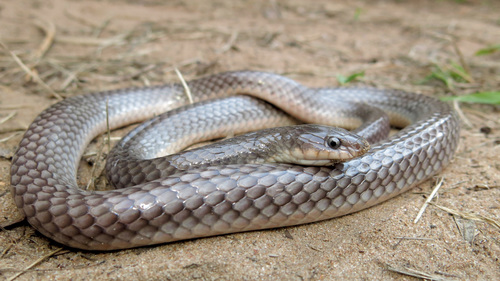 Highveld Garter SnakeElapsoidea sundevalliiVenomous
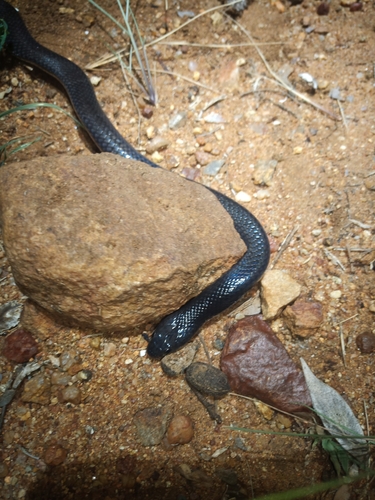 Boulenger's Garter SnakeElapsoidea boulengeriVenomous
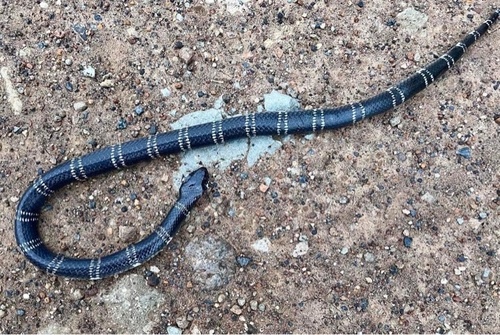 East African Garter SnakeElapsoidea loveridgeiVenomous
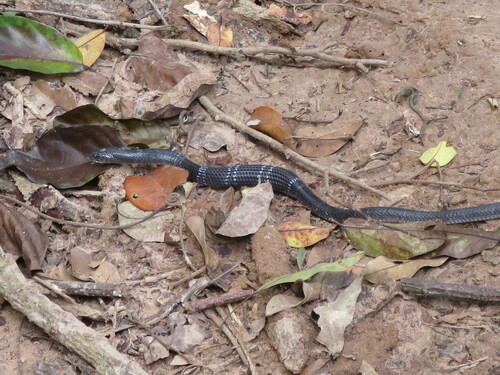 Angolan Garter SnakeElapsoidea semiannulataVenomous
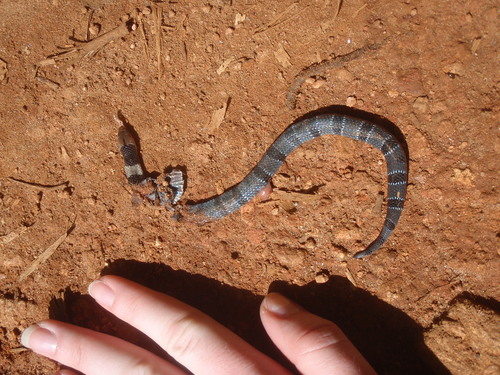 Black Garter SnakeElapsoidea nigraVenomous
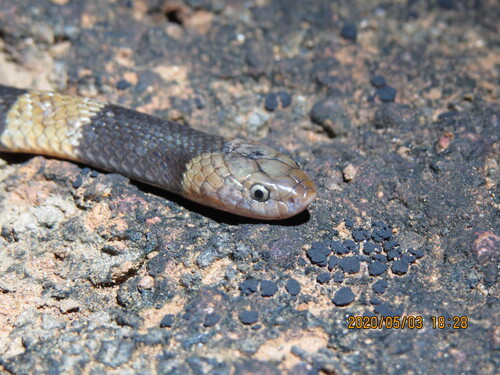 Werner's Garter SnakeElapsoidea laticinctaVenomous
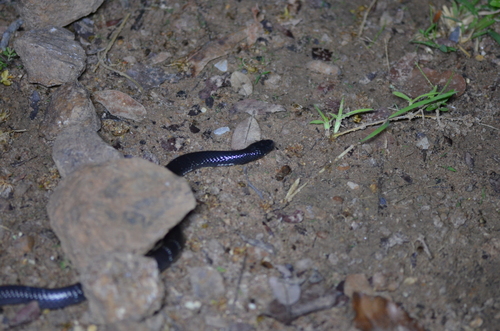 Günther’s Garter SnakeElapsoidea guentheriiVenomous
Keep learning
- Venomous vs Nonvenomous: How to Tell the DifferenceThe folk rules for telling venomous snakes apart, where each one fails, and why location-based identification beats guessing by sight.
- Are Snakes Dangerous? The Real Risk, in PerspectiveMost snakes are harmless and avoid people. Here is the honest picture of snakebite risk worldwide and how to lower your own.
- Snake Venom Explained: How It Works and WhyWhat snake venom actually is, why it evolved, the main venom types, fang delivery, how antivenom works, and why ranking the most venomous snake is hard.
- How Snakes Move, Hunt, and EatHow snakes move without legs, hunt as ambushers or active foragers, kill by constriction or venom, and swallow prey wider than their head.