
Genus · Colubridae
Types of lizard-eating snakes
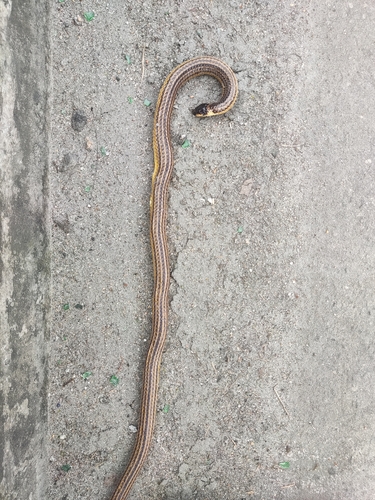
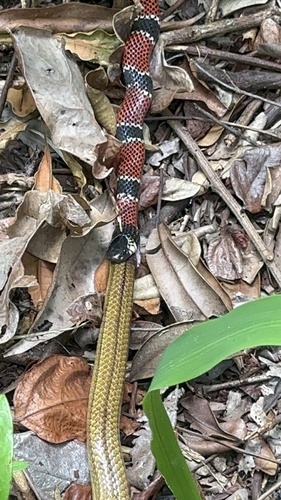
2 species make up the genus Elapomorphus, the snakes commonly called lizard-eating snakes. None are considered dangerous to humans.
About Brazilian burrowing snakes
Small, secretive South American burrowers that spend almost their whole lives underground hunting other reptiles.
Elapomorphus is a small genus of burrowing snakes found in South America and traditionally placed in the large, catch-all family Colubridae, within the group of New World burrowing snakes often called the Elapomorphini. Our database holds two species, Raddi's Lizard-eating Snake and Wucherer's Lizard-eating Snake. The genus is concentrated in eastern and southeastern Brazil and neighboring parts of the continent, where these snakes live a hidden, fossorial life rather than moving in the open like the snakes most people picture.
Members are small and slender with smooth scales, a short tail, and a narrow head that is barely set off from the neck, which is the typical build of a snake adapted to pushing through soil and leaf litter. Colubrids in this burrowing group commonly show a dark collar or banding near the neck on an otherwise plain brown or grayish body. Because they are so secretive and so easily confused with other small burrowers in the same region, the safest way to identify one is by locality and a careful look by someone familiar with South American snakes, not by a quick glance in the field.
These are not dangerous snakes to people. They feed largely on other small reptiles, which is reflected in the lizard-eating common name, and they spend most of their time underground or under cover. Many colubrids of this type are non-venomous or only mildly rear-fanged, with no venom of medical concern to humans and no inclination to bite defensively. As a general rule, observe any wild snake rather than handle it, and if a bite from any snake ever causes spreading pain, swelling, or other symptoms, contact emergency care, in the United States the Poison Control line at 1-800-222-1222 or local emergency services elsewhere.
Elapomorphus belongs to the Colubridae family (Colubrids). The largest snake family, and the one most snakes you meet belong to. Typically round pupils, a head only slightly wider than the neck, and no heat-sensing facial pit or rattle. Scales may be smooth and glossy or keeled and matte depending on the species.
Danger: Almost all colubrids are harmless. A small number are rear-fanged with medically significant venom, the boomslang and the twig (vine) snakes of Africa being the dangerous exceptions. Most colubrids will flee or bluff rather than bite.
All species (2)
Keep learning
- What Is a Snake? Anatomy and the BasicsA clear overview of what makes a snake a snake: limbless body plan, anatomy, evolution from lizards, species diversity, and why they are ectothermic.
- How Snakes Move, Hunt, and EatHow snakes move without legs, hunt as ambushers or active foragers, kill by constriction or venom, and swallow prey wider than their head.
- What Do Snakes Eat?All snakes are carnivores. Learn what snakes eat, how diet changes with size and age, how often they feed, and how they hunt and swallow prey.
- Venomous vs Nonvenomous: How to Tell the DifferenceThe folk rules for telling venomous snakes apart, where each one fails, and why location-based identification beats guessing by sight.