
Genus · Colubridae
Echinanthera
5 species make up the genus Echinanthera. None are considered dangerous to humans.
About leaf-litter snakes
Small, secretive South American forest snakes that hunt frogs through the damp leaf litter.
Echinanthera is a genus of small colubrid snakes native to South America, part of the large and diverse family Colubridae. The roughly five species recognized here belong to the same broad assemblage of slender, ground-dwelling New World snakes often grouped informally as leaf-litter or forest snakes. They are typical of the dipsadine radiation that dominates the snake fauna of Central and South America.
These snakes live in the moist forests of southern and eastern South America, with several species closely tied to the Atlantic Forest of Brazil and adjacent regions. They favor humid, shaded ground where a thick layer of fallen leaves, rotting logs, and forest debris holds moisture and shelters their prey. As terrestrial, leaf-litter specialists they spend most of their time on or just under the surface rather than climbing or swimming.
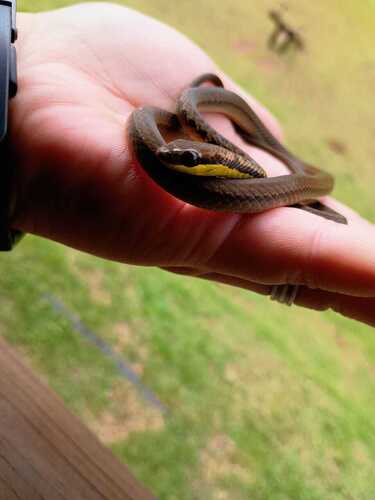
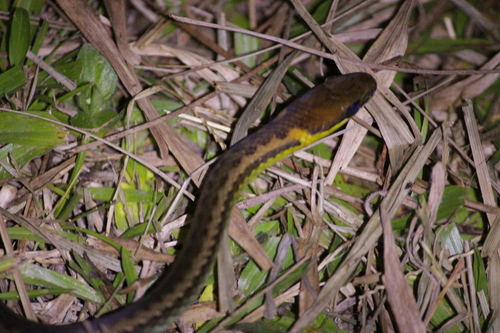
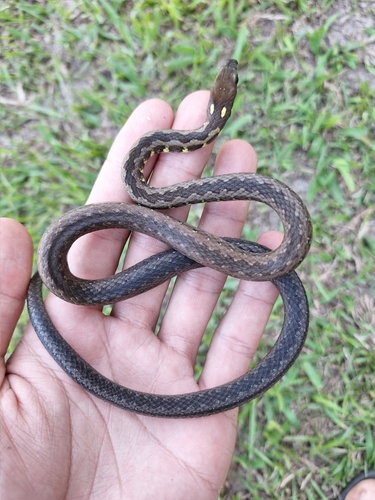
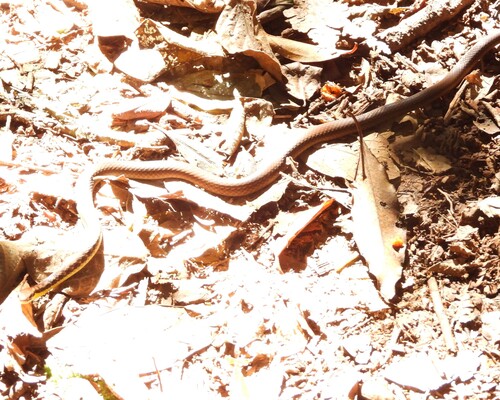
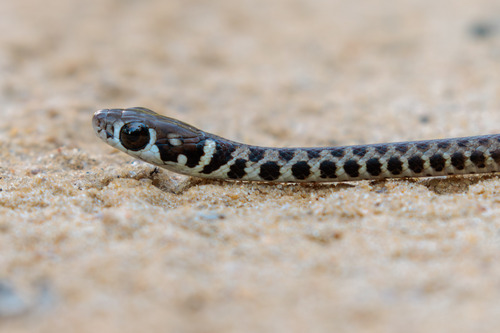
Members are recognized in general terms by their small, slim build, smooth scales, a fairly distinct head, and large eyes with round pupils suited to active daytime and twilight foraging. Color patterns are usually understated browns and grays, sometimes with darker stripes or fine markings that help them disappear against the forest floor. The Head-striped Leaf-litter Snake is one representative of this look, with markings on the head being a useful local clue. Precise identification of any given species is difficult and is best confirmed by a regional herpetologist using scale counts and locality.
Echinanthera snakes are not considered dangerous to people. They are small, non-aggressive, and lack the front-fanged venom delivery of vipers or elapids. Like many colubrids in this group they may have mild rear-fanged secretions used to subdue small cold-blooded prey, but they are regarded as effectively harmless to humans and are not a medical threat. As a rule, wild snakes should still be left alone and never handled, since field identification is easy to get wrong and a misidentified animal carries real risk. If anyone is bitten and the snake cannot be confidently identified, or symptoms develop, contact emergency services or US Poison Control at 1-800-222-1222.
Ecologically these are specialist predators of small forest animals, feeding heavily on frogs and other amphibians and on the eggs and larvae they find in the leaf litter. They are active hunters that move through ground cover searching for prey rather than ambushing it. Like most colubrids in their lineage they reproduce by laying eggs, and they generally rely on secrecy and a quick retreat under cover rather than any defensive display when disturbed.
Echinanthera belongs to the Colubridae family (Colubrids). The largest snake family, and the one most snakes you meet belong to. Typically round pupils, a head only slightly wider than the neck, and no heat-sensing facial pit or rattle. Scales may be smooth and glossy or keeled and matte depending on the species.
Danger: Almost all colubrids are harmless. A small number are rear-fanged with medically significant venom, the boomslang and the twig (vine) snakes of Africa being the dangerous exceptions. Most colubrids will flee or bluff rather than bite.
All species (5)
Keep learning
- What Is a Snake? Anatomy and the BasicsA clear overview of what makes a snake a snake: limbless body plan, anatomy, evolution from lizards, species diversity, and why they are ectothermic.
- How Snakes Move, Hunt, and EatHow snakes move without legs, hunt as ambushers or active foragers, kill by constriction or venom, and swallow prey wider than their head.
- What Do Snakes Eat?All snakes are carnivores. Learn what snakes eat, how diet changes with size and age, how often they feed, and how they hunt and swallow prey.
- Venomous vs Nonvenomous: How to Tell the DifferenceThe folk rules for telling venomous snakes apart, where each one fails, and why location-based identification beats guessing by sight.