
Genus · Elapidae
Drysdalia
3 species make up the genus Drysdalia. All of them are venomous.
About Australian crowned snakes
A small group of slender, secretive elapids native to cool, well-vegetated corners of southern Australia.
Drysdalia is a genus of small terrestrial snakes in the family Elapidae, the same front-fanged family that includes cobras, taipans, and the many venomous land snakes of Australia. The genus is endemic to Australia, and our database holds three members of it: the White-lipped Snake, the Mustard-bellied Snake, and Masters' Snake. As elapids they share the family hallmark of fixed front fangs, but they sit among the smaller and more reserved members of that group rather than its dangerous giants.
These are snakes of southern and southeastern Australia, including cooler temperate regions and higher-elevation country where many larger reptiles cannot thrive. They tend to favor moist, vegetated habitats such as grassland, heath, woodland, and the edges of wetlands, where ground cover, leaf litter, and surface debris give them places to shelter and hunt. The White-lipped Snake in particular is notable for tolerating cold conditions, ranging into Tasmania and high country.
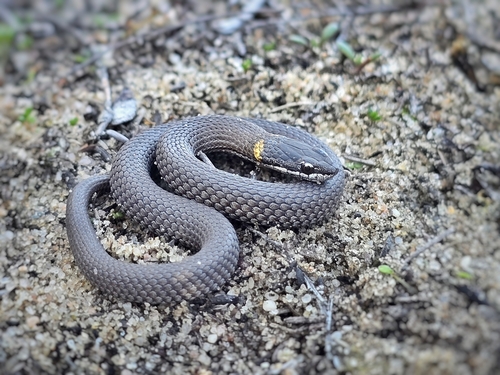
Members are generally small and slender, with smooth scales and a modest, often olive, brown, or grayish body, sometimes with a pale or distinctively marked lip line, as the White-lipped Snake's name suggests. Identifying snakes to genus and species in the field is difficult and unreliable, especially in Australia where several harmless-looking small snakes are actually venomous elapids. Treat any wild snake as potentially dangerous and identify only from photographs at a safe distance or with an expert.
As front-fanged elapids, Drysdalia species are venomous. They are small snakes not regarded as posing the same level of danger as Australia's larger elapids, and they are typically shy and inclined to flee rather than confront. That is not a reason to handle one. The medical significance of a bite from a small or uncommon elapid can be uncertain, and you should never assume a wild venomous snake is safe to pick up. If anyone is bitten, do not attempt first aid beyond keeping the person still and calm, and seek emergency care immediately by calling local emergency services, or in the US contact Poison Control at 1-800-222-1222.
Ecologically these snakes are small predators of the leaf litter and ground layer. Like many small Australian elapids they feed largely on small prey such as skinks and other lizards, and depending on the species may take frogs or invertebrates. Some Drysdalia species are live-bearing, a common adaptation among reptiles in cool climates where eggs would struggle to develop. Their secretive, low-key behavior means people encounter them far less often than the larger snakes that dominate attention.
Drysdalia belongs to the Elapidae family (Cobras, mambas, coral & sea snakes). Front-fanged venomous snakes, many with potent neurotoxic venom. Usually slender with a head barely wider than the neck and fixed front fangs (not the folding fangs of vipers). Coral snakes are boldly ringed; sea snakes have a flattened, paddle-like tail.
Danger: All elapids are venomous and the family is responsible for a large share of fatal snakebites worldwide. Many are shy, but bites can be life-threatening. Treat any bite as a medical emergency.
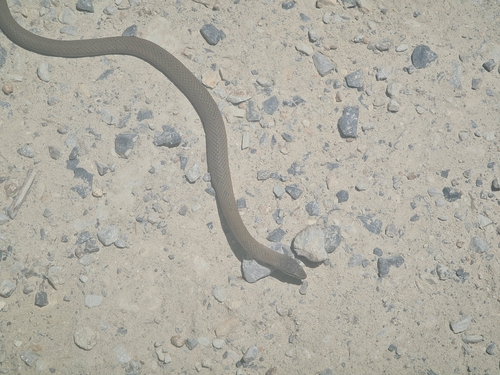
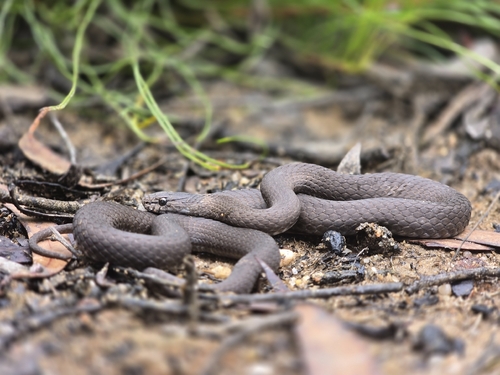
All species (3)
Keep learning
- Venomous vs Nonvenomous: How to Tell the DifferenceThe folk rules for telling venomous snakes apart, where each one fails, and why location-based identification beats guessing by sight.
- Are Snakes Dangerous? The Real Risk, in PerspectiveMost snakes are harmless and avoid people. Here is the honest picture of snakebite risk worldwide and how to lower your own.
- Snake Venom Explained: How It Works and WhyWhat snake venom actually is, why it evolved, the main venom types, fang delivery, how antivenom works, and why ranking the most venomous snake is hard.
- How Snakes Move, Hunt, and EatHow snakes move without legs, hunt as ambushers or active foragers, kill by constriction or venom, and swallow prey wider than their head.