
Genus · Pseudoxyrhophiidae
Ditypophis
The genus Ditypophis contains a single species. It is not considered dangerous to humans.
About Socotra night snake
A single small, rear-fanged snake found only on the island of Socotra.
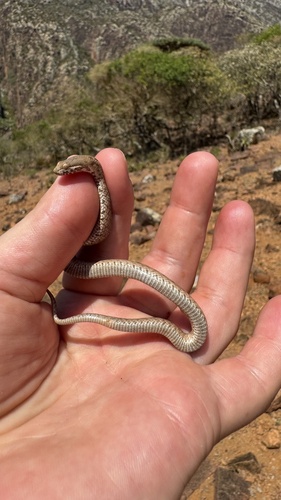
Ditypophis is a monotypic genus, meaning it contains just one species, the Socotra night snake (Ditypophis vivax). It belongs to the family Pseudoxyrhophiidae, a group of rear-fanged snakes centered on Madagascar, with a handful of lineages reaching nearby islands and parts of Africa. Ditypophis is one of those outlying island branches, isolated on the Socotra archipelago in the Indian Ocean off the Horn of Africa. Its presence there reflects the deep evolutionary history that links Socotra's fauna to the wider Afro-Malagasy region.
As a small, secretive, ground-dwelling snake, Ditypophis fits the general pattern of its family: a slender to moderate body, smooth scales, and a head only modestly distinct from the neck. Members of Pseudoxyrhophiidae are typically nocturnal or active in low light, which matches the common name. In broad terms, you would recognize a snake like this by its small size, plain or lightly patterned coloration, and the island endemic context rather than by any single dramatic feature.
Like most pseudoxyrhophiids, this snake is rear-fanged (opisthoglyphous), with enlarged grooved teeth set toward the back of the upper jaw and a mild venom used to subdue small prey such as lizards and invertebrates. It is not considered dangerous to people and there is no record of it causing medically significant bites. Even so, no wild snake should be handled, and bites from rear-fanged species can occasionally cause local reactions. If anyone is bitten by an unidentified snake, stay calm, keep the limb still, and seek medical care; in the US contact Poison Control at 1-800-222-1222 or local emergency services.
Ditypophis belongs to the Pseudoxyrhophiidae family (Malagasy snakes). A spectacular radiation of mostly harmless snakes centered on Madagascar. Highly variable; identification is usually by region and genus rather than a single family trait.
Danger: Considered harmless to humans. Some are mildly venomous (rear-fanged) but not medically significant.
All species (1)
Keep learning
- What Is a Snake? Anatomy and the BasicsA clear overview of what makes a snake a snake: limbless body plan, anatomy, evolution from lizards, species diversity, and why they are ectothermic.
- How Snakes Move, Hunt, and EatHow snakes move without legs, hunt as ambushers or active foragers, kill by constriction or venom, and swallow prey wider than their head.
- What Do Snakes Eat?All snakes are carnivores. Learn what snakes eat, how diet changes with size and age, how often they feed, and how they hunt and swallow prey.
- Venomous vs Nonvenomous: How to Tell the DifferenceThe folk rules for telling venomous snakes apart, where each one fails, and why location-based identification beats guessing by sight.