
Genus · Psammophiidae
Dipsina
The genus Dipsina contains a single species. It is not considered dangerous to humans.
About dwarf beaked snakes
A single small, slender African snake with an upturned snout, built for life in dry, sandy country.
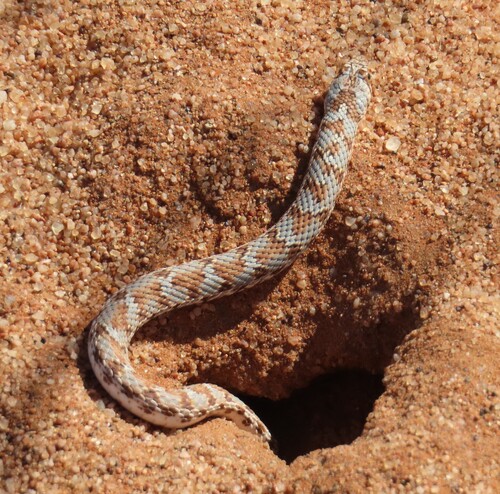
Dipsina is a monotypic genus in the family Psammophiidae, the African group often called the sand and beaked snakes that also includes Psammophis, Psammophylax, Rhamphiophis, and Malpolon. It contains one recognized species, the Dwarf Beaked Snake (Dipsina multimaculata), which is the only member represented in this database. As the family name suggests, these are fast, slim, day-active snakes well suited to open, arid terrain, and Dipsina sits among them as a small, ground-dwelling form named for its slightly upturned, beak-like snout.
The Dwarf Beaked Snake is found in the dry regions of southern Africa, favoring sandy and semi-arid habitats such as scrub, savanna, and the fringes of desert where it can move quickly over loose ground and shelter in cover. In general terms it is a small, slender snake with smooth scales, a narrow head, and the distinctive raised, pointed snout that gives the beaked snakes their common name. Coloration is typically a sandy or grayish-brown patterned with darker blotches that blend into dry soil, which is the most reliable broad field cue rather than any single mark.
Like many psammophiids, Dipsina is rear-fanged and mildly venomous, with grooved teeth at the back of the jaw used to subdue small prey such as lizards and other small animals it hunts during the day. It is not considered dangerous to people, and bites are uncommon because the snake is small and not aggressive, but no wild venomous snake should be handled. If a bite occurs, do not attempt home treatment; contact emergency services or, in the United States, Poison Control at 1-800-222-1222. As an egg-laying snake of dry country, much of its detailed behavior is shaped by the fast-moving, well-camouflaged habits typical of the sand snakes around it.
Dipsina belongs to the Psammophiidae family (Sand & grass snakes). Fast, slender, day-active snakes of open country. Long, slim, and fast, with large eyes and a streamlined head, often striped lengthwise.
Danger: Rear-fanged and mildly venomous; bites can cause local swelling but are not considered dangerous to people.
All species (1)
Keep learning
- What Is a Snake? Anatomy and the BasicsA clear overview of what makes a snake a snake: limbless body plan, anatomy, evolution from lizards, species diversity, and why they are ectothermic.
- How Snakes Move, Hunt, and EatHow snakes move without legs, hunt as ambushers or active foragers, kill by constriction or venom, and swallow prey wider than their head.
- What Do Snakes Eat?All snakes are carnivores. Learn what snakes eat, how diet changes with size and age, how often they feed, and how they hunt and swallow prey.
- Venomous vs Nonvenomous: How to Tell the DifferenceThe folk rules for telling venomous snakes apart, where each one fails, and why location-based identification beats guessing by sight.