
Genus · Colubridae
Types of tree snakes
11 species make up the genus Dipsadoboa, the snakes commonly called tree snakes. None are considered dangerous to humans.
About African tree snakes
Slender, big-eyed African forest snakes that climb at night and are mildly venomous but harmless to people.
Dipsadoboa is a genus of African snakes in the family Colubridae, the largest and most diverse snake family in the world. Colubrids are the catch-all lineage that includes most of the planet's harmless and mildly venomous snakes, and Dipsadoboa sits firmly in that group. The genus is often known by common names like marbled tree snakes and Cross's beaked snakes. Our database holds 11 species, including the Marbled Tree Snake, the Northern Marbled Nocturnal Tree Snake, Gunther's Green Tree Snake, and Weiler's Tree Snake.
These are snakes of sub-Saharan Africa, concentrated in the forested and well-watered regions of central, eastern, and western Africa. They are strongly associated with woodland, rainforest, gallery forest along rivers, and forest edges, where there is cover and a steady supply of small prey. As tree snakes they spend much of their time off the ground, moving through shrubs, vines, and branches, though they also descend to hunt near the forest floor.
In general terms, a Dipsadoboa is a slim, lightly built snake with a head that is noticeably distinct from the neck and large eyes with vertical or rounded pupils suited to a nocturnal life. Coloration varies across the genus from plain greens and browns to marbled and blotched patterns, which is reflected in names like the Marbled Tree Snake and Gunther's Green Tree Snake. The combination of a slender climbing body, big eyes, and forest habitat is the most reliable general signature, though precise identification depends on scale counts and locality and is best left to a specialist.
Dipsadoboa snakes are rear-fanged. This means they are technically venomous, with enlarged grooved teeth set toward the back of the upper jaw and a mild venom used to subdue small prey, rather than the front-fang delivery system of vipers and cobras. For people they are considered harmless: their venom is weak, their delivery is inefficient against large animals, and they are not regarded as a danger to humans. Even so, no wild snake should be handled. If anyone is bitten by a wild snake and the species or its effects are uncertain, treat it as a medical matter and contact US Poison Control at 1-800-222-1222 or local emergency services rather than guessing in the field.
Ecologically these are nocturnal hunters. Members of the genus feed largely on small cold-blooded prey such as frogs, lizards, and geckos, using their mild rear-fanged venom and climbing ability to catch animals in vegetation at night. Like most colubrids in the group they are egg-laying. Their quiet, arboreal, night-active habits mean they are easy to overlook, and they fill the role of a small to medium predator helping to keep amphibian and lizard populations in check across Africa's forests.
Dipsadoboa belongs to the Colubridae family (Colubrids). The largest snake family, and the one most snakes you meet belong to. Typically round pupils, a head only slightly wider than the neck, and no heat-sensing facial pit or rattle. Scales may be smooth and glossy or keeled and matte depending on the species.
Danger: Almost all colubrids are harmless. A small number are rear-fanged with medically significant venom, the boomslang and the twig (vine) snakes of Africa being the dangerous exceptions. Most colubrids will flee or bluff rather than bite.
All species (11)
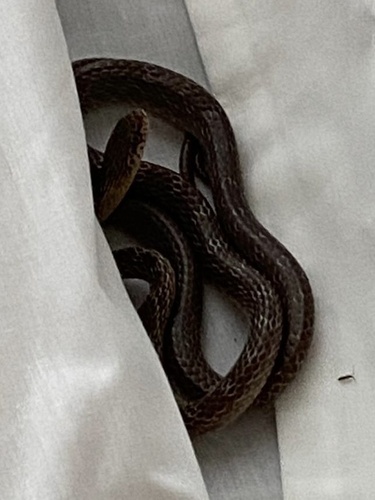 Marbled Tree SnakeDipsadoboa aulicaHarmless
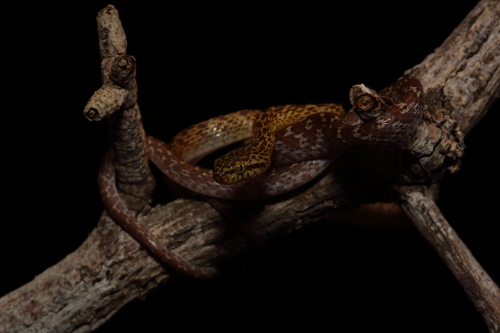 Northern Marbled Nocturnal Tree SnakeDipsadoboa flavidaHarmless
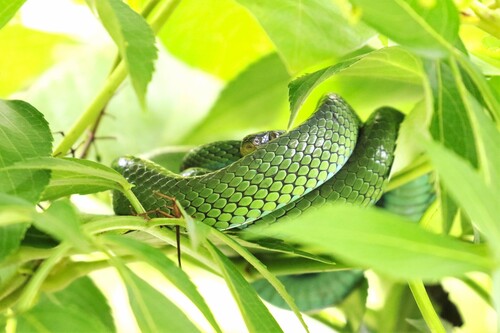 Günther's Green Tree SnakeDipsadoboa unicolorHarmless
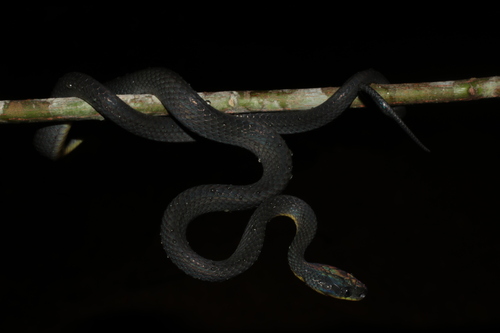 Weiler's Tree SnakeDipsadoboa weileriHarmless
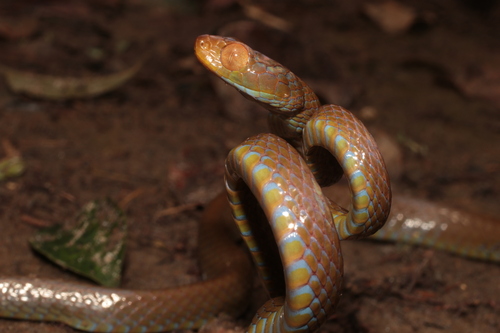 Blue-tailed Nocturnal Tree SnakeDipsadoboa duchesniiHarmless
 Gracile Nocturnal Tree SnakeDipsadoboa viridisHarmless
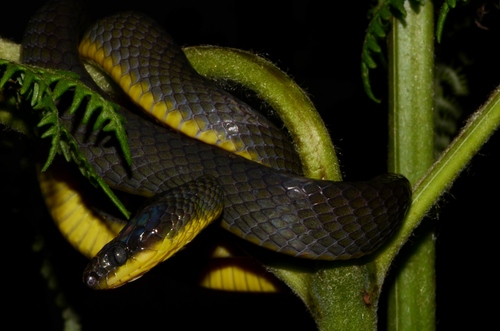 Underwood's Nocturnal Tree SnakeDipsadoboa underwoodiHarmless
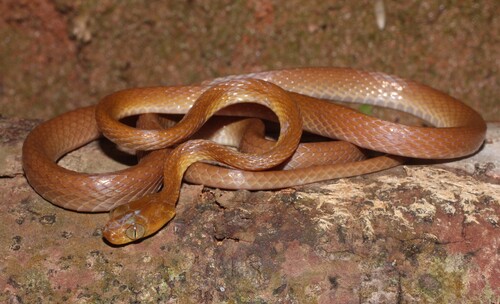 Shorthead Rear-fanged Tree SnakeDipsadoboa brevirostrisHarmless
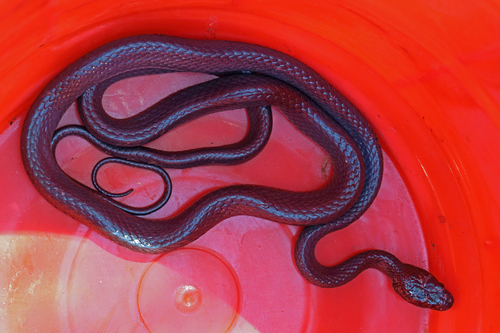 Shreve's Tree SnakeDipsadoboa shreveiHarmless
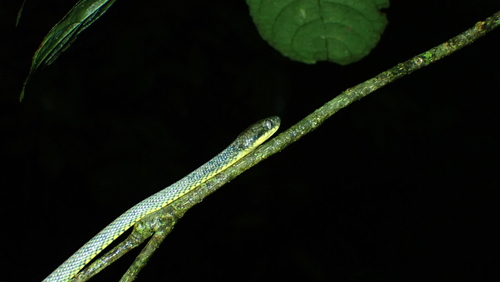 Werner's Green Tree SnakeDipsadoboa werneriHarmless
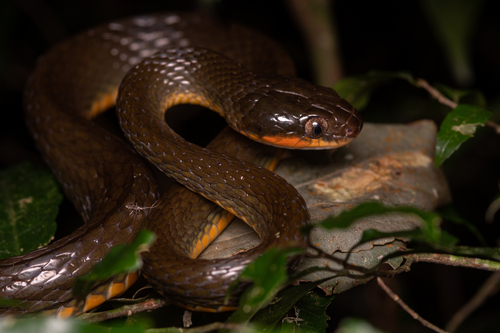 Montane Forest Tree SnakeDipsadoboa montisilvaHarmless
Keep learning
- What Is a Snake? Anatomy and the BasicsA clear overview of what makes a snake a snake: limbless body plan, anatomy, evolution from lizards, species diversity, and why they are ectothermic.
- How Snakes Move, Hunt, and EatHow snakes move without legs, hunt as ambushers or active foragers, kill by constriction or venom, and swallow prey wider than their head.
- What Do Snakes Eat?All snakes are carnivores. Learn what snakes eat, how diet changes with size and age, how often they feed, and how they hunt and swallow prey.
- Venomous vs Nonvenomous: How to Tell the DifferenceThe folk rules for telling venomous snakes apart, where each one fails, and why location-based identification beats guessing by sight.