
Genus · Colubridae
Diaphorolepis
The genus Diaphorolepis contains a single species. It is not considered dangerous to humans.
About frog-eating snakes
A tiny genus of small, secretive Andean colubrids that are harmless to people and spend their lives in cool, wet cloud forest.
Diaphorolepis is a small genus in the vast family Colubridae, the largest family of snakes in the world. It contains only one or two recognized species of small, slender snakes, the best known being the Ecuador Frog-eating Snake, Diaphorolepis wagneri. These are South American snakes tied to the wet, mid-elevation forests of the northern Andes and adjacent foothills, where damp leaf litter and dense vegetation give them cover. Within Colubridae they sit among the New World forest colubrids, a loose grouping of mostly terrestrial and semi-fossorial snakes that hunt small soft-bodied prey rather than large vertebrates.
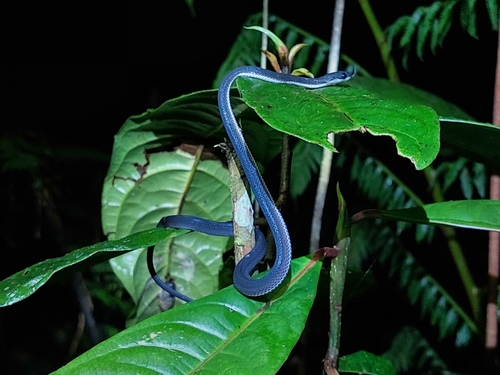
Members are small and unobtrusive. Like many leaf-litter colubrids they have a relatively slim body, a head only slightly distinct from the neck, and smooth to weakly keeled scales suited to moving through wet ground cover. Their common name reflects a diet built around frogs and other small, soft prey typical of the humid forest floor. Because so few specimens are studied, fine details of their biology are not well documented, which is normal for obscure Andean colubrids; the responsible picture is the family-level one rather than invented specifics. Most colubrids of this kind lay eggs, are active mainly by night or in the damp hours, and rely on concealment instead of speed or defense.
For people, these snakes are effectively harmless. They are not front-fanged vipers or elapids, they carry no medically significant venom, and they pose no danger in normal encounters. Some colubrids are technically rear-fanged with mild oral secretions used to subdue small prey, but that is a tool for handling frogs, not a threat to humans. Even so, no wild snake should be picked up or handled, both for the animal's welfare and because identification in the field can be uncertain. If a bite from any unknown snake ever causes unusual symptoms, contact emergency services or US Poison Control at 1-800-222-1222 rather than waiting. The far more likely meaning of a Diaphorolepis sighting is simply a healthy cloud forest doing its job.
Diaphorolepis belongs to the Colubridae family (Colubrids). The largest snake family, and the one most snakes you meet belong to. Typically round pupils, a head only slightly wider than the neck, and no heat-sensing facial pit or rattle. Scales may be smooth and glossy or keeled and matte depending on the species.
Danger: Almost all colubrids are harmless. A small number are rear-fanged with medically significant venom, the boomslang and the twig (vine) snakes of Africa being the dangerous exceptions. Most colubrids will flee or bluff rather than bite.
All species (1)
Keep learning
- What Is a Snake? Anatomy and the BasicsA clear overview of what makes a snake a snake: limbless body plan, anatomy, evolution from lizards, species diversity, and why they are ectothermic.
- How Snakes Move, Hunt, and EatHow snakes move without legs, hunt as ambushers or active foragers, kill by constriction or venom, and swallow prey wider than their head.
- What Do Snakes Eat?All snakes are carnivores. Learn what snakes eat, how diet changes with size and age, how often they feed, and how they hunt and swallow prey.
- Venomous vs Nonvenomous: How to Tell the DifferenceThe folk rules for telling venomous snakes apart, where each one fails, and why location-based identification beats guessing by sight.