
Genus · Colubridae
Types of racers
10+ species make up the genus Dendrophidion, the snakes commonly called racers. None are considered dangerous to humans.
About forest racers
Fast, slender, big-eyed colubrids that race across the floor of Latin American forests by day.
Dendrophidion is a genus of nonvenomous snakes in the family Colubridae, the largest and most diverse snake family on Earth. The genus holds roughly a dozen and a half recognized species, commonly called forest racers, and includes the members in our database such as the Barred Forest Racer, Clark's Forest Racer, and the Olive Forest Racer. As colubrids, they sit alongside other familiar day-active terrestrial snakes rather than with the front-fanged vipers or elapids, and they share the family pattern of being alert, agile, and built for speed rather than for ambush.
These snakes live in the wet and humid forests of the Neotropics, ranging from southern Mexico through Central America and into much of tropical South America. They are most at home in lowland and mid-elevation rainforest and cloud forest, where they hunt on the leaf litter and in low vegetation. Despite the name, forest racers spend much of their time on or near the ground, using dense forest cover and stream edges as their core habitat.
In general terms, a forest racer is long and whip-thin with a notably long tail, large eyes with round pupils, and smooth to weakly keeled scales that often carry crossbands, stripes, or a plain olive-to-brown ground color. The big eyes and slim build reflect a fast, visually guided, daytime hunting style. Telling the species apart usually requires close examination of scale rows and counts, so identification to the exact species is a task for careful in-hand or photographic detail rather than a quick field glance.
Forest racers are harmless to people. They are not venomous in any medically significant way and are not considered dangerous. Like many colubrids they may have enlarged rear teeth and a mild oral secretion that helps subdue small prey, but they are not a front-fanged threat and they prefer to flee at high speed rather than confront. As a rule, wild snakes should be observed and left alone rather than handled, and any snakebite that causes worrying symptoms should be treated as a medical matter: in the United States contact Poison Control at 1-800-222-1222, or call local emergency services.
Ecologically these are active diurnal foragers. Their diet centers on frogs and lizards taken on the forest floor, which suits their fast, searching movement through the litter. They are egg-laying snakes, and their slender, agile bodies and long tails support quick escape from predators across uneven ground. As mid-level predators of small vertebrates, forest racers are a common and important part of healthy Neotropical forest food webs.
Dendrophidion belongs to the Colubridae family (Colubrids). The largest snake family, and the one most snakes you meet belong to. Typically round pupils, a head only slightly wider than the neck, and no heat-sensing facial pit or rattle. Scales may be smooth and glossy or keeled and matte depending on the species.
Danger: Almost all colubrids are harmless. A small number are rear-fanged with medically significant venom, the boomslang and the twig (vine) snakes of Africa being the dangerous exceptions. Most colubrids will flee or bluff rather than bite.
All species (15)
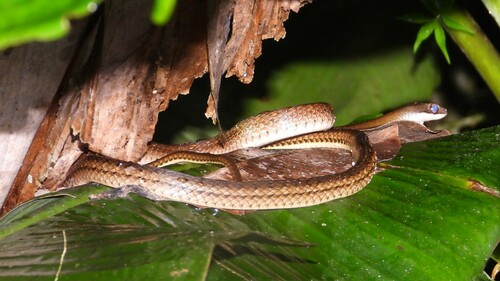 Barred Forest RacerDendrophidion percarinatumHarmless
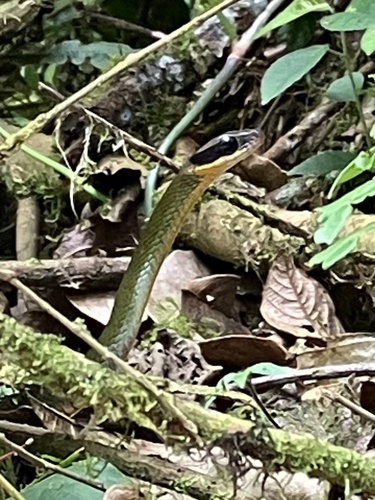 Clark's Forest RacerDendrophidion clarkiiHarmless
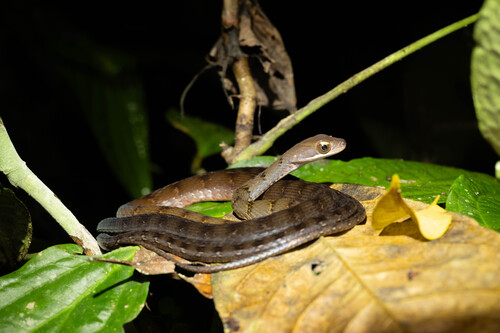 Olive Forest RacerDendrophidion dendrophisHarmless
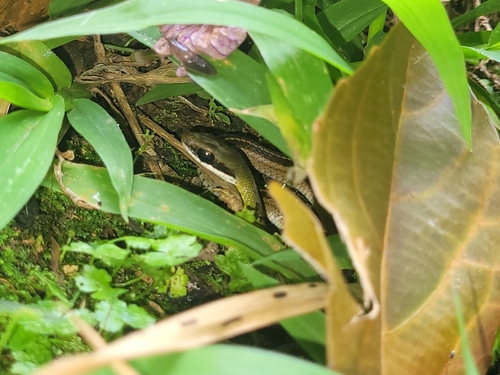 Forest RacerDendrophidion bivittatusHarmless
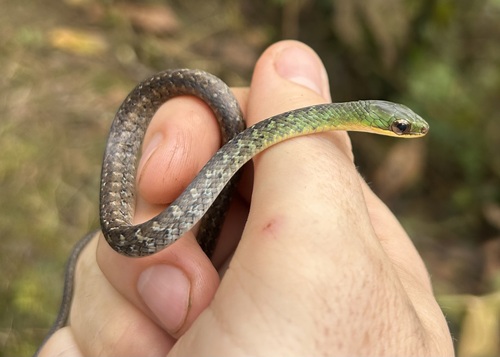 Günther's Forest RacerDendrophidion brunneumHarmless
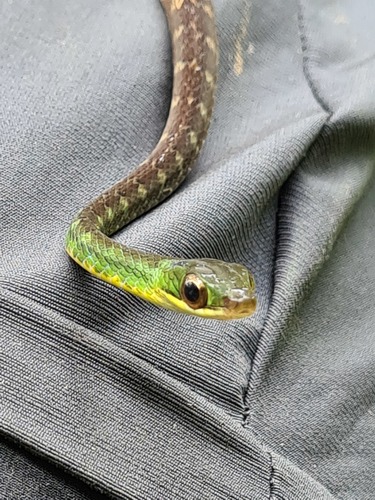 Cadle's Forest RacerDendrophidion graciliverpaHarmless
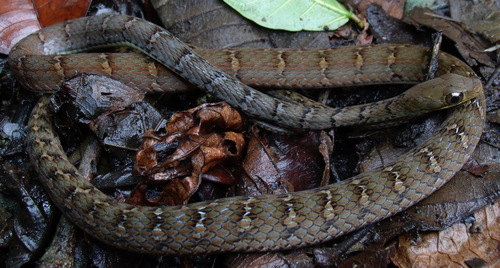 Dendrophidion apharocybeHarmless
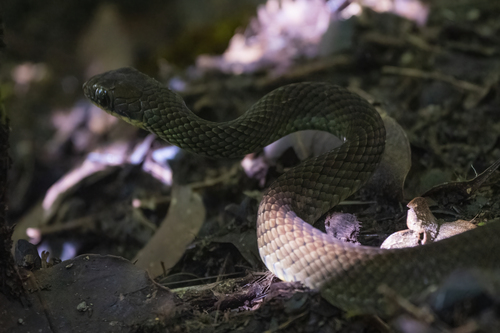 Cope's Forest RacerDendrophidion paucicarinatumHarmless
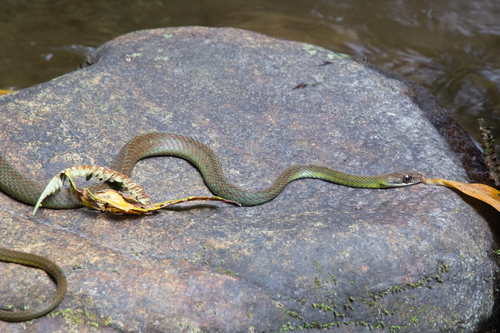 Dendrophidion prolixumHarmless
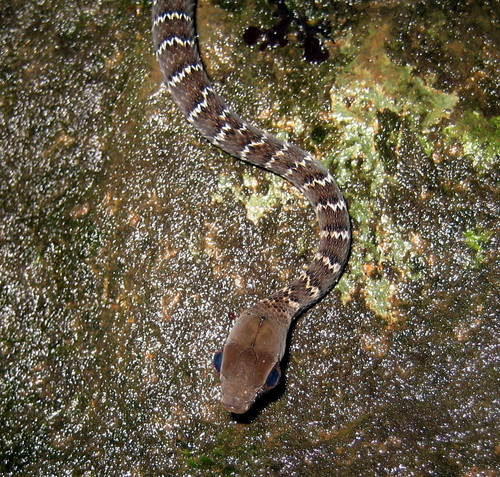 Barred Forest RacerDendrophidion vinitorHarmless
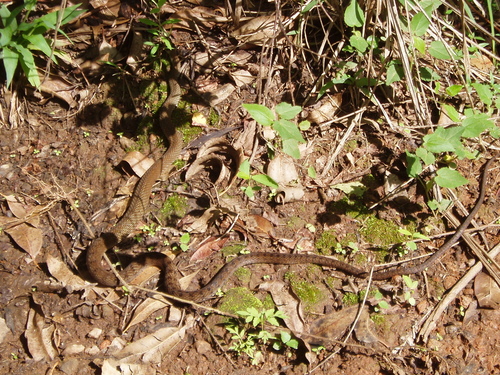 Rainbow Forest-RacerDendrophidion nuchaleHarmless
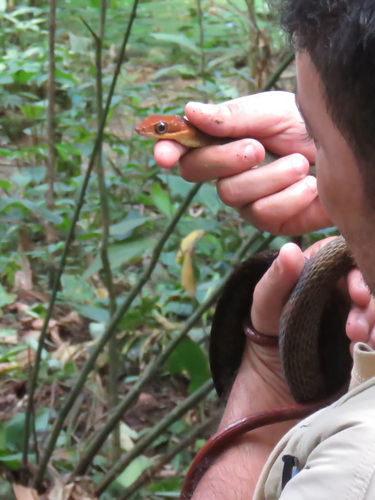 Red-headed Forest RacerDendrophidion rufiterminorumHarmless
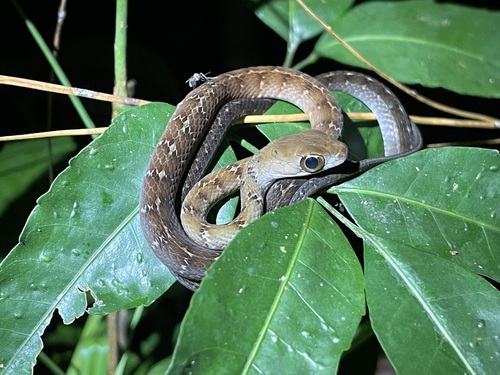 Atlantic Forest RacerDendrophidion atlanticaHarmless
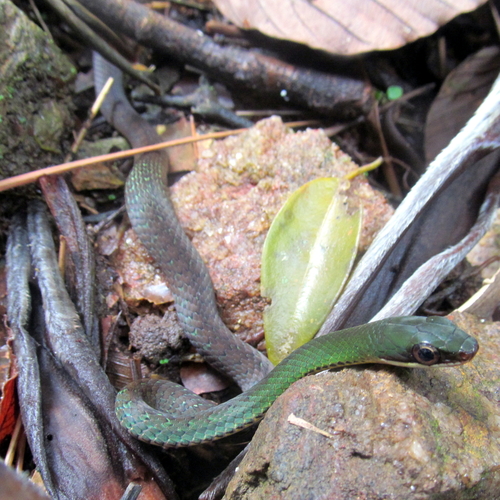 Hoshell's Forest RacerDendrophidion boshelliHarmless
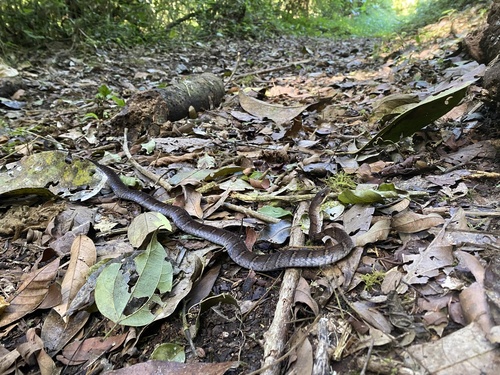 Talamanca Forest RacerDendrophidion crybelumHarmless
Keep learning
- What Is a Snake? Anatomy and the BasicsA clear overview of what makes a snake a snake: limbless body plan, anatomy, evolution from lizards, species diversity, and why they are ectothermic.
- How Snakes Move, Hunt, and EatHow snakes move without legs, hunt as ambushers or active foragers, kill by constriction or venom, and swallow prey wider than their head.
- What Do Snakes Eat?All snakes are carnivores. Learn what snakes eat, how diet changes with size and age, how often they feed, and how they hunt and swallow prey.
- Venomous vs Nonvenomous: How to Tell the DifferenceThe folk rules for telling venomous snakes apart, where each one fails, and why location-based identification beats guessing by sight.