
Genus · Typhlopidae
Cyclotyphlops
The genus Cyclotyphlops contains a single species. It is not considered dangerous to humans.
About blind snakes
A rare, burrowing blind snake known from a single species in Indonesia.
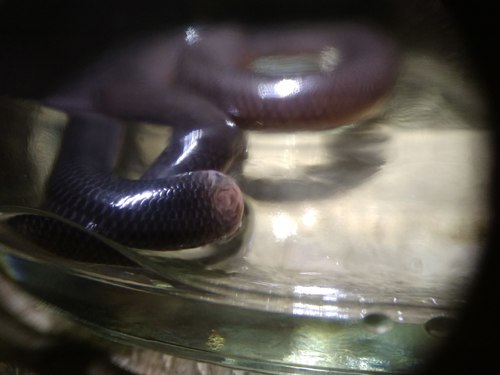
Cyclotyphlops is a blind snake genus in the family Typhlopidae, the typical blind snakes. It is monotypic, meaning it holds just one described species, Deharveng's Blind Snake (Cyclotyphlops deharvengi), which is known from the island of Sulawesi in Indonesia. Like other members of Typhlopidae, it is a small, worm-like, fossorial snake that spends nearly all of its life underground. The genus is distinguished within the family by an unusual arrangement of the scales on the top of the head, which is what led researchers to separate it from the broader blind snake group.
Blind snakes in this family share a consistent body plan, so members are recognized in general terms by their cylindrical, even-width bodies, smooth glossy scales, a short blunt tail often tipped with a tiny spine, and eyes reduced to dark spots beneath the head scales rather than functional eyes. The mouth is small and set far back under a rounded snout. These traits suit a life of pushing through soil and leaf litter. Given how few specimens of Cyclotyphlops are known, the most reliable framing is the family pattern of a small, shiny, soil-dwelling snake easily mistaken for an earthworm.
Blind snakes are harmless to people. They are not venomous, they do not bite defensively in any meaningful way, and their tiny mouths cannot meaningfully injure a person. They feed mainly on ants and termites and the soft larvae and eggs found in those colonies, and many typhlopids reproduce by laying eggs. Behavior is secretive and burrowing, with surface activity tied to rain or disturbed soil. If you encounter one, it poses no danger, though wild snakes should always be left undisturbed and identified from a safe distance rather than handled.
Cyclotyphlops belongs to the Typhlopidae family (Blindsnakes). Tiny, worm-like burrowing snakes that raid ant and termite nests. Looks like a small, glossy earthworm with smooth scales and no obvious neck, eyes, or pattern.
Danger: Harmless. They do not bite people and have no venom.
All species (1)
Keep learning
- What Is a Snake? Anatomy and the BasicsA clear overview of what makes a snake a snake: limbless body plan, anatomy, evolution from lizards, species diversity, and why they are ectothermic.
- How Snakes Move, Hunt, and EatHow snakes move without legs, hunt as ambushers or active foragers, kill by constriction or venom, and swallow prey wider than their head.
- What Do Snakes Eat?All snakes are carnivores. Learn what snakes eat, how diet changes with size and age, how often they feed, and how they hunt and swallow prey.
- Venomous vs Nonvenomous: How to Tell the DifferenceThe folk rules for telling venomous snakes apart, where each one fails, and why location-based identification beats guessing by sight.