
Genus · Cyclocoridae
Types of triangle-spotted snakes
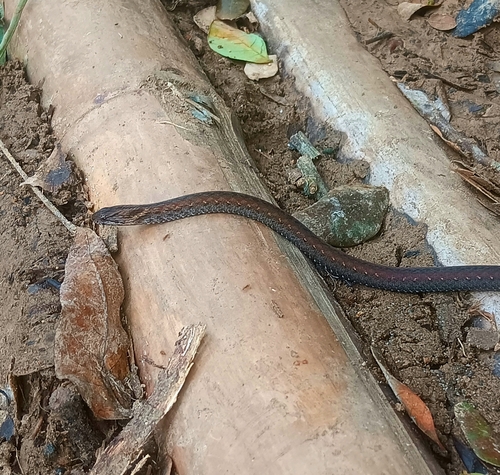
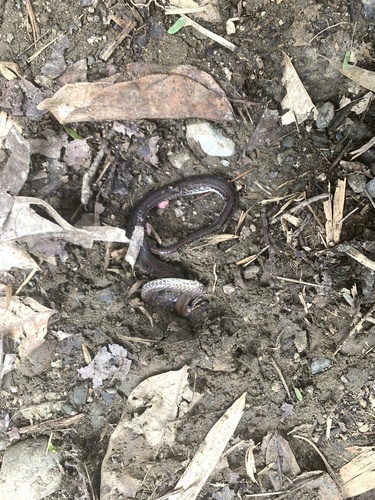
2 species make up the genus Cyclocorus, the snakes commonly called triangle-spotted snakes. None are considered dangerous to humans.
About triangle-spotted snakes
Small, secretive ground snakes found only in the Philippines, the heart of the family Cyclocoridae.
Cyclocorus is a small genus of nonvenomous-to-mildly-rear-fanged ground snakes endemic to the Philippine islands. It belongs to the family Cyclocoridae, a group of Philippine endemic snakes that was recognized as its own family after molecular work showed these snakes form a distinct, ancient lineage rather than fitting neatly into the older catch-all colubrid families. Our database holds two members of the genus: the Northern Triangle-spotted Snake and the Southern Triangle-spotted Snake, whose common names point to the dark triangular blotches that can mark the body. These are modest-sized, slender to moderately built terrestrial snakes that spend most of their lives close to the ground rather than in trees or water.
In general terms, members of Cyclocorus are recognized as small, smooth-scaled snakes of forest floors and forest edges, often patterned with darker markings on a brown or tan background. They favor moist, shaded habitats: leaf litter, the bases of vegetation, and the cover of logs and rocks in forested or partly cleared land. Like many ground-dwelling snakes, they are easy to overlook and are most often encountered when turning cover objects or during damp conditions. Within the family Cyclocoridae, Cyclocorus sits alongside a handful of other Philippine endemic genera, all sharing a common evolutionary origin in the archipelago.
Cyclocorus snakes are not considered dangerous to people. They are small, secretive, and not front-fanged vipers or cobras. Some snakes in this broader group carry enlarged rear teeth and weak salivary secretions used to subdue small prey, so the honest framing is that they pose no meaningful threat to humans even if a rear-toothed bite were to occur. As with any wild snake, the right move is to leave it alone and not handle it; a wild snake should never be picked up just because it looks harmless. Diet centers on small prey such as other small snakes, lizards, and similar ground animals, and like most colubroid snakes in the region they are expected to be egg-laying. If anyone is bitten by a wild snake they cannot confidently identify, contact emergency services or, in the US, Poison Control at 1-800-222-1222 rather than attempting first aid based on a guess.
Cyclocorus belongs to the Cyclocoridae family (Philippine snakes). A small family of harmless snakes endemic to the Philippines. Small, secretive snakes; identification is by region and genus.
Danger: Harmless.
All species (2)
Keep learning
- What Is a Snake? Anatomy and the BasicsA clear overview of what makes a snake a snake: limbless body plan, anatomy, evolution from lizards, species diversity, and why they are ectothermic.
- How Snakes Move, Hunt, and EatHow snakes move without legs, hunt as ambushers or active foragers, kill by constriction or venom, and swallow prey wider than their head.
- What Do Snakes Eat?All snakes are carnivores. Learn what snakes eat, how diet changes with size and age, how often they feed, and how they hunt and swallow prey.
- Venomous vs Nonvenomous: How to Tell the DifferenceThe folk rules for telling venomous snakes apart, where each one fails, and why location-based identification beats guessing by sight.