
Genus · Typhlopidae
Types of blindsnakes
4 species make up the genus Cubatyphlops, the snakes commonly called blindsnakes. None are considered dangerous to humans.
About blind snakes
Tiny, burrowing, worm-like snakes of the Caribbean that spend almost their whole lives underground.
Cubatyphlops is a genus of blind snakes in the family Typhlopidae. The typhlopids are a large, ancient lineage of small fossorial snakes found across the warmer parts of the world, and Cubatyphlops is the West Indian branch of that family, centered on Cuba and nearby islands in the Greater Antilles and Bahamas. The four species in our database, including the Guantanamo Bay Blindsnake, the Bahaman Slender Blindsnake, the Goliath Blindsnake, and the Cayman Worm Snake, are all part of this Caribbean radiation.
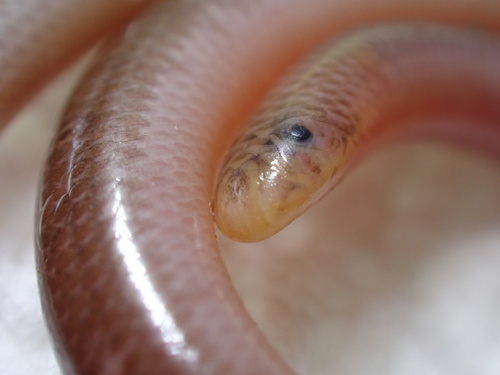
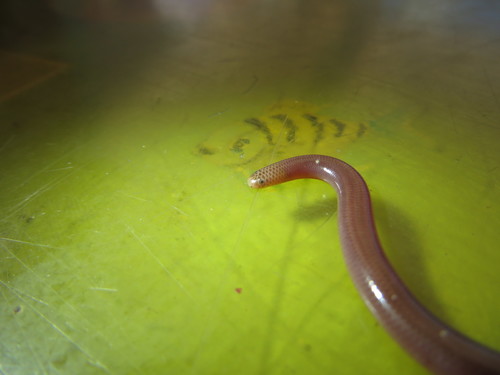
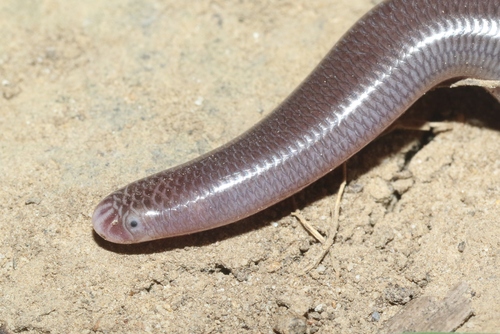
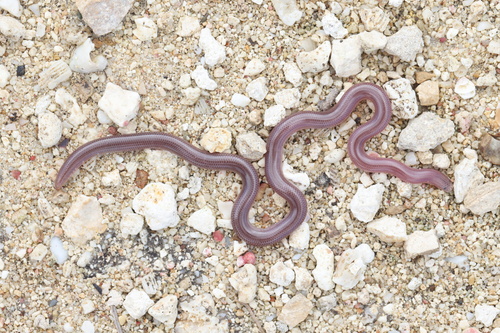
These are among the most unusual snakes to look at because they barely look like snakes at all. They are small and slender with a smooth, cylindrical, almost uniform body that makes the head and tail hard to tell apart at a glance. The scales are tiny, tight, and glossy, giving them a polished, worm-like appearance. The eyes are reduced to dark spots beneath the head scales, which is where the name blind snake comes from. They are not truly blind, but their vision is limited to sensing light and dark, which is all a burrowing animal needs.
Like other typhlopids, members of Cubatyphlops live underground or under cover such as leaf litter, rotting logs, soil, and stones. They are built for digging, with a blunt head, a short blunt tail often tipped with a small spine that helps anchor them as they push through soil, and a body that resists abrasion. People most often encounter them by accident when turning over a log or a rock, after heavy rain pushes them to the surface, or in loose garden soil. They are easy to mistake for earthworms, and the smooth scaled body and the small spine at the tail are the clues that tell them apart.
Blind snakes are completely harmless to people. They are not venomous, they are not rear-fanged, and they have tiny mouths that cannot meaningfully bite a human. There is no medical danger from these animals. The honest framing is simply that they are inoffensive, and the main reason to leave one alone is for the animal's own welfare, since handling can stress and dry out a small soil-dwelling creature. As a general rule with any wild snake you cannot identify with confidence, do not handle it, and if anyone is ever bitten by a snake and there is any doubt about the species, seek medical care and contact US Poison Control at 1-800-222-1222 or local emergency services.
Ecologically, typhlopid blind snakes are specialist predators of soft-bodied soil invertebrates. They feed largely on ants and termites, including the eggs, larvae, and pupae found inside colonies, which they raid underground. Reproduction in the family is by laying eggs, and the small clutches reflect the small body size of these snakes. Their behavior is secretive and almost entirely subterranean, so they are rarely seen even where they are common, and they play a quiet role in soil ecosystems as controllers of ant and termite populations.
Cubatyphlops belongs to the Typhlopidae family (Blindsnakes). Tiny, worm-like burrowing snakes that raid ant and termite nests. Looks like a small, glossy earthworm with smooth scales and no obvious neck, eyes, or pattern.
Danger: Harmless. They do not bite people and have no venom.
All species (4)
Keep learning
- What Is a Snake? Anatomy and the BasicsA clear overview of what makes a snake a snake: limbless body plan, anatomy, evolution from lizards, species diversity, and why they are ectothermic.
- How Snakes Move, Hunt, and EatHow snakes move without legs, hunt as ambushers or active foragers, kill by constriction or venom, and swallow prey wider than their head.
- What Do Snakes Eat?All snakes are carnivores. Learn what snakes eat, how diet changes with size and age, how often they feed, and how they hunt and swallow prey.
- Venomous vs Nonvenomous: How to Tell the DifferenceThe folk rules for telling venomous snakes apart, where each one fails, and why location-based identification beats guessing by sight.