
Genus · Colubridae
Types of water snakes
5 species make up the genus Crotaphopeltis, the snakes commonly called water snakes. None are considered dangerous to humans.
About herald snakes (white-lipped and water snakes)
Small, mild-mannered African colubrids best known for the bright lip stripe of the Red-lipped Herald Snake.
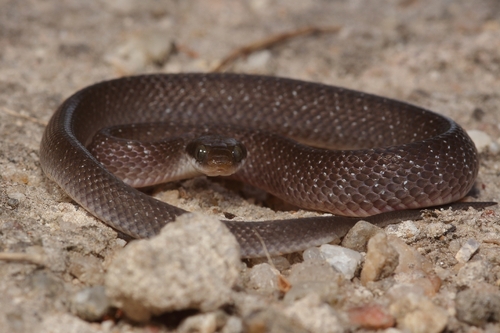
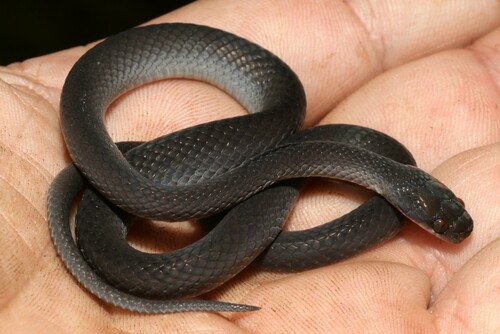
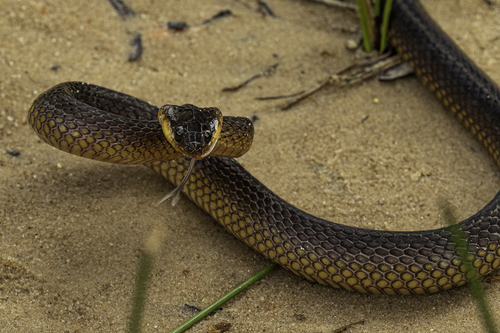
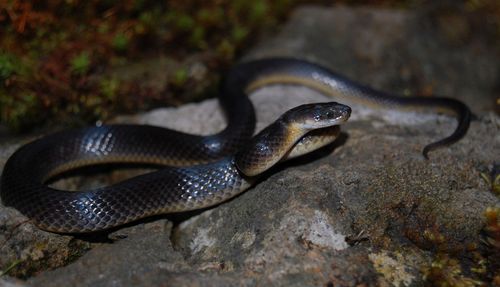
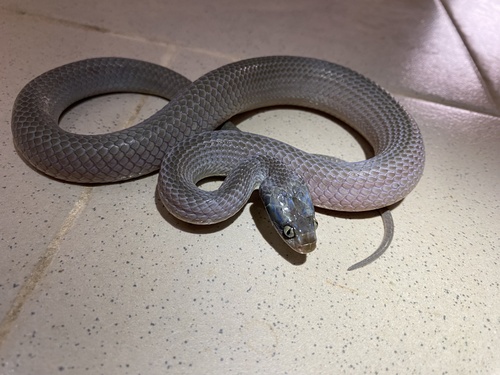
Crotaphopeltis is a genus of small to medium snakes in the family Colubridae, the largest snake family and the one that holds most of the world's harmless and mildly venomous species. The genus is African, and its members are often grouped under common names like herald snakes or water snakes. The best-known member, the Red-lipped Snake or Red-lipped Herald Snake, gets its name from the pale to reddish coloring along the upper lip that contrasts with a darker head and body.
These snakes range across much of sub-Saharan Africa, with several species tied to moist habitats. Members are found near wetlands, marshes, streams, dams, and damp grassland, as well as in gardens and farmland where frogs are common. The genus name and the water-snake common names reflect this preference for areas with standing or slow-moving water, which concentrates their amphibian prey.
In general terms, Crotaphopeltis snakes are stout-bodied for their modest length, usually under a meter, with a head that is somewhat distinct from the neck and large eyes with vertical or rounded pupils depending on the species. Color is typically olive, brown, gray, or near-black, often with small light flecks, and the contrasting lip can be a useful field clue in the species that show it. Because several look-alikes exist in African herpetofauna, exact identification should rely on regional guides rather than a single feature.
These are rear-fanged snakes. They carry enlarged grooved teeth at the back of the upper jaw and a mild venom suited to subduing small cold-blooded prey. For the species studied, bites to humans are considered medically minor, typically producing local effects only, and these snakes are not regarded as dangerous in the way front-fanged elapids or vipers are. That is not a reason to handle a wild snake. Any wild snake can bite, identification mistakes happen, and individual reactions vary. Do not handle, catch, or provoke one. If a bite occurs and symptoms develop or the snake is not confidently identified, seek medical care and contact emergency services, or US Poison Control at 1-800-222-1222 if you are in the United States.
Ecologically, Crotaphopeltis snakes are largely nocturnal hunters that feed heavily on frogs and toads, with some also taking lizards and other small animals. They are egg-laying. When threatened, several will flatten the head and body, hiss, and strike defensively, a bluff display that makes them look fiercer than they are. Their close ties to wetlands and amphibians make them useful indicators of healthy moist habitats.
Crotaphopeltis belongs to the Colubridae family (Colubrids). The largest snake family, and the one most snakes you meet belong to. Typically round pupils, a head only slightly wider than the neck, and no heat-sensing facial pit or rattle. Scales may be smooth and glossy or keeled and matte depending on the species.
Danger: Almost all colubrids are harmless. A small number are rear-fanged with medically significant venom, the boomslang and the twig (vine) snakes of Africa being the dangerous exceptions. Most colubrids will flee or bluff rather than bite.
All species (5)
Keep learning
- What Is a Snake? Anatomy and the BasicsA clear overview of what makes a snake a snake: limbless body plan, anatomy, evolution from lizards, species diversity, and why they are ectothermic.
- How Snakes Move, Hunt, and EatHow snakes move without legs, hunt as ambushers or active foragers, kill by constriction or venom, and swallow prey wider than their head.
- What Do Snakes Eat?All snakes are carnivores. Learn what snakes eat, how diet changes with size and age, how often they feed, and how they hunt and swallow prey.
- Venomous vs Nonvenomous: How to Tell the DifferenceThe folk rules for telling venomous snakes apart, where each one fails, and why location-based identification beats guessing by sight.