
Genus · Colubridae
Coronella
The genus Coronella contains a single species. It is not considered dangerous to humans.
About smooth snakes
Coronella is the smooth snake genus, a small group of slender, harmless Old World colubrids that hunt lizards.
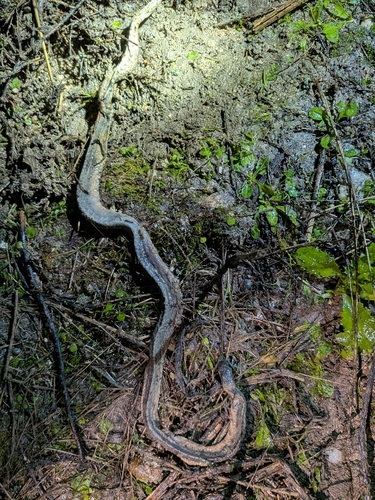
Coronella is a small genus in the family Colubridae, the largest and most diverse snake family in the world. Its members are commonly called smooth snakes because their scales are smooth rather than keeled, giving the body a polished, even look. The genus contains only a couple of species, and our database covers one of them, the Southern Smooth Snake. These are modest, secretive snakes that rarely grow large and are easily mistaken for vipers, which has historically led people to kill them out of fear even though they pose no danger.
The genus is centered on Europe, western Asia, and parts of North Africa, where its members favor dry, sunlit habitats such as heathland, rocky slopes, scrub, woodland edges, and old stone walls. In general terms, a Coronella smooth snake is a slim snake with a rounded snout, a dark stripe running through the eye, and a row of darker blotches or bars down a gray, brown, or reddish back. The round pupil and the absence of a deep facial pit help separate them from true vipers, but identification of any wild snake should be done from a distance and confirmed by a regional expert rather than by handling.
Smooth snakes are non-venomous and harmless to people. They subdue prey by constriction and by gripping with the jaws, feeding mainly on lizards, small snakes, and occasionally young mammals. Like many colubrids they are shy and prefer to hide rather than confront a threat, though a cornered individual may bite, hiss, or release a foul musk in defense. They are generally slow to mature and produce small litters, with the young born well formed. Because Southern Smooth Snake is an obscure taxon, treat its precise biology as broadly typical of the genus rather than assuming details specific to it, and leave any wild snake undisturbed even though these are not dangerous animals.
Coronella belongs to the Colubridae family (Colubrids). The largest snake family, and the one most snakes you meet belong to. Typically round pupils, a head only slightly wider than the neck, and no heat-sensing facial pit or rattle. Scales may be smooth and glossy or keeled and matte depending on the species.
Danger: Almost all colubrids are harmless. A small number are rear-fanged with medically significant venom, the boomslang and the twig (vine) snakes of Africa being the dangerous exceptions. Most colubrids will flee or bluff rather than bite.
All species (1)
Keep learning
- What Is a Snake? Anatomy and the BasicsA clear overview of what makes a snake a snake: limbless body plan, anatomy, evolution from lizards, species diversity, and why they are ectothermic.
- How Snakes Move, Hunt, and EatHow snakes move without legs, hunt as ambushers or active foragers, kill by constriction or venom, and swallow prey wider than their head.
- What Do Snakes Eat?All snakes are carnivores. Learn what snakes eat, how diet changes with size and age, how often they feed, and how they hunt and swallow prey.
- Venomous vs Nonvenomous: How to Tell the DifferenceThe folk rules for telling venomous snakes apart, where each one fails, and why location-based identification beats guessing by sight.