
Genus · Colubridae
Types of guarders
3 species make up the genus Conophis, the snakes commonly called guarders. None are considered dangerous to humans.
About road guarders
Fast, day-active Central American colubrids that hunt other reptiles and carry a mild rear-fanged venom.
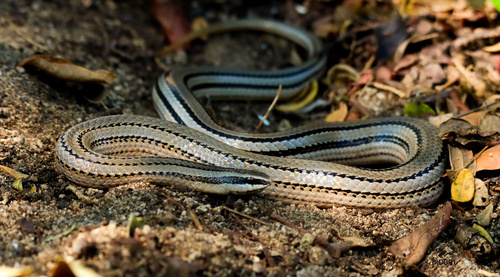
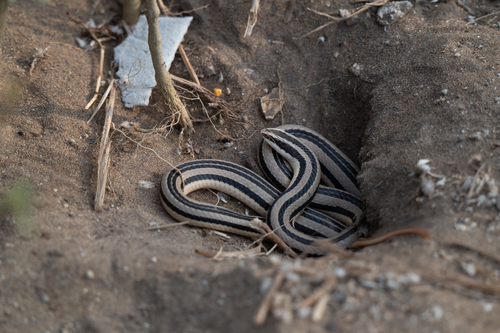
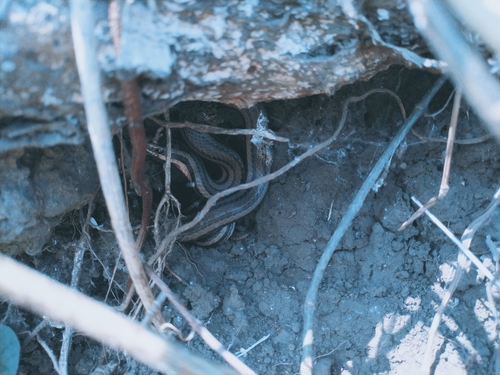
Conophis is a small genus of New World colubrid snakes, the road guarders, native to Mexico and Central America. It sits in the family Colubridae, by far the largest snake family, which holds well over half of all living snake species. Within that family Conophis belongs to the broad group of terrestrial, ground-dwelling colubrids rather than to the front-fanged elapids or vipers. Our database lists 3 species in the genus, including the widely recognized Road Guarder, the Striped Road Guarder, and the Los Tuxtlas Road Guarder.
These are snakes of warm, open lowland country. Their range runs through southern Mexico down into Central America, where they favor dry forest, savanna, scrub, brushy edges, agricultural land, and roadsides. The common name reflects exactly that habit: they are often seen out in the open during the day, moving across paths and dirt roads where other snakes would stay hidden. They are mostly ground hunters rather than climbers or burrowers.
In general terms, road guarders are slender to moderately built snakes with smooth scales, a fairly narrow head, and round pupils, and several species carry bold longitudinal stripes running the length of the body over a pale or tan ground color. That striped, alert, fast-moving appearance is a reasonable field impression of the genus, though reliable species identification depends on local range and scale detail rather than color alone, and many harmless colubrids in the same region look broadly similar.
Conophis is rear-fanged and mildly venomous. The enlarged, grooved teeth sit toward the back of the upper jaw and deliver a venom that subdues their small prey. They are not considered dangerous in the way front-fanged snakes such as coral snakes or pit vipers are, but a prolonged, chewing bite to a person can cause local pain, swelling, and bleeding. That is an honest reason not to handle any wild road guarder: a snake that looks harmless can still produce an unpleasant reaction. Never assume a wild venomous or rear-fanged snake is safe to pick up. If a bite occurs, stay calm, keep the limb still, and seek medical care promptly. In the United States contact Poison Control at 1-800-222-1222, and elsewhere call your local emergency services.
Ecologically, road guarders are active diurnal predators with a strong appetite for other reptiles. They eat lizards, smaller snakes, frogs, and small mammals, using speed and their mild venom to overcome prey rather than constriction. Like most colubrids in their region they are egg-laying, producing clutches of eggs that develop without parental care. Their alert, fast, open-ground behavior makes them a familiar sight to people in their range and a useful natural control on local lizard and rodent populations.
Conophis belongs to the Colubridae family (Colubrids). The largest snake family, and the one most snakes you meet belong to. Typically round pupils, a head only slightly wider than the neck, and no heat-sensing facial pit or rattle. Scales may be smooth and glossy or keeled and matte depending on the species.
Danger: Almost all colubrids are harmless. A small number are rear-fanged with medically significant venom, the boomslang and the twig (vine) snakes of Africa being the dangerous exceptions. Most colubrids will flee or bluff rather than bite.
All species (3)
Keep learning
- What Is a Snake? Anatomy and the BasicsA clear overview of what makes a snake a snake: limbless body plan, anatomy, evolution from lizards, species diversity, and why they are ectothermic.
- How Snakes Move, Hunt, and EatHow snakes move without legs, hunt as ambushers or active foragers, kill by constriction or venom, and swallow prey wider than their head.
- What Do Snakes Eat?All snakes are carnivores. Learn what snakes eat, how diet changes with size and age, how often they feed, and how they hunt and swallow prey.
- Venomous vs Nonvenomous: How to Tell the DifferenceThe folk rules for telling venomous snakes apart, where each one fails, and why location-based identification beats guessing by sight.