
Genus · Colubridae
Coniophanes
10+ species make up the genus Coniophanes. None are considered dangerous to humans.
About black-striped snakes
Small, secretive New World colubrids with mild rear-fanged venom, harmless to people but capable of a stinging bite.
Coniophanes is a genus of small to medium snakes in the family Colubridae, the largest and most diverse snake family. The group ranges from southern Texas through Mexico and Central America into northern South America. People often call them black-striped snakes or spotbelly snakes, names that point to the dark longitudinal stripes many species carry down the back and sides and, in some, the boldly marked underside.
Members are typically slender, modestly sized snakes, with most species under a few feet in length. Recognition leans on the striped dorsal pattern set against a tan, brown, or reddish ground color, smooth scales, and a body built for moving through leaf litter and loose soil rather than climbing. Color and stripe intensity vary between species and even between individuals, so identification to species usually relies on locality and close scale detail rather than pattern alone.
These are rear-fanged snakes. They carry enlarged, grooved teeth at the back of the upper jaw and a Duvernoy's gland that produces a mild venom used to subdue small prey. For humans the practical risk is low: bites from Coniophanes are generally harmless, sometimes producing local swelling, itching, or tenderness, but they are not considered dangerous. They are not aggressive and usually try to flee or hide. Even so, no wild snake should be handled, and any bite that causes a reaction beyond minor local irritation warrants medical attention. In the United States call Poison Control at 1-800-222-1222, or contact local emergency services.
Ecologically, Coniophanes are secretive, often crepuscular or nocturnal hunters of the ground layer. They favor moist lowland habitats such as forest floor, scrub, grassland edges, and the margins of wetlands, where they shelter under logs, rocks, and debris. Their diet centers on small ectothermic prey including frogs, toads, lizards, smaller snakes, and invertebrates, with the rear-fanged venom helping to immobilize struggling catches. Like most colubrids in the group, they are egg-laying, producing small clutches, and they pass largely unnoticed because of their size and retiring habits.
Within the broader picture of Colubridae, Coniophanes illustrates a common pattern: a mildly venomous, rear-fanged lineage that is medically insignificant to people yet ecologically important as a predator of small animals. Treat them as harmless wildlife to observe and leave alone, not as a threat and not as a pet to pick up.
Coniophanes belongs to the Colubridae family (Colubrids). The largest snake family, and the one most snakes you meet belong to. Typically round pupils, a head only slightly wider than the neck, and no heat-sensing facial pit or rattle. Scales may be smooth and glossy or keeled and matte depending on the species.
Danger: Almost all colubrids are harmless. A small number are rear-fanged with medically significant venom, the boomslang and the twig (vine) snakes of Africa being the dangerous exceptions. Most colubrids will flee or bluff rather than bite.
All species (15)
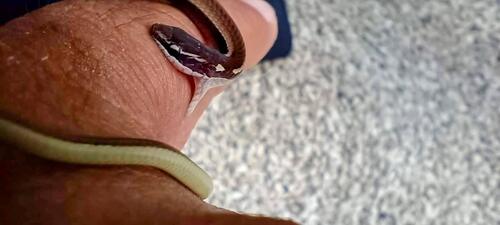 Black-striped SnakeConiophanes imperialisHarmless
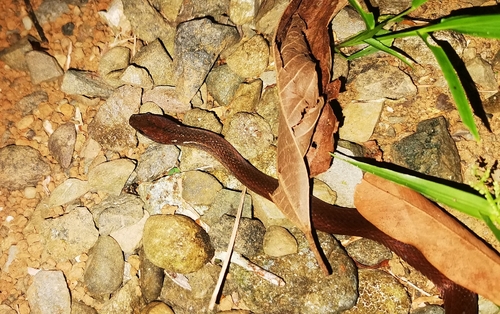 Brown Spotbelly SnakeConiophanes fissidensHarmless
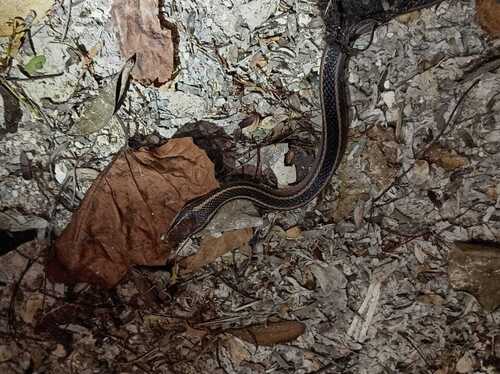 Faded Black-striped SnakeConiophanes schmidtiHarmless
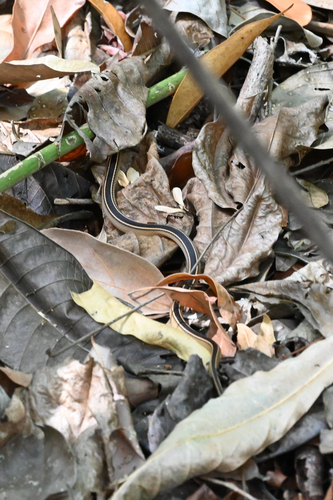 Sooty Black-striped SnakeConiophanes piceivittisHarmless
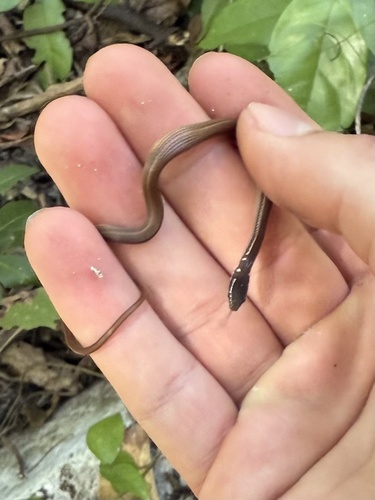 Peninsula Stripeless SnakeConiophanes meridanusHarmless
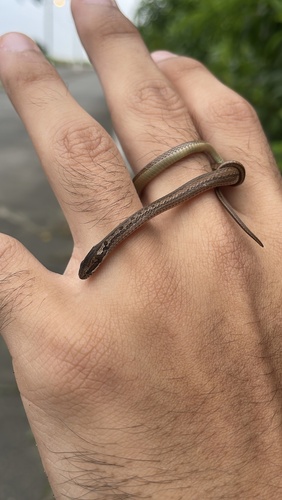 Peters' Running SnakeConiophanes dromiciformisHarmless
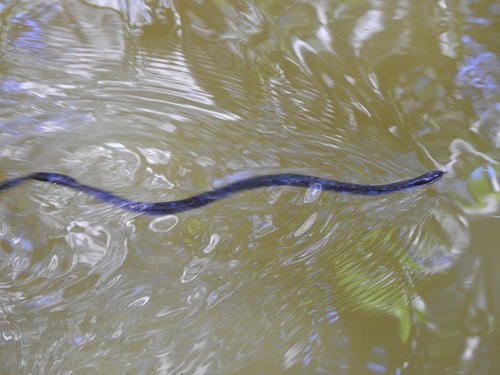 Two-spotted SnakeConiophanes bipunctatusHarmless
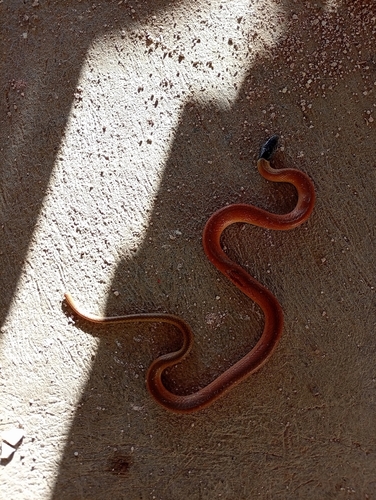 Stripeless SnakeConiophanes lateritiusHarmless
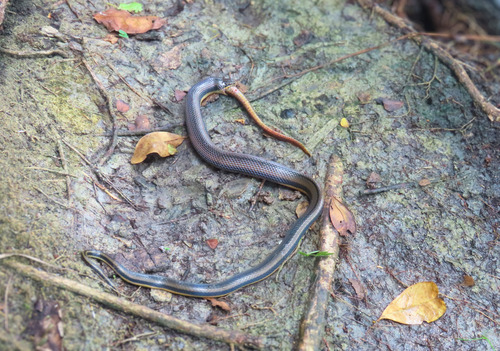 Five-striped SnakeConiophanes quinquevittatusHarmless
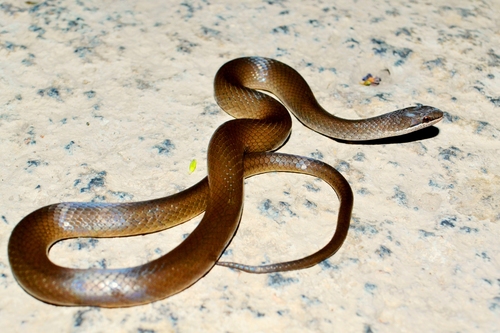 Chiapan Stripeless SnakeConiophanes alvareziHarmless
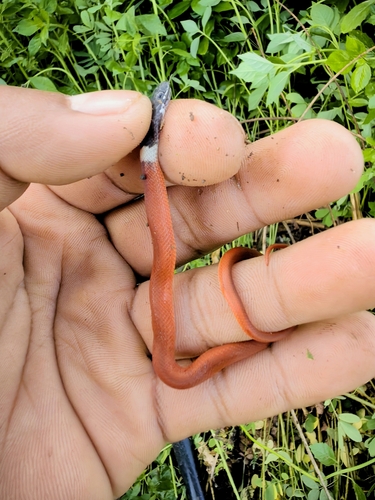 Blackhead Stripeless SnakeConiophanes melanocephalusHarmless
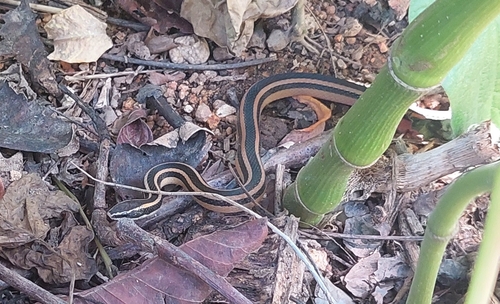 Guerrero Black-striped SnakeConiophanes tayloriHarmless
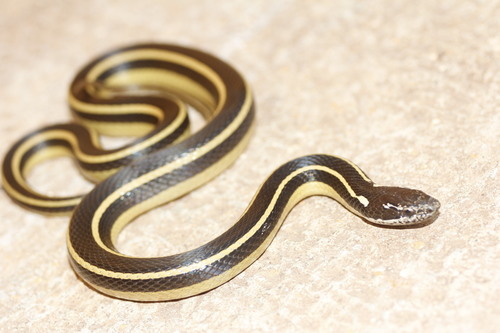 Coniophanes taeniataHarmless
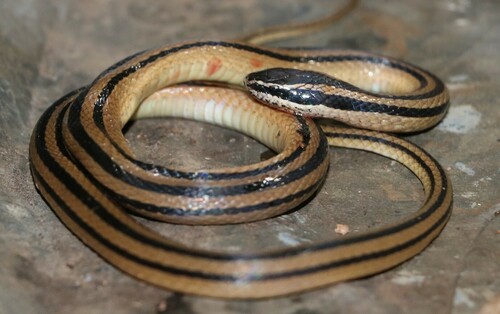 Michoacan Black-striped SnakeConiophanes michoacanensisHarmless
- No photoAndresen's SnakeConiophanes andresensisHarmless
Keep learning
- What Is a Snake? Anatomy and the BasicsA clear overview of what makes a snake a snake: limbless body plan, anatomy, evolution from lizards, species diversity, and why they are ectothermic.
- How Snakes Move, Hunt, and EatHow snakes move without legs, hunt as ambushers or active foragers, kill by constriction or venom, and swallow prey wider than their head.
- What Do Snakes Eat?All snakes are carnivores. Learn what snakes eat, how diet changes with size and age, how often they feed, and how they hunt and swallow prey.
- Venomous vs Nonvenomous: How to Tell the DifferenceThe folk rules for telling venomous snakes apart, where each one fails, and why location-based identification beats guessing by sight.