
Genus · Pseudoxyrhophiidae
Types of big-headed snakes
6 species make up the genus Compsophis, the snakes commonly called big-headed snakes. None are considered dangerous to humans.
About Madagascar big-headed and forest snakes
A small genus of harmless forest snakes found only on Madagascar.
Compsophis is a genus of snakes in the family Pseudoxyrhophiidae, a group that makes up the large majority of Madagascar's native snake species. Like the rest of that family, Compsophis is endemic to Madagascar, meaning these snakes occur naturally nowhere else on Earth. Our database lists six species, including the Ranomafana Big-headed Snake, the Lined Forest Snake, Boulenger's Forest Snake, and the Andasibe Big-headed Snake.
These are forest snakes. They live in the humid and montane rainforests of eastern and central Madagascar, where they are tied to moist leaf litter, ground cover, and low vegetation. Several members carry the common name big-headed snake, a reference to a head that is noticeably wider than the neck. Others are called forest snakes for the simple reason that the forest floor is where they make their living.
In general terms, members of Compsophis are modest in size with a head that is often distinct from the neck, and many show longitudinal stripes or lines down the body, which is where names like Lined Forest Snake come from. Because several of these species are obscure and poorly studied, the most reliable way to recognize the genus is by combining the traits above with the location: a small, ground-dwelling Malagasy snake from rainforest habitat is a strong candidate.
On safety, the practical answer is reassuring. The Pseudoxyrhophiidae include both harmless and mildly rear-fanged species, and Madagascar has no snakes considered dangerous to people. Compsophis snakes are not a medical threat to humans. As with any wild animal, the right approach is to observe and not handle. If a bite from any wild snake ever breaks the skin and you are unsure, treat it seriously and contact emergency care or US Poison Control at 1-800-222-1222 or your local emergency services.
Ecologically, ground-dwelling Malagasy forest snakes of this type typically feed on small prey found in and around the leaf litter, such as frogs, eggs, and other small animals, and reproduce by laying eggs as is common across the family. They tend to be secretive and non-aggressive, relying on cover and stillness rather than confrontation. Detailed life-history data for individual Compsophis species remains limited, which is itself a reminder of how much of Madagascar's snake diversity is still being documented.
Compsophis belongs to the Pseudoxyrhophiidae family (Malagasy snakes). A spectacular radiation of mostly harmless snakes centered on Madagascar. Highly variable; identification is usually by region and genus rather than a single family trait.
Danger: Considered harmless to humans. Some are mildly venomous (rear-fanged) but not medically significant.
All species (6)
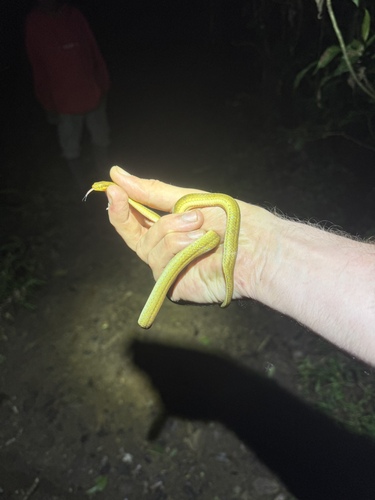 Ranomafana Big-headed SnakeCompsophis laphystiusHarmless
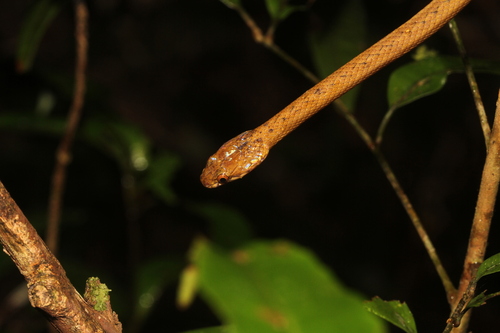 Lined Forest SnakeCompsophis infralineatusHarmless
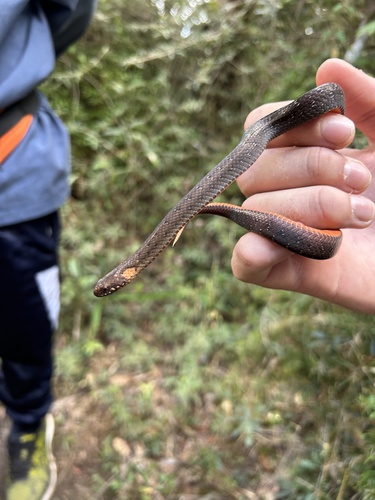 Boulenger's Forest SnakeCompsophis boulengeriHarmless
- No photoAndasibe Big-headed SnakeCompsophis vinckeiHarmless
- No photoFianarantsoa Big-headed SnakeCompsophis zenyHarmless
- No photoWhite-bellied Big-headed SnakeCompsophis albiventrisHarmless
Keep learning
- What Is a Snake? Anatomy and the BasicsA clear overview of what makes a snake a snake: limbless body plan, anatomy, evolution from lizards, species diversity, and why they are ectothermic.
- How Snakes Move, Hunt, and EatHow snakes move without legs, hunt as ambushers or active foragers, kill by constriction or venom, and swallow prey wider than their head.
- What Do Snakes Eat?All snakes are carnivores. Learn what snakes eat, how diet changes with size and age, how often they feed, and how they hunt and swallow prey.
- Venomous vs Nonvenomous: How to Tell the DifferenceThe folk rules for telling venomous snakes apart, where each one fails, and why location-based identification beats guessing by sight.