
Genus · Colubridae
Collorhabdium
The genus Collorhabdium contains a single species. It is not considered dangerous to humans.
About Mountain dwarf snakes
A tiny, secretive forest snake from the mountains of Peninsular Malaysia, known from very few specimens.
Collorhabdium is a small genus within Colubridae, the largest and most diverse snake family in the world. For most of its history it has been treated as monotypic, built around a single described species, the Mountain Dwarf Snake (Collorhabdium williamsoni). It belongs to the broad assemblage of small, slender, ground-dwelling colubrids of Southeast Asia, the same general grouping that includes the reed snakes and their relatives. As with many obscure colubrid lineages, its exact placement has been revised over time as researchers compare anatomy and genetics, so it is best understood at the family level: a colubrid, not a viper, elapid, or python.
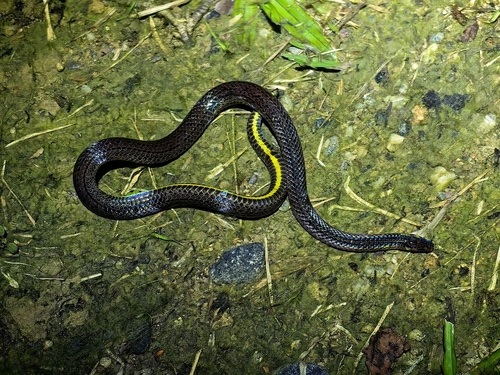
The genus is associated with the mountains of Peninsular Malaysia, where it is found in moist, forested hill and montane habitats. Snakes of this type are typically encountered in leaf litter, under logs, in soil, and among roots rather than in the open, which is one reason so few specimens exist. Recognition is general rather than precise for a taxon this rare: expect a very small, smooth-bodied, secretive snake with a short head not much wider than the neck and a body built for moving through litter and loose ground, in keeping with other small fossorial and semi-fossorial colubrids of the region. Reliable identification of any small forest snake should come from a regional expert or verified field guide, not from a single photo.
There is no evidence that Collorhabdium is dangerous to people. Small colubrids of this kind are not front-fanged and are not known to be medically significant; they are part of the harmless to mildly defensive end of the family. Their ecology fits the small-colubrid pattern: a diet of small soft invertebrates and other tiny prey found in the leaf litter, secretive behavior, and egg-laying reproduction typical of the family, though specific natural-history details for this rare genus are poorly documented and should not be assumed. As a general rule, never handle a wild snake you cannot positively identify. If anyone is bitten by an unknown snake and symptoms develop, contact US Poison Control at 1-800-222-1222 or local emergency services right away.
Collorhabdium belongs to the Colubridae family (Colubrids). The largest snake family, and the one most snakes you meet belong to. Typically round pupils, a head only slightly wider than the neck, and no heat-sensing facial pit or rattle. Scales may be smooth and glossy or keeled and matte depending on the species.
Danger: Almost all colubrids are harmless. A small number are rear-fanged with medically significant venom, the boomslang and the twig (vine) snakes of Africa being the dangerous exceptions. Most colubrids will flee or bluff rather than bite.
All species (1)
Keep learning
- What Is a Snake? Anatomy and the BasicsA clear overview of what makes a snake a snake: limbless body plan, anatomy, evolution from lizards, species diversity, and why they are ectothermic.
- How Snakes Move, Hunt, and EatHow snakes move without legs, hunt as ambushers or active foragers, kill by constriction or venom, and swallow prey wider than their head.
- What Do Snakes Eat?All snakes are carnivores. Learn what snakes eat, how diet changes with size and age, how often they feed, and how they hunt and swallow prey.
- Venomous vs Nonvenomous: How to Tell the DifferenceThe folk rules for telling venomous snakes apart, where each one fails, and why location-based identification beats guessing by sight.