
Genus · Colubridae
Chlorosoma
3 species make up the genus Chlorosoma. None are considered dangerous to humans.
About South American green racers
Slim, fast-moving green snakes of South American grasslands and forest edges, members of the vast harmless colubrid family.
Chlorosoma is a small genus of snakes in the family Colubridae, the largest and most widespread snake family on Earth. Colubrids account for roughly two thirds of all living snake species, and most of them are nonvenomous or only mildly rear-fanged. Chlorosoma belongs to this typical, slender-bodied colubrid mold rather than to any of the dangerous front-fanged groups like vipers or cobras.
The genus is South American, with species ranging across open and semi-open country in countries such as Brazil, Argentina, Paraguay, and Uruguay. Like many racers and whipsnakes, its members favor grasslands, savanna, brushy field edges, and forest borders where there is enough cover to hide and enough open ground to move quickly. These are habitats shaped by warmth and seasonal rains, and the snakes are active during the day.
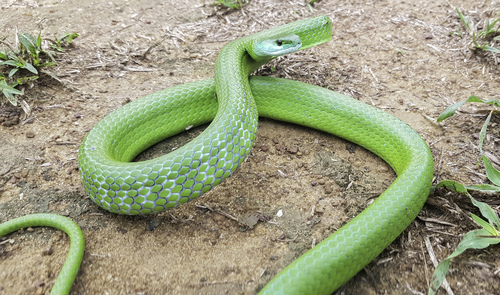
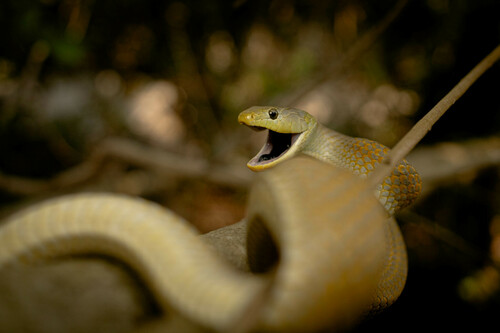
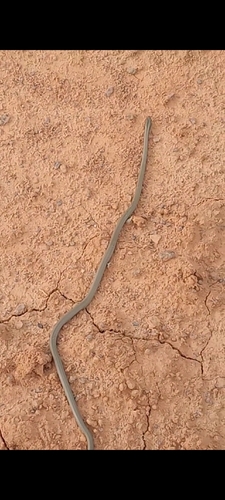
In general terms, a Chlorosoma is recognized as a long, thin, agile snake with a narrow head, large eyes, and a tapering tail, often with greenish or olive coloration that blends into vegetation. The proportions are those of a classic diurnal hunter built for speed rather than ambush. Because many slender green and brown colubrids look alike, exact identification should rely on locality and a herpetologist or regional field guide rather than color alone.
These snakes are not considered dangerous to people and are best described as harmless. Some colubrids carry mild rear-fanged secretions used to subdue small prey, and these have no meaningful medical effect on humans. As with any wild snake, the responsible practice is to observe and not handle it. If anyone is bitten and there is any uncertainty about the species or symptoms develop, do not wait: contact US Poison Control at 1-800-222-1222 or local emergency services right away.
Ecologically, racers of this type are active foragers rather than sit-and-wait predators. They hunt by moving through cover and chasing down small prey such as lizards, frogs, large insects, and other small animals, relying on speed and keen eyesight. Like most colubrids in their range, they are egg-laying, and their main defense is flight, freezing, or bluffing rather than a harmful bite. They play a useful role in controlling small vertebrate and invertebrate populations.
Chlorosoma belongs to the Colubridae family (Colubrids). The largest snake family, and the one most snakes you meet belong to. Typically round pupils, a head only slightly wider than the neck, and no heat-sensing facial pit or rattle. Scales may be smooth and glossy or keeled and matte depending on the species.
Danger: Almost all colubrids are harmless. A small number are rear-fanged with medically significant venom, the boomslang and the twig (vine) snakes of Africa being the dangerous exceptions. Most colubrids will flee or bluff rather than bite.
All species (3)
Keep learning
- What Is a Snake? Anatomy and the BasicsA clear overview of what makes a snake a snake: limbless body plan, anatomy, evolution from lizards, species diversity, and why they are ectothermic.
- How Snakes Move, Hunt, and EatHow snakes move without legs, hunt as ambushers or active foragers, kill by constriction or venom, and swallow prey wider than their head.
- What Do Snakes Eat?All snakes are carnivores. Learn what snakes eat, how diet changes with size and age, how often they feed, and how they hunt and swallow prey.
- Venomous vs Nonvenomous: How to Tell the DifferenceThe folk rules for telling venomous snakes apart, where each one fails, and why location-based identification beats guessing by sight.