
Genus · Colubridae
Chersodromus
3 species make up the genus Chersodromus. None are considered dangerous to humans.
About earth runners
Small, secretive ground snakes found only in the wet highland forests of eastern Mexico.
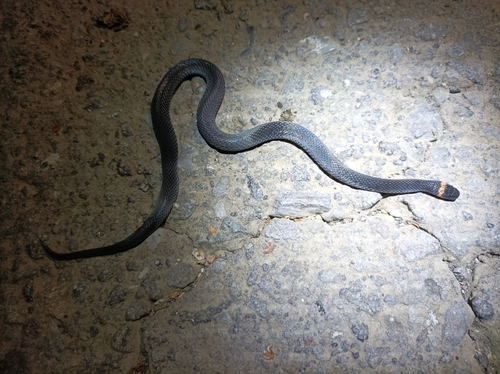
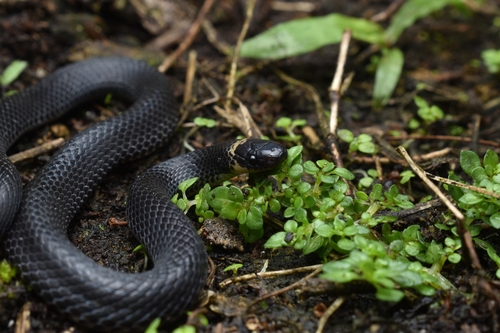
Chersodromus is a small genus of colubrid snakes native to Mexico. It belongs to the family Colubridae, the largest and most diverse snake family in the world, which contains the majority of harmless terrestrial snakes. Within that family Chersodromus sits among the small, leaf litter and ground dwelling lineages of the New World, and the group is sometimes called the earth runners. Our database lists three species, including Liebmann's Earth Runner.
These are diminutive snakes with the typical build of forest floor colubrids: a slender body, smooth or weakly keeled scales, a short tail, and small eyes suited to a life spent mostly out of sight. They are easy to overlook and hard to confuse with larger, more conspicuous snakes because they rarely exceed the length of a pencil to a ruler. Reliable identification of any specific species usually depends on scale counts and locality rather than color alone, so field identification is best left to experts familiar with the region.
The genus is restricted to eastern and southeastern Mexico, where members live in cool, humid montane and cloud forest habitats. They are associated with the damp microclimate of the forest floor, sheltering under logs, rocks, leaf litter, and moss. This narrow range and dependence on intact wet forest makes them sensitive to habitat loss, and several Mexican forest snakes of this type are poorly documented simply because they are rarely encountered.
Chersodromus snakes are not venomous in any medically important sense and pose no danger to people. Like most small leaf litter colubrids they are harmless, non-aggressive, and far more likely to flee or hide than to defend themselves. There is no evidence that they are a threat to humans. As a general rule, wild snakes should still be observed and not handled, both for the animal's welfare and to avoid disturbing a species that may already be uncommon.
Ecologically, small ground dwelling colubrids of this kind typically feed on soft bodied invertebrates and other tiny prey of the forest floor, such as soft insects, worms, and similar animals, though the precise diet of each Chersodromus species is not well studied. They are believed to be secretive and mostly nocturnal or crepuscular. Reproduction in the genus is not thoroughly documented, but many small colubrids in similar habitats lay small clutches of eggs. The honest summary is that these are little known, range restricted Mexican snakes whose natural history still holds open questions.
Chersodromus belongs to the Colubridae family (Colubrids). The largest snake family, and the one most snakes you meet belong to. Typically round pupils, a head only slightly wider than the neck, and no heat-sensing facial pit or rattle. Scales may be smooth and glossy or keeled and matte depending on the species.
Danger: Almost all colubrids are harmless. A small number are rear-fanged with medically significant venom, the boomslang and the twig (vine) snakes of Africa being the dangerous exceptions. Most colubrids will flee or bluff rather than bite.
All species (3)
Keep learning
- What Is a Snake? Anatomy and the BasicsA clear overview of what makes a snake a snake: limbless body plan, anatomy, evolution from lizards, species diversity, and why they are ectothermic.
- How Snakes Move, Hunt, and EatHow snakes move without legs, hunt as ambushers or active foragers, kill by constriction or venom, and swallow prey wider than their head.
- What Do Snakes Eat?All snakes are carnivores. Learn what snakes eat, how diet changes with size and age, how often they feed, and how they hunt and swallow prey.
- Venomous vs Nonvenomous: How to Tell the DifferenceThe folk rules for telling venomous snakes apart, where each one fails, and why location-based identification beats guessing by sight.